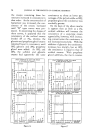
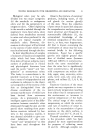
TESTING DEODORANTS WITH CHLOROPHYLL AND DERIVATIVES 61 characteristic of ingested asparagus. Results of a series of preliminary experiments had indicated that the maximum intensities of odor in the urine appeared within 4 to 7 hours after consumption of one dose of 186 gm. of asparagus and that the odor became imperceptible at the end of 17 hours. However, the feeding of this quantity of asparagus on two or more consecutive days resulted in cumulative increments in odor of which the intensities were measurable at the ends of periods of 17 or more hours following the in- gestion of the vegetable. On the basis of the results of these preliminary tests, collections of samples of urine were divided into two periods: (a) the first seven hours tollowing consumption of the asparagus and (b) the interval between the time of awakening and 10 a.m. of the following morning. Samples of urine collected during the first of these periods yielded data concerning the immediate effects of the asparagus upon odors in urine and these specimens are identified in the charts as the p.m. samples. On the other hand, the samples collected during the four morning hours (6 a.m. to 10 a.m.) are listed as a.m. samples and odors in these specimens were representa- tive of the persistent effects of the vegetable upon odors in urine. All samples of urine were divided into two aliquots of which one was used for odor measurements by the air-dilution method whereas the other was utilized for determinations of odor by water-dilution procedure. Experimental procedures adopted tk)r stimulation of sweating and for collections of samples of perspira- tion from the bodies of the subjects were the same as those which have been described during discussions of the series of experiments sum- marized in Charts IV and V. Also, the method of determination of capacities of perspiration to develop obnoxious odors was iden- tical with that used in the first series of in-vivo experiments. Throughout the entire experi- mental period, all subjects refrained from washing their skins, except the cutaneous surfaces of their faces, necks, and hands. Also, they dis- continued applications of antiper- spirants and deodorants to any part of their bodies. Chlorophyll was administered daily during the test period as a purified form of "a" and "b" chlorophyllins which had been in- corporated in a moderately sweet lozenge base. The mean weight of each lozenge was 175 mg. Each lozenge contained 15 mg. of a com- bination of 70 per cent chloro- phyllin "a" and 30 per cent chloro- phyllin "b." The total daily dosage was three lozenges which were ad- ministered to the subjects in the laboratory. The first lozenge was administered before the consump- tion of'the asparagus the second lozenge was ingested about 1 p.m. and the third lozenge was taken at about $ p.m. The subjdcts sucked the lozenges until they were disintegrated com- pletely in their mouths. This pro-

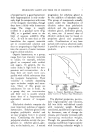
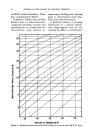
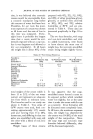
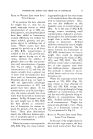
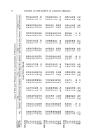
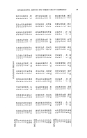
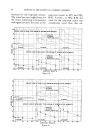
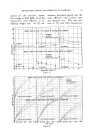
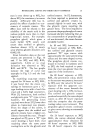
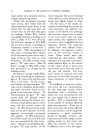
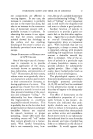
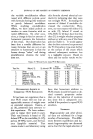
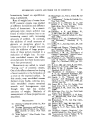
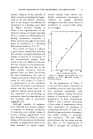
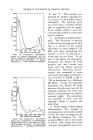
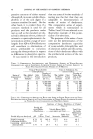
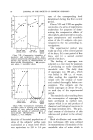
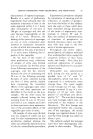
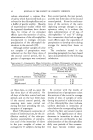
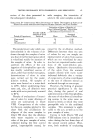
JOURNAL OF THE SOCIETY OF COSMETIC CHEMISTS cedure stimulated a copious flow of saliva which functioned both as a solvent for the chlorophyllins and as a buffer of gastric acidity. Results of experimental studies which will be reported elsewhere have shown that, by virtue of its stimulant effects upon the secretion of saliva, administration of the chlorophyllins incorporated in lozenges obviates precipitation of the chlorophyll de- rivatives in the stomach (29). Although neither samples of urine nor samples of perspiration were collected on the first three days of the second control period, the in- gestion of asparagus was continued first control period, the test period, and the last three days of the second control period. From the conforma- tions of the sections of the curve depicting average changes in per- spiratory odors, it is evident the daily administration of 45 mg. of chlorophyllins "a" and "b" during five consecutive days had no signif- icant effects upon the capacities of perspiration to develop odors during storage for twenty-four hours at 37øC. The conclusion stated in the preceding paragraph has been based upon data presented in the following tabulation. TABULATION C--COMPaRATIVE MEAN II•TENSlTIES OF ODORS DETERMINED II• SAMPLES OF PEKSPIKATION COLLECTED FKOM FIFTEEN SUBJECTS DURING CONtTKOL AND TEST PEKIODS Intensities of Odors After Incu- bation at 37øC. for 24 Hours as Dilutions with Air Number of Sam- ples of Perspira- Standard Period of Experiment tion Analyzed Mean Error of Mean First control 75 50 0.62 Test 75 57 0.13 Second control 30 52 0.40 on these days, as well as, upon the last three days of this period. On all days of the first control and test periods and on the last three days of the second control period, the sweating tests were carried out during the hour preceding the con- sumption of asparagus. Chart VII presents summaries of results of determina, tions, by the air- dilution method, of the odor-pro- duction potentialities of perspira- tion and of the intensities of odors in the p.m. samples of urines as averages for 15 subjects during the In contrast with the results of determinations of perspiratory odors the sections of the curve for average results of tests of samples of urine during the period of administration of the chlorophyllins does indicate uniform decreases in intensities of odors below the corresponding levels of both the first and second control periods. The significances of these decreases in intensities in odors of urine which are attributable to the administration of the chlorophyllins daily over periods of five consecu- tive days become evident upon
Purchased for the exclusive use of nofirst nolast (unknown)
From: SCC Media Library & Resource Center (library.scconline.org)