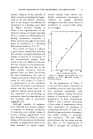
TESTING DEODORANTS WITH CHLOROPHYLL AND DERIVATIVES 73 Of the three principles, the one which has the greatest potentiality of influencing, either constructively or destructively, the practical sig- nificances of experimental studies of deodorants relates to the criteria adopted in assembling groups of experimental subjects. A common practice adopted in clinical trials and in in-vivo experiments has been, over a period of several decades, the utilization of ambulatory clinic pa- tients or hospitalized cases as test subjects. Frequently, these groups have been supplemented by private patients reporting to physicians' offices at intervals of seven days or more. For experimental studies of deodorants, this procedure of select- ing subjects is wholly unsatisfactory and may be productive of misleading experimental data. The entire cutaneous areas of skins of all subjects should be free of functional and (•rganic disorders, in so) far as these abnormalities are recognizable by a qualified specialist in dermatology. It is a matter of common knowledge that among dill ferent individuals, marked varia- tions in rates of excretion of sweat may occur under identical conditions of thermal stimulations. Experi- ences, over a period of eighteen years, in conducting sweating tests, during control periods, by the method described in the discussions of experiments presented in Charts IV and V, have shown that adult female subjects may produce from 50 to 500 c.c. of perspiration dur- ing immersions in water at tem- peratures between 40 and 45øC. during periods of thirty minutes. Although in some cases, two or three months intervened between two series of tests, the daily volumes of perspiration collected from any one subject were surprisingly uni- form through two or more series of tests. Some subjects gave volumes from 50 to 100 c.c. these individu- als are referred to as the "light sweaters." The yields from the majority of subjects ranged from 150 to 300 c.c. of perspiration these women are called the "moderate sweaters." From a relatively small group of subjects, volumes of per- spiration collected in one test fell within the extremes of 325 to 500 c.c. these cases are classified as the "heavy sweaters." It has been the invariable policy of this laboratory, in experimental studies of antiper- spitants and deodorants, to include in a test of subjects all c)f the "heavy sweaters" who are available and then to complete the group with "moderate sweaters." Light sweat- ers are never used in studies of either deodorants or antiperspirants. In respect to either bacterial populations of perspiration or counts of viable microi3rganisms on their skins, variations among subjects are definitely greater than variations among volumes of perspiration. Extremes of variations, among counts of organisms, are from ap- proximately 2.00 millions to about 18.00 millions per 1 c.c. of perspira- tion. In general, the "moderate" and "heavy sweaters" show the higher and highest densities of bac- terial populations of perspiration.

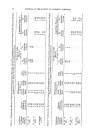
74 JOURNAL OF THE SOCIETY OF COSMETIC CHEMISTS Loads of cutaneous soils and num- bers of viable micro6rganisms in perspiration follow approximately parallel courses throughout control periods and during periods of cleans- ing and degermations of subjects' skins. In fact, the good correlations between these two variables estab- lish the validity of the acceptance of counts of viable bacteria as indices of amounts of cutaneous soil sam- pled from skin by means of stimula- tion of sweating. Hence, selection of "heavy" and "moderate sweat- ers" gives assurance of the fact that the test group will include subjects representative of either moderate or heavy loads of soil and viable micro- 6rganismson their skins. However, it is imperative that rthese latter in- .dications be confirmed by tests dur- ing the first control period. Densities of soil and bacterial population on cutaneous surfaces are dependent upon two major vari- ables: (a) the conditions of ex- posures of skin, particularly the cu- taneous areas not covered by cloth- ing to extraneous contaminants and (b) the hygienic care of the skin's surface. During participation in experiments of the type presented in Charts IV to VIII inclusive, sub- jects are under supervision in the laboratory during about eight hours of each day of an experiment within control and test periods. This sched- ule excludes Sundays and, in some instances, the subjects are not re- quired to report on Saturdays. In other words, the subjects are not under supervision during more than two-thirds of the total number of hours within any one period. In view of the fact that, throughout these extramural intervals, the sub- jects are on "their own," it is im- perative to utilize only those indi- viduals who have shown by their performances in earlier series of ex- periments the requisite evidences of intelligent co-operation and con- scientious adherence to all instruc- tions relative to their activities out- side the laboratory in so far as these activities may influence the experi- mental results. It is essential that the director of the experiments have a general knowledge of the habits and extramural activities of all sub- jects taking part in the tests. In tests of soaps or other detergents, utilized for cleansing the skin of the entire body, the use of any other skin cleanser is prohibited and the tub baths under supervision must be the only procedures for cleansing the surface of the body, except of the face and hands throughout the entire experimental period. In like man- ner, the supervised underarm appli- cations of underarm deodorants or antiperspirants under test must be the sole treatments (including the used soaps) of the cutaneous sur- faces of the axillas during the con- trol and test periods. There is only one way of assembling individuals who may be depended upon to ful- fill satisfactorily the requirements listed above and that is to utilize experienced professional or semi- professional subjects who expect and receive adequate remunerations for their participations in the experi- ments.
Purchased for the exclusive use of nofirst nolast (unknown)
From: SCC Media Library & Resource Center (library.scconline.org)