JOURNAL OF THE SOCIETY OF COSMETIC CHEMISTS ment), but it will be observed that the grouping suggested by the E.I. du Pont de Nemours Company also includes secondary items of similar basic tonality. It is upon such a listing that several versions of simple floral foundations can be based and, more- over, easily modified or altered in accordance with the perfumer's per- sonal inclination, but because I believe that the arbitrary "tempera- ture scale" which we accept--some- what loosely, perhaps--in describing certain odours as having a warm quality, others being regarded as cool, green or fresh, to be of far greater importance in perfumery composition than is generally real- ised it will be noted that I have divided my list of basic florals into two groups: (3) Jasmin (13) Violet (5) Neroli (9) Rose (warm) (17) Lilac (21) Lily (cold). Note: (The numbers in brackets refer to the position which I have allocated these blossom odours in a more elaborate 24-unit "floral spec- trum," to be considered in a conclud- ing paper upon "Compound Floral Perfumes." Meanwhile, these in- dices serve as a useful check when positioning the permutations.) Here I should like to pay tribute to two of the most informative papers I have on my file, namely, the con- tributions of Ruemele, the first upon "Variations of the Chypre Frag- rance" which appeared in the P.&E.O.R. for May 1.050, and the second entitled, "The Jasmin-Rose Bouquet and its Development" (ibid, March 1.051), because from here onwards in this present article, my approach to the "mechanics of per- fumery" would have tended to appear merely as an enlargement of the three-fold component scheme as already outlined by the above- mentioned author. I have also noticed with consider- able interest that, in many of the more detailed perfumery catalogues, there is no hesitation in describing the nature of compounds and bou- quets listed under a fancy name or serial number, as such data affords the potential user ample guidance and aids the selection of a blend suitable for a particular class of product. For instance, such de- scriptions as "a jasmin-lily-rose com- plex, with a lifting top-note," or "a floral French-type bouquet based on lily, lilac and rose, slightly aldehy- dic," are very helpful, as the per- fumer can at once recognise the pleas- ing tonality of such harmonious combinations. Upon reflection, however, it would seem that there should be an almost endless series of three-fold permuta- tions, though strangely enough the useful list is much shorter than one might imagine and several restrictive features are encountered. THE COLOUR-BLENDING ANALOGY The first is incongruity*. For instance, I doubt whether a complex of rose, lilac and violet would find * or what Cerbeland has called "olfac- tory incompatibility ".-.-Editor. 186

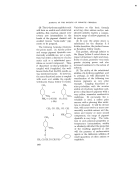
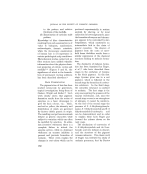
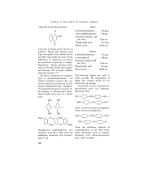
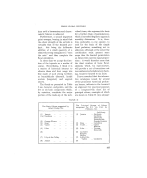
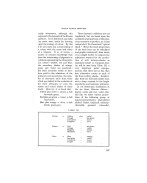
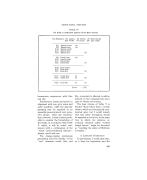
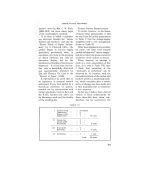
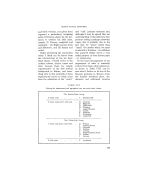
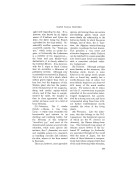
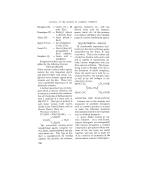
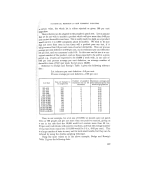
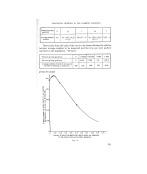
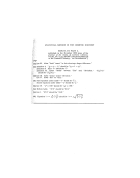
SIMPLE FLORAL PERFUMES ready acceptance, although this represents the elements of the Freesia perfume but I feel that I can make my point more easily by drawing upon the analogy of colour. By this I do not imply any actual linking of a colour with the name and odour of a blossom. It is, of course, a matter of common knowledge that from the intermixing of pigments or solutions representing the three prim- ary colours--yellow, red and blue, the secondary shades of orange, green and violet are produced but little attention seems to have been paid to the admixture of the primaries and secondaries, the num- ber of chromatic units from these wkich are utilised in the evolution of the three tertiaries, or even the names and actual shades of these triads. However, it is found that: Yellow plus violet = citrine, a dull brownish green. Red plus sea-green ---- russet, a dull rust-brown. Blue plus orange -- olive, a dull bluish green-grey. These chromatic additions are not haphazard, but are based upon the arithmetical proportions of the prim- aries necessary to produce, as a final end-product, the theoretical "optical black." Hence the exact proportions of the basic hues can be calculated and graphs constructed, from which it is a simple matter to compute the admixture required for the produc- tion of such between-shades as mandarin-orange or turquoise-blue. As will be seen from Table III, a very important point emerges, namely, that there are no less than four alternative routes to each of the three tertiary shades. Incident- ally, these are dull and sombre hues and a sharp contrast to the bright secondaries and luminous primaries. In our elementary simulations of the six Basic Blossom Odours-- jasmin, neroli and rose, violet, lilac and lily, we select various propor- tions of the following group of isolates and synthetics: phenylethyl alcohol, linalol, terpineol, hydroxy- citronellal, geraniol, citronellol, TABLE III Citrine Russel Olive Yellow Orange Leaf-green Tangerin l•ed Orange Magenta Mandarin Blue Sea-green Turquoise Purple plus ,, ,, violet sea-green russet olive sea-green violet citrine olive orange violet russet citrine I87
Purchased for the exclusive use of nofirst nolast (unknown)
From: SCC Media Library & Resource Center (library.scconline.org)