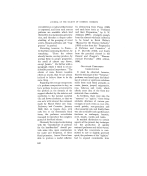
JOURNAL OF THE SOCIETY OF COSMETIC CHEMISTS sion, "I think the leaves and their stems . . . mus[ have their own peculiar odour for I have noticed near lotus beds, where no blossoms were to be seen, a strong and rather sickly perfume . . ." and this, I think, may be assumed to be something of a similar oenan- thic under-tone as mentioned in connection with the English yellow water-lily. (I) PAEON¾. Although of Chinese origin, the many and beautiful varieties of single and double blossoms have also in Japan their traditional gardens, and in addi- tion to the familiar bushy plant, floricultural skill has produced the delicate flowers of the tree- paeony. •Vith regard to the scent associated with these lovely flowers, strangely enough this may vary from the unpleasant, fox-like smell of the old, dark crimson, double-blossom, cot- tage garden plant, to the delightful and ethereal fragrance of the single- white Chinese and Portuguese varie- ties, which seem to possess a pro- nounced violet odour, with a sub- stratum of lily and Jasmin (any indoloid complement in the latter being unobtrusive). (E) C,•NDYTuFr. Of these common border-plants of the garden, the Iberis urnbellala and oe. sempervirens (the purple Persian and the Spanish tuft) are usually devoid of odour, but the sweet-scented varieties, the flowers of which are a dazzling white, are natives of the mountains of Geneva and, although the first im- pression of the fragrance inclines somewhat toward the violet, there is an after-development, similar to the jasmin-rose undertones of honey- suckle and oleander a remarkably simple but very effective tonal com- bination. (C) CORYLOPSIS. The C. spicata is another plant of Japanese origin, the fragrance of the yellow blossoms showing the similar 1ilac-neroli un- dertone which is more prominent in the Lotus. This motif is also ob- served with the Cowslip, so that the composite note of this simple diad, if complemented with the indis- pensable jasmin, and given a slight balsamic undertone, results in a very close impression of the exotic per- fume of the living blossoms.

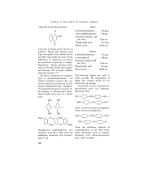
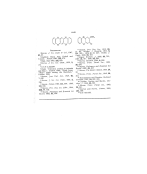
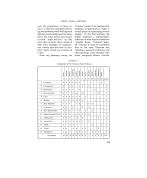
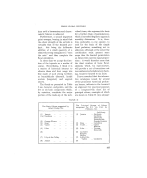
SYNTHETIC DETERGENTS- TYPES AND APPLICATIONS By A. r TAYLOR, M.P.S.* HISTORICALLY THE synthetic de- .: ::' tergents date back to the first World War, when German Patent 336558 disclosed the alkylation of naphtha- lene with isopropanol and concurrent or subsequent sulphonation. The .!i commercial products were Nekal A. and Nekal B.X. (when butanol was ', used for alkylation). These and :: similar products still find application as wetting out agents, particularly in the textile industry, while the free butyl naphthalene sulphonic acid is widely used in acid carbonising ,. baths for wool. Around 1925 Igepon T. was marketed by the I.G. and this was shortly followed by the commercial exploitation of the method of producing fatty alcohols by hydrogenation of fatty acids or esters in the presence of copper and chromium catalysts. Drene and Dreft were first marketed in the 1930's and Vel was introduced by Colgates in America in 1938. About this time Nacconal N.R., an alkyl aryl sulphonate, and the U.S.-pro- duced Igepon T. were introduced. During the last war considerable quantities of Mersolate type alkane sulphonates were made, particularly in Germany, using the original patents of Cortes F. Reed. * Marchon Products Ltd., Whitehaven, Cumberland. Shell, meanwhile, were busy devel- oping their secondary alkyl sulphate Teepol from the cracking and sulpha- tion of high petroleum waxes, and I.C.I. introduced their nonionic pro- duct Lissapol N.X., and its diluted form Lissapol N. Here I feel I cannot do better than to break down the various types of surface active agents very briefly as outlined by Schwarz & Perry in their book, "Surface Active Agents," where the various types are classified into the following groups: (1) Anionic. (2) Cationic. The hydrophobic group forms part of the cation in water. (3) Nonionic. R.NH•C1 ' (R-NH•)++C1. I propose to outline generally the various classifications and to deal briefly with their chemical properties before turning to their applications. ANIONIC DETERGENTS This, the most important group so far as tonnage goes, can be sub- divided as follows: (a) Carboxylic acids. (b) Sulphuric esters. (c) Alkane sulphonates. (d) Alkyl aryl sulphonates. 201
Purchased for the exclusive use of nofirst nolast (unknown)
From: SCC Media Library & Resource Center (library.scconline.org)