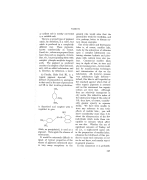
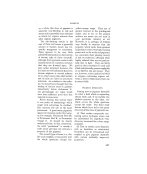
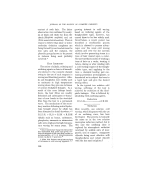
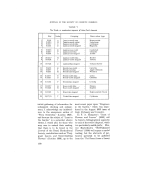
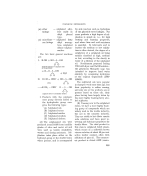
JOURNAL OF THE SOCIETY OF COSMETIC CHEMISTS (a) Carboxylic acids. i. The carboxyl (-COOH) group is directly attached to the hydrophobic (fatty) group. This class includes the fatty acid and rosin soaps and does not come within the scope of this paper. it. The carboxyl group is joined through an intermediate link- age. Examples of this type of compound are the Medialans, wherein the fatty acid chloride is prepared and reacted with an amino acid such as methyl glycine (safcosine). The fatty acid may be derived from coconut, palm kernel or olive oils, or synthetic fatty .acids may be used. The Medialans _ N/CH3 R CO- •CH•..C00- H + have good solubility and detergent power and are lime-resistant enough to be effective in quite hard waters (up to 15 ø German Hardness or 27 ø Ca hardness). The Lamepons or Maypons belong to this class of surface active agent. Lamepons are prepared by hydrolysis of waste protein (leather scraps) with alkali, yielding amino acids and polypeptides. These are then con- densed with a fatty aryl halide, such as oleyl chloride the mixture being kept alkaline with NaOH at about 25-30 ø C., finally, the temperature being allowed to rise to 60 ø C. R.CON(CH•)CH•C00-M + The products are normally mar- keted as viscous brownish liquids of about 35 per cent active matter content. The Lamepons are lime- resistant and are good dispersing agents for lime soaps, although they are precipitated by acids. Various other linkages have been proposed, e.g., stearic acid esters of tartaric acid, sulphonamides, but none has achieved any real commer- cial significance. (b) Sulphuric Esters. This classification is, from the cosmetic aspect, by far the most important section--though in the domestic and industrial field it has been overtaken by the alkyl aryl sulphonates. Nevertheless, 'even in this field, the sulphuric esters repre- sent a considerable tonnage. The two basic types of sulphuric esters comprise: (1) products wherein the sulphate group is attached directly to the hydrophobic group. (i) sulphate group is located near the centre of the molecule, the hydrophobic group having a polar group at the end, i.e., the sulphated oils. (it) sulphate group is near the end, or if near the middle of the molecule, no other polar group is present--i.e., the sulphated alcohols or olefines. (2) products where the sulphate group is attached to the hydro- phobic group through a linkage, which may be: (i) ester link -- sulphated mono- glyceride. (it) amide link -- sulphated alkylo- lamide 2O2

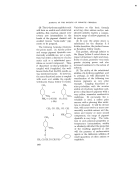
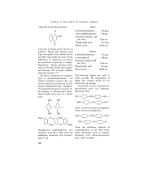
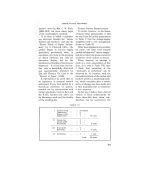
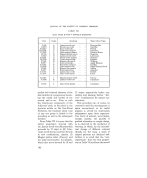
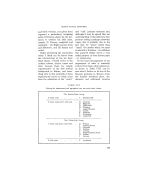
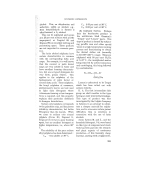
SYNTHETIC DETERGENTS (iii) ether -- sulphated alky- linkage lene oxide on alkyl phenol type. (iv) miscellane--- sulphated fatty ous linkage alkyl' metcap- tans, sulphated alkane sulphon- amides. The two basic general reactions are ß I. R.OH + HO--S--OH O O alcoholic hydroxyl + sulphuric acid or its equivalent. = R--O--S--OH ,,/%, + H•O o o II. R.CH = CHR' -+- HO--S--OH olean 0 0 ----R.CH•.--CHR' O--S--OH o o sulphuric ester of a secondary alcohol. I. Products with the sulphuric ester group directly linked to the hydrophobic group com- prise the following types' ' (A) $ulphated oils (B) Sulphated esters (C) $ulphated amides (D) Sulphated alcohols (E) Sulphated olefines. (A) The sulphonated oils were produced kround 1850 from inedible grades of olive and castor oil and were used as textile emulsifiers, wetters and dyeing assistants. Sul- phation takes place either on the hydroxyl group or the double bond, where present, and is accompanied by side reaction such as hydrolysis of the glyceride ester linkages. For some products a high degree of sul- phation is aimed at, i.e., for high wetting and foaming properties, and where lime and acid resistance is essential. In lubricants and in leather oils medium or low sulpha- tion is often desired, the degree of a sulphation of a sulphated oil being usually classified as high, medium or low, according to the clarity in water of a dilution of the sulphated oil. Stockhausen proposed boiling TRO with 6 per cent NaOH solution: the gelatinous Monopole soap was intended to improve hard water stabihty by completing hydrolysis of the original triglyceride (DRP 113433). The sulphated oils were popular in shampoo work some time ago, but their popularity is rather waning, and only one or two products are at present based on these oils, their place having been largely taken by the more highly foaming fatty alco- hol sulphates. (B) Turning now to the sulphated esters, we have a more highly foam- ing group of compounds which are widely used in the textile industry, but not in the cosmetic industry. q-hey are stable to hot dilute caustic soda solutions and have good re- wetting and lubricant properties for textile fibres. The chief product in this class is sulphated butyl oleate, which occurs as a yellowish brown viscous solution of about 50 per cent active matter content, often with additions of pine oil. The common- est product is Avirol AHX (manu- 203
Purchased for the exclusive use of nofirst nolast (unknown)
From: SCC Media Library & Resource Center (library.scconline.org)