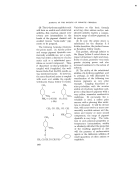
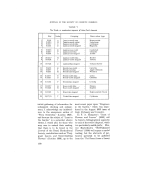
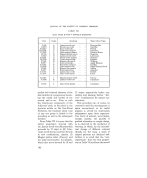
JOURNAL OF THE SOCIETY OF COSMETIC CHEMISTS factured also in this country as Empicol MOS and in the U.S. as Surfax WO, Phi-Sol, etc.). (C) The sulphated amides are exemplified by the Humectol series. Humectol CX is the sulphated di- isobutyl amide of oleic acid, the carboxyl group being blocked by amidation. (D) The sulphated alcohols com- prise the most important group for the cosmetician. Production of the higher fatty alcohols for sulphation purposes, on.a commercial scale, began around 1930, the two main processes being the reduction of fatty acid esters by sodium and a lower alcohol (the well-known Bouveault-Blanc process) and the more recent catalytic hydrogenation process. The catalytic hydrogenation process is now re- sponsible for the largest production of fatty alcohols, and consists of the high-pressure hydrogenation of fatty acid esters in the presence of oxides of chromium and copper as catalysts. Pressures are of the order of 300 atmospheres at a temperature of 250ø-350 ø C. Various other methods of reduc- tion of esters have been proposed, such as the reduction of esters with aluminium and absolute alcohol, but the only present real commercial application of the Bouveault-Blanc method was that worked out by Scott and Hansley of Du Pont, using metallic sodium. A further process, used for the higher (cetyl and cetyloleyl) alcohols is the saponification of certain natural waxes such as spermaceti and sperm oil, followed by distilla- tion or solvent extraction. Normally the fatty alcohols are sulphated with either oleum or chlorsulphonic acid, the product being neutralised with inorganic or organic bases and, where applicable, dried either by spray or drum drying. ROH q- C1S03H - RO.SO3H + HC1. As will be appreciated, sulphation is an equilibrium reaction and equilibrium mixtures form which contain varying amounts of "free" or unsulphated alcohol. For certain purposes this "free" alcohol is reduced to a minimum by careful control of manufacturing conditions or by extraction of the neutralised sulphate with a lower chlorinated solvent such as carbon tetrachloride or a lower aliphatic hydrocarbon such as petroleum ether. To obtain low inorganic sulphate content in sulphated alcohols they are often treated with such solvents as isopropanol separation of an active layer and a salt layer (which is removed) occurs. Small-scale experiments appear to have been made using alcohols produced from fatty acids derived from Irischer-Tropsch hydrocarbons, but none has been found in commer- cial quantities outside wartime Ger- many. A further group of sulphated alcohols marketed by Carbon & Car- bide Corporation is the Tergitol series, where two molecules of aide- hyde (e.g., butyraldehyde) are con- densed in the presence of a mild alkaline catalyst to form aidehyde 204

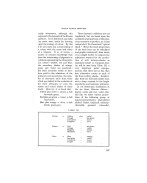
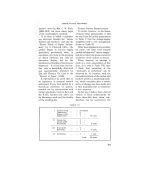
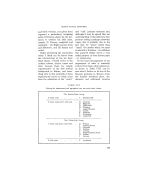
alcohol. This, on dehydration and reduction, yields an alcohol, e.g., from butyrMdehyde is formed 2 ethyl hexanol, a C8 alcohol. This can be sulphated and occurs as a 25 per cent solution with a little isopropanol, as Tergitol 08 and Dupano180, an excellent wetting and penetrating agent. These products are not important in cosmetic prac- tice. The fatty alcohol sulphates have certain characteristics in common with the ,corresponding fatty acid soaps. For example, it is welI known that the coconut or palm kernel soaps are very soluble in water and have excellent foaming characteris- tics, but are not good detergents for very dirty, greasy objects. This applies to the sulphates of the hydrogenares of palm kernel or coconut fatty acids. These sulphates, the lauryl sulphates of commerce, predominantly lauryl, are best used as light duty detergents where voluminotls foaming at low tempera- tures is required, and this property explains their particular usefulness in shampoo formulations. Sodium cetyl sulphate corresponds to the palmirate soap, and has poorer solubility characteristics, but better detergency than the lauryls. When we come to sodium ceto stearyl sulphate (Orvus ES, Dupanol G, Empicol CS) we have a poor foaming agent, but an excellent detergent at higher temperatures, i.e., above 80 ø C. The solubility of the pure sodium Mkyl sulphates has been determined ß C• very soluble at 30 ø C. SYNTHETIC ]DETERGENTS C• 2.53 per cent at 30 ø C. C• 0.03 per cent at 30 ø C. (E) Sulphated Olefir•es. Perhaps here the best-known product is the well-known Shell ChemicaI's "Teepol" and "Lensex" paste. This type of product is formed by subject- ing paraffin wax and other special waxes to a high temperature cracking process and fractionating to obtain the desired define cut (normally in the 160ø-220 ø C. range). These are sulphated with 90 per cent H,SO, at 5-10 ø C., the unsulphated matter being removed by solvent extraction and centrifuging, this being followed by neutrMisation. R--CH•--CH--R' OSO•0Iqa Lensex is understood to be Teepol which has been salted out with sodium chloride. II. A. The first intermediate link group we shall consider is the type having an ester intermediate linkage. This type of product was first investigated by the Colgate Company in America in an attempt to substi- tute a cheaper material for sulpha- tion, and to overcome certain patent difficulties then in existence in connection with the use of fatty alcohols. Arctic Syntex M. and L., and the household detergent, Vel, were based on this type of compound and much work has been put into the research and plant aspects of continuous production of this basically cheap materiM, starting with a triglyceride, 205
Purchased for the exclusive use of nofirst nolast (unknown)
From: SCC Media Library & Resource Center (library.scconline.org)