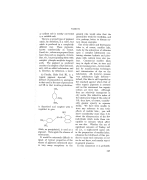
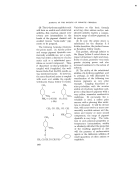
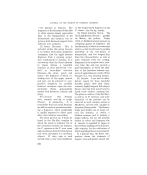
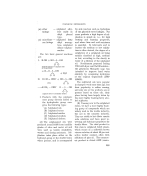
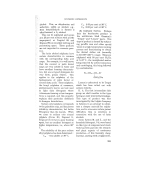
JOURNAL OF THE SOCIETY OF COSMETIC CHEMISTS glycerine .and suIphuric acid. The chief drawback of this product is its relative instability to acids, which hydrolyse the sulphuric ester linkage, and to alkalis, which saponify the carboxylic ester linkage. B. Amide links are exemplified by the sulphated alkylolamides, popular on the Continent, particu- larly in the Netherlands, but which so far have not had much popularity in this country. They are sold in the U.S. chiefly for textile purposes as Alrosene, Emcol, etc. The basic reaction is between either isopropanolamine or mono~ ethanolamine, with a fatty acid followed by sulphation. R.COOH + H•.N--X--OH I• R'CO'NH --X--OH --'---- R'CONH--X-- O'SO •Na These products are rather unstable, particularly in paste form, their life being only 2 to 3 months. The powders are much more stable, but cannot be produced by spray drying technique, and are made by neutralisation of the acid sulphate with soda ash in Werner-Pfleiderer mixers. Reaction of monoethanolamine with fatty acid also results in forma- tion of some ester R.COO.C•.H•.NH• which is unsulphatable and remains in the finished product. (Igepon B is a sulphated aryl derivative of 4-amino-butanol.g.) C. The ether link type •of product is economic only when special advan- tages are shown, but some products were put out in the Igepal range, which were based on sulphated ether alcohols produced from an alcohol or phenol and ethylene oxide. When less than 10 ethylene oxide molecules are combined the product is useful for sulphation with more than 10 molecules the product becomes water-soluble and a typical nonionic surface active agent (Sapogenat B-- Anorgara). (c) Alkane Sulphonic Acids. This type of surface-active com- pound possesses the general formula R.SO3H where R varies from C, to C•0, and is prepared classically by reacting an alkyl halide with sodium sulphite. R.Br. q- Na•SO3------RSO•Na q- NaBr. The Mersolat type of compound, produced in large quantities (of the order of 70,000 ton/year) in Germany during the war and introduced by Du Pont in America, under the Trade Name M.P.189, has not found fayour in this country, and has recently been dropped in the United States. Mersolats are produced by the Reed reaction (after the dis- coverer Cortes F. Reed) by the reaction of an aliphatic hydrocarbon, sulphur dioxide and chlorine in the presence of short wave-length light RH q- SOs q- CI•---+ R.SO•. C1 + HC1 The alkane sulphonyl chloride i• hydrolysed and neutralised to give the alkane sulphonate salt. Many grades of mineral oils can be used as the source of hydrocarbon, but particularly useful are the white oils boiling between 250-350 ø C. In Germany, Mersol D (50 per cent 206

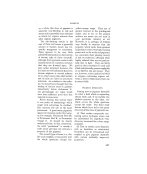
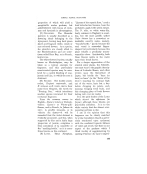
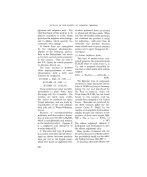
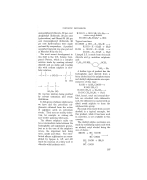
SYNTHETIC DETERGENTS monosulphonyl chloride, 30 per cent disulphonyl dichloride, 20 per cent hydrocarbon) and Metsol H (50 per cent monosulphonyl dichloride, 50 per cent hydrocarbon) were made and used by soapmakers. A purified saponified material was also put out as Mersolat H by the I.G. The most recent development in this field is the U.S. Solway Com- pany's Nytron, which is a complex mixture made by reacting nitrosyl chloride and an olefin and treating this with sodium sulphite in alco- holic solution, -- C = C -- d- NO.C1---• -- C -- C- c1 NO ---+ --C---- C-- I SO•Na NO the reaction mixture being purified by solvent extraction and steam distillation. In this group of alkane sulphonates we have also the petroleum sul- phonates obtained from the action of sulphuric acids on petroleum stocks. Their uses are mainly indus- trial, for example in cutting oils and textile spinning lubricants. The alkane sulphuric acids can have intermediate links between the hydrophobic and sulphonate groups, just as in the case of the sulphuric esters, the important link being ester, amide and ether. The ester- linked alkane sulphonates are exem- plified by Igepon A, AP, and AD made by reaction of a fatty acid or chloride with isethonic acid: R.CO C1 + HO.C•.H,.SO,.Na---- (ethylene oxide on NaHSOa) R.COO.C•H,.SlS,Na + -1- HC1 Typical reactions R.COOH -t7. HO.--X--SO3.H R.COO--X--SO3H d- H,•O R.OH d- HOOC--X--SO•H R.OOC--X--SO,H d- H,O Lissapol L.S. is made from oleic acid chloride and p. anisidine sulphonic acid C•,H•.CO.NHN•-- •/OCH• NS03 -- Na A further type of product has the hydrophobic part derived from a fatty alcohol and the sulphoacetates and dialkyl sulphonamides are repre- sentative of this type: R.OH d- C1CH•.COOH R.OOC.CH,..C1 R.OOC.CH•.C1 d- Na•SO, R.OOC.CH•.SO•Na + NaC1 Oleyl, lauryl, cetyl and stearyl alco- hols are estertried with chloracetic acid, the chlorester is reacted with an alkali metal sulphite to form the sulphoacetate group. Nacconal LAL (made from coconut alcohol) is a typical example, but this product, while it has been used in cosmetics, is not available in this country. The dialkyl sulpho succinates are made by esterifying maleic acid with an alcohol, octyl alcohol being the one of choice: 2ROH. d- HC COOH HC COOIt HC. COOR + 2H•O II HC. COOR 207
Purchased for the exclusive use of nofirst nolast (unknown)
From: SCC Media Library & Resource Center (library.scconline.org)