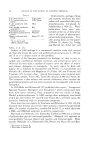
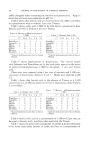
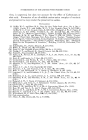
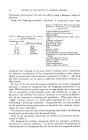
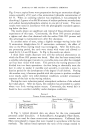
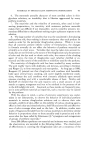
428 JOURNAL OF THE SOCIETY OF COSMETIC CHEMISTS F. A.* polyol esters Tegin, Span F. A.* polyol esters plus Crill, Tween ETOn' F. A.* condensed with Myrj ETOn' Fatty alcohol condensed Brij with ETO •' Polyethylene glycols Carbowax Polyethylene polypropylene Pluronics glycols Phenols condensed with Igepal-CO 530 ETO• * F. A., fatty acid. • ETO, ethylene oxide. Aalto, et al. (5). Until recently, spoilage of drug and cosmetic emulsions has been rather well controlled with p-hy- droxybenzoates, introduced by Sabalitschka in 1924 (2). Many publications have since com- mented on the use of these prod- ucts in all types of pharmaceuti- cal and toilet preparations. Not- able among these are the papers of Bohm (3), Suess (3a), Neidig and Burrell (4), Sokol (4a) and Indeed, in 1949 spoilage in a commercial emulsion made with mineral oil, Span 40, Tween 40, water and methyl p-hydroxybenzoate (1:750) led one of us to a deeper study of this problem. A search of the literature produced two findings (a) that no one re- corded any interference between nonionics and preservatives prior to 1950 and (b) that quite a number of reports cover the effects of anionic and cationic detergents on antiseptics. An early report by Katz and Lipsitz (6) is followed by Gershenfeld and Within (7) Gershenfeld and Peristein (8) Allawala and Riegelman (9) Fisher (10) and Youroans and Youroans (11), to name a few. Among these papers, some nonionics were mentioned, namely, Triton NE, Tween 80, Antarox A-400 and Tween 20. The consensus is that anionic and cationic surfactants often increase the germicidal properties and that some nonionics are incompatible with several antiseptics. In 1950 Bolle and Mirimanoff (12) published their report, "Antagonism Between Nonionic Detergents and Antiseptics," which summarized their work with seven nonionics, three antiseptics and two strains of fungi. Methyl p-hydroxybenzoate (1:1000) among other antiseptics, was tested with 2 per cent Crillex 11' and 16t and Tween 60 in all three cases, the nonionics interfered with its preservative properties. Since that time two reports by Lawrence and Erlandson in 1953 (13, 14) disclosed that Tweens and certain other nonionics reduced the germicidal effect of a number of phenolics, notably G-4 and G-11, in which there was a 5000- and 2000-fold reduction in activity, respectively. Sherwood and Mattocks (15) found that Carbowax 1000 and a mixture of polyethylene glycols inactivated penicillin. Hadgraft (16) reported an incompatibility between phenol and resorcin and Cetomacrogols. More recently Shibasaki (17), Okabayashi (18), Plaxco and Husa (19) and Bart * Equivalent to Tween 81. •' Equivalent to Arlacel 83.

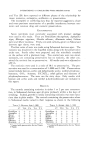
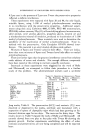
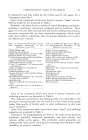
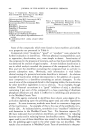
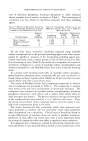
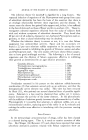
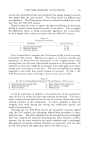
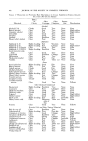
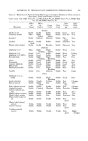
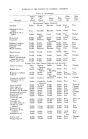
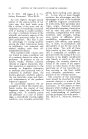
INTERFERENCE OF EMULSIFIERS WITH PRESERVATIVES 429 and Tice (20) have reported on different phases of the relationship be- tween nonionics, antiseptics, antibiotics or preservatives. The incomplete or conflicting data thus far reported suggested a closer and more pertinent examination of a possible interference between non- ionics and common drug and cosmetic preservatives. EXPERIMENTAL Seven microbials most commonly associated with product spoilage were used in this study. They are Penicillium chrysogenum, dspergillus niger, Rhizopus nigricans, Mortilia albicans, dlternaria solani, Oidium lactis and Mucor racemosa. Fresh, one-week cultures, grown on Sabouraud dextrose agar slants, were used. The first series of tests was made using Sabouraud dextrose agar. The nonionic was dissolved in the liquefied media along with the preservative under test. Sterile tubes were prepared and the microbials streaked on the surface with a platinum loop. Two control sets were run simul- taneously, one containing preservative but no nonionic, the other con- tained the nonionic but no preservative. All media used were adjusted to pH 5.6. The nonionics were used in a ratio of 10:1 to preservative. The pre- servative was used in a concentration of 1: 1000 and 1: 500. Preservatives tested include benzoic, sorbic and dehydracetic acids methyl p-hydroxy- benzoate G-11 Actamet P.C.M.X. ethyl gallate and mixtures of p-hydroxybenzoates. The tests ran for sixty days. Only results with benzoic and sorbic acids and methyl p-hydroxybenzoate are included in this report. RESULTS The controls containing nonionics in either 1 or 2 per cent concentra- tion, in Sabouraud dextrose agar all grew profusely within a few days of streaking. Indeed, growth in media containing nonionics was more luxu- riant than in plain media. The controls containing the preservative alone in Sabouraud media varied in their response as shown in the following Taa•.v. 2--BEnzOIn Acre 1:1000 Ta•L• 3--So,,me Acre 1:1000 C* T'{'8 T6 T4 T2 C* T'{'8 T6 T4 T2 Penicillium + + + + + Penicilliurn + + + + + Aspergillus + + 4- + + Aspergillus Mucor + + + + + Mucor Monilia + + + + + Monilia -- -- + + -- Oidium + + + + + Oidium + + + + + Rhizopus + + + + + Rhizopus + + + + + Alternaria 4- 4- 4- + 4- Alternaria + 4- + + 4- * Control with preservative but no Tween. • Tween * Control with preservative but no Tween. • Tween
Purchased for the exclusive use of nofirst nolast (unknown)
From: SCC Media Library & Resource Center (library.scconline.org)