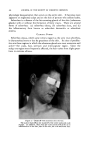
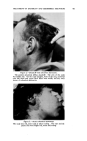
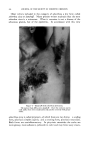
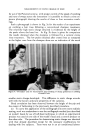
TREATMENT OF DANDRUFF AND SEBORRHEIC ERUPTIONS 455 thema and dry scaling of the scalp, scalp margin, and face, as illustrated in Fig. 1). Healing of the lesions resulted in 22 of 25 patients treated. Wright, Samitz and Brown (31) reported favorable results in treatment of patients with seborrheic dermatitis with injections of pyridoxine in doses of 25 to 100 mg. According to Forman (32) topical application of 0.5 per cent pyridoxine in an ointment base (it also contained hexachlorophene) was effective in treatment of patients with seborrheic dermatitis of the sicca type. On the other hand, these observations of favorable effect of topically applied pyridoxine have not been confirmed by Effersoe (33) and (as later discussed) by Lorincz (26). Effersoe found that the cream alone induced as much improvement as the cream containing pyridoxine. QUATERNARY AMMONIUM COMPOUNDS A number of these compounds have germicidal and fungicidal activity against a wide range of organisms. Certain bacteria, notably cocci, are more susceptible than gram-negative species of the coliform groups. Pathogenic fungi, however, are generally more resistant to quaternaries than are the pathogenic bacteria (Botwright (34)). Botwright* demonstrated that Hyamine compounds--qu,aternaries are active against Pityrosporum ovale and mention may be made of at least one proprietary quaternary ammonium compound--Dandricide available in treatment of dandruff. Lesser (35) discusses the effectiveness of some quaternaries in treatment of dandruff. It is doubtless that the aforementioned properties rationalize the use of certain quaternaries in treatment of dandruff. FUNGICIDES If an antidandruff medicament is directed at growth of Pityrosporum ovale (although I question the validity of this reason) the observations of Martin-Scott (17) are of interest. In cultural studies of Pityrosporum ovale, of the fungicides, the organism was unable to grow in those areas of the medium where a high percentage of either undecylenic acid, phenyl mercuric nitrate, benzoic acid, or copper sulfate was present. Ball (36) reports on the use of Vancide 89---N-trichloromethylmercapto- 4-cyclohexane-l,2-dicarboximide. This compound has a broad bacterial spectrum and is effective against a considerable number of fungi. In the agricultural field it is used as a fungicide and is known as Captan. He reported favorable results in treatment of 98 cases of seborrheic dermatitis of the scalp. *Personal communication.

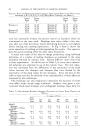
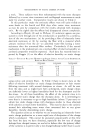
456 JOURNAL OF THE SOCIETY OF COSMETIC CHEMISTS ASSAY OF PREPARATIONS USED IN TREATMENT OF DANDRUFF There is no preparation that permanently cures dandruff. Continuous use of a medicament is necessary to control it or prevent recurrence. Its use is advised at such interval that serves to prevent recurrence. This interval varies depending upon the severity of the disorder and the prep- aration employed. Application of a given preparation may be required one or more times in one week, or one application at a longer interval. Other circumstances may alter this frequency, such as, free exposure of the scalp to sun and frequency of shampooing. There is no laboratory test to determine if a given medicament is effec- tive in treatment of dandruff. As already discussed, germicidal and fungicidal activity may serve as an index. The only means of determining efficacy is clinical use. I have employed the following method in clinical trial: In order to "bring out" dandruff to a maximum degree in subjects known to have dan- druff shampooing is omitted for two weeks. At this time the dandruff is classified as Grades 1, 2 and 3 depending upon the degree of scaling scat- tered over the scalp in many patches or confluently affecting all or almost all of the scalp. Subjects presenting a sparing number of scaly patches are rejected. Preferably, subjects with Grades 2 and 3 are selected. It was determined that 13 cc. of a liquid applied by means of a medicine drop- per on the skin of the scalp of adult male in two to three drop doses to adjacent areas required four to five minutes to moisten the entire scalp. Fifteen cc. applied in five to six minutes was necessary for the female adult. Daily application of this amount, and in that period of time, is employed for seven consecutive days. During this period and subsequently, the subject refrains from shampooing, wetting the scalp, applying any medica- ment or exposure to the sun. Examination is made at frequent intervals. In the opinion of the examiner when the dandruff returns to its original state the number of days since the last application is recorded. Decision of return to the original state is aided by referring to detailed notes made at first examination. The efficacy of the preparation employed is graded as follows: Return of dandruff in about one week is graded "Fair" and of limited value re- turn in about two weeks is graded "Good" and of value for practical use return in two to four weeks is graded "Very Good" and of good practical value. CONSIDERATIONS IN FORMULATION OF NEW PREPARATIONS IN TREATMENT OF DANDRUFF Reference is made to favorable reports of pyrldoxine topically applied in treatment of seborrheic dermatitis of the sicca type. Although Lor-
Purchased for the exclusive use of nofirst nolast (unknown)
From: SCC Media Library & Resource Center (library.scconline.org)