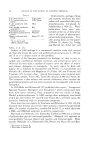
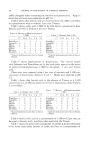
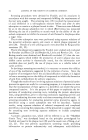
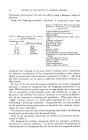
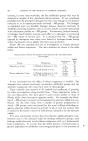
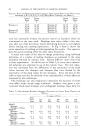
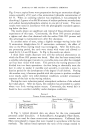
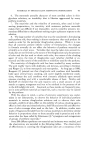
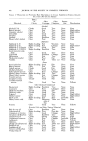
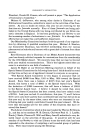
438 JOURNAL OF THE SOCIETY OF COSMETIC CHEMISTS Friedemann and Graeser (25) and the pH by using a Beckman Model G pH meter. Using the foregoing procedure, hundreds of compounds have been TABLE 1---MoDxrIED CASEIN TEST EffEC- TIVENESS RATINGS Reduction in Acid, % Effectiveness Rating 0 None 1-15 Slight 16-45 Moderate 46-75 Good 76-100 Excellent TABLE 2--COMPOUNDS POSSESSING No ACID INHIBITOKY PKOPEKTIES IN THE MODIFIED CASEIN TEST 9-Aminoacridine hydrochloride Sodium N-methyl-N-oleoyl taurate Iodoacetamide 2-Methyl-l,4-naphthoquinone sodium bisul- rite 2-Methyl cyclohexanol Pantothenyl alcohol Polymyxin B sulfate Sodium propionate Urea Sodium salicylate Pantoyltaurine N'-3,4-dimethyl-5-isoxazolylsul fanilamide Sodium alkyl aryl polyether sulfonate (Triton X-200) 2(p-Chlorophenoxy) ethanol 2-Nitro-2-methyl-l-propanol n-Hexyl carbitol Isonicotinylhydrazine Sodium copper chlorophyllin evaluated over a period of six years, both in solution and in dentifrices. An arbitrary classification of the compounds according to their relative ability to reduce lactic acid formation is presented in Table 1. The final pH after incubation can be used as additional confirmatory evidence of effectiveness. In view of the fact that the protein adsorption test involves biological processes, it should be recognized that the foregoing classification is not rigid. While thesaliva is pooled to give an average sample, day to day varia- tion in consistency, total bacterial count and distribution of types of bacteria in the oral flora will result in variations in the measured effective- ness of any material in reducing acid production. When more than a "slight" rating is found, it is worth while repeating the test to avoid overlooking a promising compound. Compounds that are rated excellent can be retested at lower concentration to determine the optimum concen- tration for use in a dentifrice. The chemical names of some of the compounds described in the following presentation are those given by the manufacturer. Some of the compounds which did not inhibit acid formation are pre- sented in Table 2. The foregoing list includes compounds which are antiseptic, antibiotic, antimycotic or enzyme inhibitors. It can be noted that the possession of these properties by a compound does not insure that the compound will also

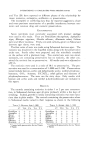
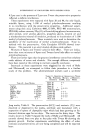
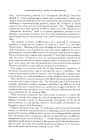
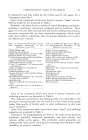
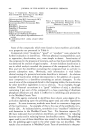
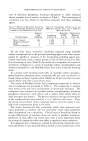
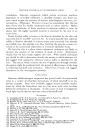
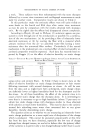
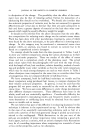
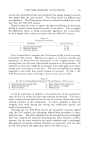
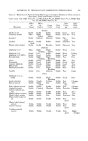
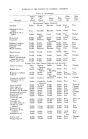
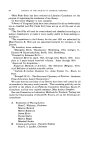
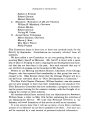
CARIES-PREVENTIVE AGENTS IN DENTIFRICES 439 be substantive and thus useful, by the criteria used in this paper, for a "therapeutic den tifrice." Some of the compounds which were tbund to possess "slight" acid in- hibitory properties are presented in Table 3. Included in the above list are a number of anionic detergents, antiseptics, including a quaternary ammonium compound and an antibiotic. Once again it can be seen that materials with well-known antibacterial and anti- enzymatic properties did not have substantive properties which would make them useful in a dentifrice, when the protein adsorption test result is the effectiveness criterion. TABLE 3---CoMPOVNDS POSSESSING SLIGHT ACiD INHIBITOKY PKOPEKTIES IN THE MODIVIED CASEIN TEST 2-Undecylimidazoline Sodium lauroyl isethionate (2-Ethyl hexyl)•Nas(PaO•0)2 (Victawet 35B) Sodium N-methyl N-lauroyl taurate Di-isobutylcresoxyethoxyethyl dimethyl ben- zyl ammonium chloride Sodium N-cyclohexyl-N-palmitoyl tautate 3,6-DimethyL4-octyne-3,6-diol 5 - Ni tro- 2 - fur alde hyde - 2 - (2 - hydroxyethyl) semicarbazone 5-Nitro 2-furaldehyde semicarbazone Neomycin sulfate Nordihydroguaiaretic acid 2-Amino-5-methyl-l,3-bis(2-ethylhexyl) hexa- hydropyrimidine 4,4'(p-Hydroxy-benzylidene) - bis - (3-methyl- 6-tertiary butyl phenol) Salicylaldehyde 6-Ethoxy-l,2-dihydro-2,2,4-trimethyl quino- line Sodium sulfate derivative of 3,9-diethyl tri- decanol-6 TABLE 4--COMPOUNDS POSSESSING MODEI•.- ATE ACID-INHIBITING PKOPEKTIES IN THE MODIFIED CASEIN TEST Sodium N-lauroyl glycinate Sodium N-lauroyl glycylglycinate Sodium dehydroacetate Dioctyl sodium sulfosuccinate Sodium alkyl sulfoacetate (Lathanol LAL) Sodium coconut monoglyceride sulfate p-Lauroyl phenol N-(5-nitro-2-furfurylidene)-l-amino hydan- toin Carbomycin Methylene ether of hydroxyhydroquinone Sorbic acid Streptomycin sulfate Sulfosalicylic acid Tyrocidine HC1 Sodium tallow oxyethane sulfonate Sodium phenyl polypropylene sulfonate Sodium di-n-hexyl-4-sulfophthalate Hexylresorcinol Some of the compounds which were found to possess moderate acid- inhibiting properties are presented in Table 4. The compounds presented in the foregoing table are comparable to the previously discussed groups, but the level of activity found in this group, makes them worthy of further study in other confirmatory in vitro tests and in dentifrices. Some of the compounds which were found to have "good" acid inhibiting properties are presented in Table 5. Included in the foregoing group are three of the major broad spectrum. antibiotics, penicillin, bacitracin, gramicidin, and both anionic and cationic surface active agents. The antibiotics except gramicidin are automatically ruled out for tooth pastes containing water because of their instability in aqueous solutions.
Purchased for the exclusive use of nofirst nolast (unknown)
From: SCC Media Library & Resource Center (library.scconline.org)