TREATMENT OF DANDRUFF AND SEBORRHEIC ERUPTIONS 443 (11) Fosdick, L. S., y./lm. Dental/lssoc., 40, 133 (1950). (12) McDonnell, C. H., and Domalakes, E. F., 5 e. Periodont., :23, 219 (1952). (13) Report of Evaluating Committee II, 5 e./lm. Dental/lssoc., 45, 16 (1952). Sulser, G. E., Lesney, T. A., and Fosdick, L. S., 5 e. DentalResearch, 19, 173 (1940). Ii1•I Barail, L. C., 5 e. Soc. Cosmetic Chem., 3,1 (1952). (16) Hill, T. J., 5 e./lm. Dental/lssoc. 48, 2 (1954). (17) "Clinical Testing of Dental Caries Preventives," American Dental Association, Chicago (1955). (18) Fosdick, L. S., y./lm. Dental/lssoc., 52, 9 (1956). (19) Fosdick, L. S., Calandra, J. C., Blackwell, R. Q., and Burrill, J. H., 5 e. DentalResearch, 32, 486 (1953). (20) Fosdick, L. S., Ludwick, W. E., and Schantz, C. W., 5 e./lm. Dental/lssoc., 43, 26 (1951). (21) King, W. J., U.S. Patent No. 2,689,170. (22) King, W. J., Manahan, R. D., and Russell, K. L., 5 e. Dental Research, 34, 703 (1955). (23) Forscher, B. K., and Hess, W. C., 5 e./lm. Dental/lssoc., 48, 134 (1954). (24) Brudevold, F., Little, M. F., and Rowley, J., Ibid., 50, 18 (1955). (25) Friedemann, T. E., and Graeser, J. B., 5 e. Biol. Chem., 100, 291 (1933). (26) Gershon, S. D., and Neiditch, O. W., U.S. Patent No. 2,723,217. (27) Zander, H. A., Lisanti, V. F., and Shiere, F. R., 5 e. DentalResearch, 30, 139 (1951). (28) Ludwick, W. E., Fosdick, L. S., and Schantz, C. W., 7./lm. Dental/lssoc., 43, 285 (1951). (29) Shiere, F. R., private communication. MODERN CONCEPT AND TREATMENT OF DANDRUFF AND SEBORRHEIC ERUPTIONS* By JOSEPH V. KLAUDER, M.D. Graduate School of Medicine, University of Pennsylvania, Philadelphia, Pa. PROBABLY NO common disorder of the skin has been subjected tO more controversy than dandruff. The controversy concerns the role several organisms, especially Pityrosporum ovale, play in its cause, the complexity of terms employed in its designation and the relation of dan- druff to seborrhea and baldness. Another aspect of dandruff of particular interest to members of this Society is the considerable time and money spent on the hair in its normal and abnormal state, and the number of prep- arations available in treatment of dandruff. DEFINITION OF TERMS Before reviewing investigations pertaining to dandruff, it is necessary to define terms since dandruff is intimately associated with seborrheic dis- orders. What is called dandruff by the laity and pityriasis simplex capitis in dermatologic nomenclature, refers to an incessant reproduction of variable degrees of dry, white or grayish scales on the scalp unaccompanied by inflammation. It should be noted that mild degree of scaling constitutes *Presented at the December 15, 1955, Meeting, New York City.

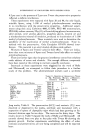
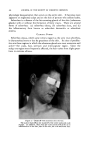
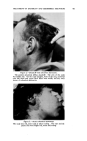
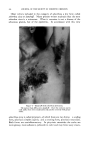
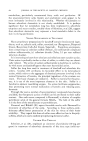
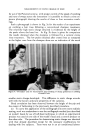
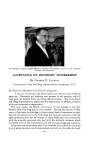
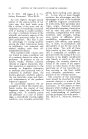
444 JOURNAL OF THE SOCIETY OF COSMETIC CHEMISTS physiologic desquamation that occurs on the entire skin. It becomes more apparent on neglected scalps and on the skin of persons who seldom bathe. Seborrhea is a disease of the fat-excreting glands of the skin (sebaceous glands) with or without the formation of fatty crusts. There are several forms of seborrhea: (a) seborrhea oleosa, (b) seborrhea sicca, and (c) the inflammatory form known as seborrheic dermatitis or seborrheic eczema. CLINICAL FORMS Seborrhea oleosa, which some writers regard as the only true seborrhea, is characterized more or less by greasiness of the skin. Its sites of predilec- tion are those regions in which the sebaceous glands are most numerous and active--the scalp, face, sternum and interscapular region. Upon the scalp, one region most frequently affected, the hair varies from slight greas- iness to extreme oiliness. : , : Figure 1.--Dandruff with extens,on onto the face. The patient had diffuse dry dandruff of the entire scalp and scalp margin. In addition, there were dry scaly lesions with little or no inflammation on the ears, side of the nose, the oval and lower face.
Purchased for the exclusive use of nofirst nolast (unknown)
From: SCC Media Library & Resource Center (library.scconline.org)