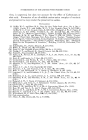
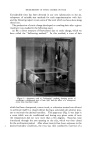
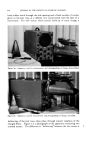
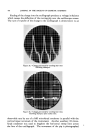
A NEW HOME PERMANENT WAVING PROCESS 475 In addition there is also the probability that there is a loss of a portion of the charge supplied to the oscillograph because of the insufficiently high impedance of the instrument and because of the necessity of introducing a condenser into the system to slow down the charge being fed into the oscillograph. Here again, where large differences are involved as in the case of shampoo versus creme rinse these sources of potential error do not appear important but may definitely affect comparisons between shampoos. To summarize our present knowledge of the effects of rinses and sham- poos on static charge generation, we believe that we have shown a large and significant effect of creme rinse on reduction of static charge by use of the apparatus and procedure described in this paper. In some experi- ments the results were significant to the greater than 0.001 level by the standard "t" test. We cannot at this time draw any such conclusions as to differences in antistatic properties due to use of different shampoos. While such differences may exist, we have no substantiating evidence from this oscillograph work. In our opinion a method is needed which will not only be more precise and freer of electrical complications than the above described method, but also one which will measure the effect of the entire charge generated rather than a portion of it. We feel that such a procedure when developed and applied to this problem will lead to a clearer understanding of the relative antistatic properties of shampoos and other hair treatments. RE•E•ESOES (1) Hayek, M., and Chromey, F. C., •lm. DyestuffReptr., 40, 164 (1951). (2) Hersh, S. P., and Montgomery, D. J., Textile Research •., 25, 279 (1955). (3) McLean, H. T., Proc. •lm. •lssoc. Textile Chemists Colorists, 485 (1955). (4) Hayek, M., •lm. DyestuffReptr., 43, 368 (1954). (5) Keggin, J. F., Morris, G., and Yocill, A.M., •. TextileInst., 40, 702 (1949). A NEW HOME PERMANENT WAVING PROCESS* By RAYMOND E. REED The Toni Company, Chicago, Ill. THE SOCIETY of Cosmetic Chemists celebrated its tenth anniversary last year. With the passing of this decade, I think it is worth while to review the scientific progress of the cosmetic industry. In this vein, I should like to take one commercial permanent waving process--the Prom process--and review its evolution into its new 1957 form. (The chemical and physical considerations involved in permanent waving processes have *Presented at the May 18, 1956, Meeting, New York City.

A NEW HOME PERMANENT WAVING PROCESS 475 In addition there is also the probability that there is a loss of a portion of the charge supplied to the oscillograph because of the insufficiently high impedance of the instrument and because of the necessity of introducing a condenser into the system to slow down the charge being fed into the oscillograph. Here again, where large differences are involved as in the case of shampoo versus creme rinse these sources of potential error do not appear important but may definitely affect comparisons between shampoos. To summarize our present knowledge of the effects of rinses and sham- poos on static charge generation, we believe that we have shown a large and significant effect of creme rinse on reduction of static charge by use of the apparatus and procedure described in this paper. In some experi- ments the results were significant to the greater than 0.001 level by the standard "t" test. We cannot at this time draw any such conclusions as to differences in antistatic properties due to use of different shampoos. While such differences may exist, we have no substantiating evidence from this oscillograph work. In our opinion a method is needed which will not only be more precise and freer of electrical complications than the above described method, but also one which will measure the effect of the entire charge generated rather than a portion of it. We feel that such a procedure when developed and applied to this problem will lead to a clearer understanding of the relative antistatic properties of shampoos and other hair treatments. RE•E•ESOES (1) Hayek, M., and Chromey, F. C., •lm. DyestuffReptr., 40, 164 (1951). (2) Hersh, S. P., and Montgomery, D. J., Textile Research •., 25, 279 (1955). (3) McLean, H. T., Proc. •lm. •lssoc. Textile Chemists Colorists, 485 (1955). (4) Hayek, M., •lm. DyestuffReptr., 43, 368 (1954). (5) Keggin, J. F., Morris, G., and Yocill, A.M., •. TextileInst., 40, 702 (1949). A NEW HOME PERMANENT WAVING PROCESS* By RAYMOND E. REED The Toni Company, Chicago, Ill. THE SOCIETY of Cosmetic Chemists celebrated its tenth anniversary last year. With the passing of this decade, I think it is worth while to review the scientific progress of the cosmetic industry. In this vein, I should like to take one commercial permanent waving process--the Prom process--and review its evolution into its new 1957 form. (The chemical and physical considerations involved in permanent waving processes have *Presented at the May 18, 1956, Meeting, New York City.
Purchased for the exclusive use of nofirst nolast (unknown)
From: SCC Media Library & Resource Center (library.scconline.org)