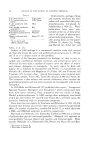
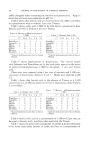
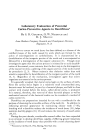
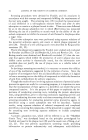
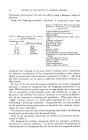
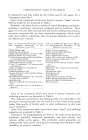
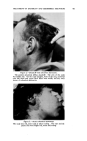
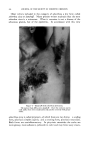
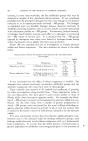
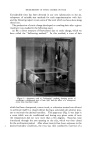
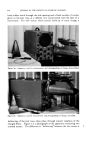
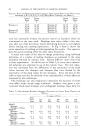
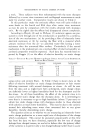
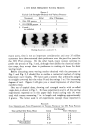
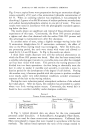
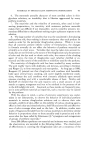
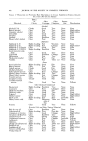
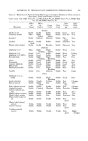
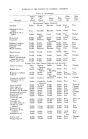
478 JOURNAI, OF THE SOCIETY OF COSMETIC CHEMISTS Fig. 4) was a. typical home wave preparation having an ammonium thiogly- colate normality of 0.5 and a free ammonium hydroxide concentration of 0.5 N. When an oxidizing solution was employed, it was prepared by dissolving 5.2 grams of an 80/20 mixture of sodium perborate monohydrate and sodium hexametaphosphate solution in one pint of water. The wave results were rated in accordance with the photographic standards appear- ing below the data. The results shown are significant and typical of those obtained in many experiments of this type. Consistently, the Prom 1951 process produces a tighter curl than that obtained with the earlier 1946-1951 process and this advantage is maintained even after five shampoos. In another series of tests, using a slightly stronger waving lotion (0.6 N ammonium thioglycolate-l.6 N ammonium carbonate), the effect of time on the Prom waving result was investigated. After the thirty-min- ute processing period, the curls were rinsed with water and allowed to stand for 0, 3, 6 and 18 hours. In Fig. 4, the results are shown. I think these results illustrate very well the technical phenomenon on which the Prom 1951 process was based. Hair that has been treated with a suitable reducing agent remains in a wayable state even after the wrapped curl has been rinsed with water. This permits the waving process to be divided into two basic operations: the first being to chemically treat the hair in order to render it wavable and secondly, to provide a wave in- duction period for the development of the degree of curl desired. Putting this another way, it becomes possible with this system to produce excellent wave results under very mild chemical conditions avoided unnecessary exposure of the hair to the waving solution. During the wave induction period, atmospheric oxidation of the reduced hair takes place. After six hours, the oxidation has proceeded to a point where very little waving action occurs. Conversely, the waved hair is found to have excellent stability under shampoo conditions. FIGURE 5 TYPICAL STRESS-STRAIN DATA Stress-Strain, 10% Indices Treatment 1 Wave 3 Waves 1. Control (untreated hair) 1.0 1.0 2. 1946-1951 Process 0.82 0.64 3. 1951 Prom Process 0.92 0.77 In Fig. 5, typical physical data are shown for the two commercial processes under discussion. A Sookne-Harris Autographic Fiber Exten- someter was used for these stress-strain measurements. Calibrated hair fibers were placed in tresses that were treated in accordance with the two methods. The indices listed represent the ratio of the energy needed to

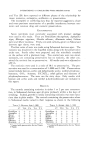
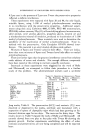
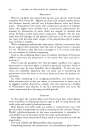
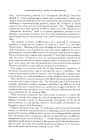
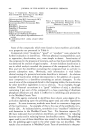
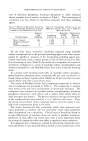
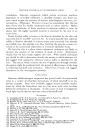
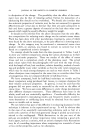
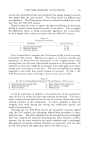
A NEW HOME PERMANENT WAVING PROCESS 479 stretch the waved fiber 10 per cent divided by the energy needed to stretch the original fiber the same amount. The values shown are different and are significant. The Prom process shows less physical modification of the hair than the 1946-1951 process. Chemical data also tend to support the physical findings just discussed. In Fig. 6, typical cystine analytical results (5) are shown. I do not regard the differences shown as being statistically significant, but consistently, we find slightly lower values associated with the 1946-1951 process. FIt•VRE 6 TYPICAL C¾STINE DATA Treatment Cystine Content 1. Control (untreated hair) 17.02 2. 1946-1951 Process 16.83 3. 1951 Prom Process 17.17 Now, I should like to compare the 1951 process of Fig. 2 with a recently introduced 1956 version. Relying once again on consumer research and experience, we found that the resaturation of the wrapped tresses with waving lotion was the most objectionable operation in this procedure. It seemed to us that step 3 might be unnecessary if we could apply more lotion during step 1 and keep it on the hair. This was accomplished by adding materials to the lotion that would increase its viscosity. In Fig. 7, the 1956 Prom process steps, involving a viscous lotion, are set forth. FIGURE 7 KEY STEPS IN PROM HOME PERMANENT WAVING PROCESS, 1956 VERSION 1. Saturate hair with waving lotion 2. Wrap hair around rod 3. Wait 15 minutes 4. Rinse wrapped curls with water 5. Wait 6 hours or overnight 6. Unwrap curls It will be noted that in addition to the elimination of the resaturation step, the use of a turban has also been rendered unnecessary. This was a minor technical bonus derived from the use of a viscous solution due to the reduced volatility of the composition. A turban, designed to keep the wrapped curls moist during the waving and stabilization period, was found to be unnecessary. Although the new 1956 Prom process has far greater consumer appeal than the 1951 method, the technology behind both procedures is essen- daily the same. The active ingredients in the waving lotion are unchanged. The time required for chemical processing has been reduced to fifteen minutes, but the wave induction and aerial oxidation step is unchanged. The general conclusions reached, therefore, in connection with the data for the 1951 process will apply quite well to the 1956 version.
Purchased for the exclusive use of nofirst nolast (unknown)
From: SCC Media Library & Resource Center (library.scconline.org)