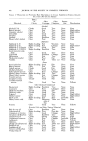
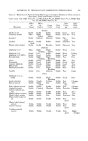
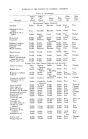
436 JOURNAL OF THE SOCIETY OF COSMETIC CHEMISTS Screening procedures were devised by Fosdick and his associates in accordance with this concept and compounds fulfilling the requirements of the test were sought. The screening tests (19) involved the measurement of acid inhibition in a saliva-glucose mixture before and after in vitro adsorption on casein or a plaque formed in vitro. These tests were followed by an in vivo plaque adsorption test in which effectiveness was measured following the use of a dentifrice or mouth wash by the ability of the ad- sorbed compounds to inhibit the amount of acid formed in the plaque after a sugar rinse. The in vitro adsorption tests were performed using aqueous solutions of the potential anticaries agents and casein or dental plaque prepared in vitro (20). Details of a test utilizing casein were described by King and his associates (21, 22). The in vivo plaque tests suggested by Fosdick were studied and evaluated by Forscher and Hess (23) and Brudevold, Little and Rowley (24). Con- flicting results were obtained and Brudevold concluded (17) that the con- cept that agents which inhibit the production of acid in plaque also may inhibit caries activity is theoretically sound, but the information now available does not justify the use of plaque tests as a reliable index of caries activity. In devising a screening test method, it is necessary to assume the validity of one of the mechanisms suggested for the initiation of caries. Since the majority of investigators favor the acid decalcification concept, it is logical to base a screening test on the ability of compounds to inhibit the formation of acid from carbohydrates by salivary organisms. Though the results of tests involving aqueous solutions of potential caries- preventive agents are useful in a screening program, it is important to note that the incorporation of these agents in a dentifrice can render the active compound inactive. It is the purpose of this paper to emphasize the im- portance of conducting screening tests, including the protein adsorption tests, using dentifrices, prior to drawing conclusions regarding activity and prior to conducting the more costly and time-consuming clinical study. A screening procedure for evaluating potential caries preventive agents in dentifrices using a casein adsorption test will be described. Typical results, using aqueous solutions of selected compounds and completed dentifrices containing the compounds, will be presented to support the need for extending tests involving aqueous solutions to include completed dentifrices. A protein adsorption test, which will be referred to as the "Modified Casein Test," was developed based on the principles promulgated by Fosdick and used in his plaque test (20) and the casein test of King, et al. (21, 22•. The test permits quantitative screening results providing information on protein substantivity and subsequent acid-inhibition

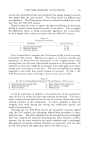
CARIES-PREVENTIVE AGENTS IN DENTIFRICES 437 ability of potential caries-preventive agents. The test is particularly useful in that it can be used both with solutions of compounds and with dentifrices containing the potentially active caries-preventive compound. MODIFIED CASEIN TEST Method (1) Treatment of Casein.* (a) COMPOtSNDS. One gram of casein powder (30 mesh) was added to 25 ml. of a 0.1 per cent solution of the test substance and the mixture was agitated for five minutes. (b) DENTIFRICES. One gram of casein powder (30 mesh) was added to a well-mixed slurry composed of 25 gin. of dentifrice and 25 ml. of dis- tilled water. The mixture was stirred for 10 minutes, then diluted with water to approximately 200 ml. The increase in treatment time from five to ten minutes was made to compensate for the viscosity of the slurry. (2) llZashing of Casein. The liquid or diluted slurry containing the treated casein was poured onto a 60-mesh 3-in. diameter sieve and washed thoroughly on the sieve with running distilled water. (3) Drying of Treated Casein. The washed, treated casein was spread on the sieve and blotted from below with filter paper or cellulose tissues. After all excess water was removed, the casein was transferred to 50-ml. beakers and dried in a vacuum desiccator over sulfuric acid for a period of forty-eight to seventy-two hours. (4) Grinding of Casein. The dried, treated casein was gently crushed using a mortar and pestle to break up lumps and reduce the particles to a size approximating the original untreated casein. (5) ?lcid-Inhibition Test. One-tenth gram of the treated casein and 4 ml. of distilled water was mixed with 3 mi. of pooled, paraffin-stimulated saliva and 1 ml. of 16 per cent glucose solution. Two comparable control tubes containing untreated casein were prepared. Using one of the control tubes, the initial pH was determined. The mixture was incubated at 37øC. for four hours during which time the contents were agitated every one-half hour. At the end of four hours, total lactate and pH were deter- mined. The lactate was determined by a modification of the method of * In testing compounds, a 0.1 per cent solution in distilled water was adopted arbitrarily and comparisons were made on an equal weight basis. In the case of materials less soluble than 0.1 gm. in 100 ml. of distilled water, the solution was effected by the use of an acid or base, a solvent such as alcohol or propylene glycol, or a nonionic dispersant such as polyoxyethylene sorbitan monolaurate or stearate. The concentration of the selected agent ultimately tested in a dentifrice depends on such factors as taste, cost, degree of effectiveness in the protein adsorption test and toxicity. Thus, in the dentifrices tested, the active ingredient concentration may differ greatly from that of the 0.1 per cent solution originally tested and the results obtained in the two tests are not necessarily comparable. Nevertheless, by comparing the results, one can determine in most cases whether or not partial or total inactivation has resulted when the compound is incor- porated into the dentifrice.
Purchased for the exclusive use of nofirst nolast (unknown)
From: SCC Media Library & Resource Center (library.scconline.org)