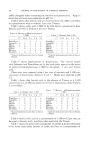
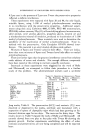
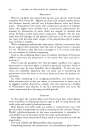
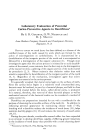
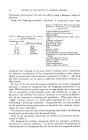
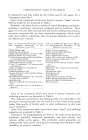
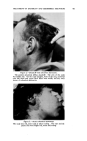
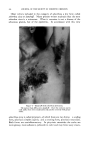
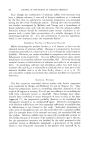
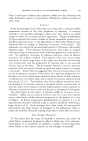
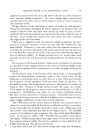
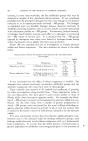
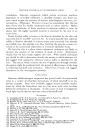
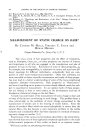
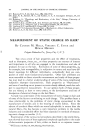
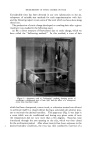
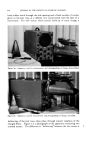
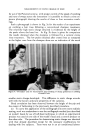
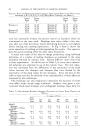
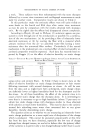
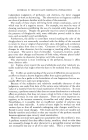
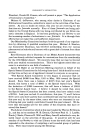
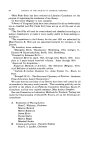
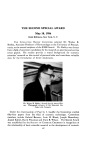
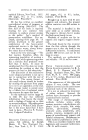
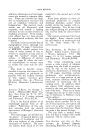
MEASUREMENT OF STATIC CHARGE ON HAIR 469 apparent. The one on the right is a tress shampooed, then creme rinsed the one on the left is shampooed only. As is generally known, creme rinses are used f•)r the purpose of promoting greater ease of combing and elimina- tion of"fiyawayness." Under most experimental conditions this balloon- ing lasts for a sufficient length of time that a fairly accurate measurement may be made of the maximum spread of the hair fibers. (b) In an attempt to obtain a more precise relative measurement of the static charge development and to compare the effect of various treat- ments on static charge we adapted a cathode ray oscillograph--camera arrangement for pick-up and recording of the charge or related electrical function developed by combing.* The oscillograph we used was a duMont Type 304A to which we attached a Polaroid camera, Type 297, also ob- tained from duMont. The camera is capable of taking two exposures per frame. This permits photographing the results on a single frame of an ex- perimental and a control treatment. A photograph of the apparatus is shown in Fig. 2. For work with hair tresses the humidity cabinet shown in Fig. 1 was used. Two gram tresses of human hair, approximately eight inches in length were used. After being sl•ampooed or otherwise treated they were air dried and then suspended from hooks in the humidity cabi- net, usually overnight, to come to equilibrium with the moisture in the cabinet. Combing was done in a standard fashion and at a rate syn- chronized with the beat of a metronome. It was found that better re- producibility resulted when the teeth of the comb were started perpendicu- lar to the tress at the top of the stroke. Usually the top third of the tress was not combed to avoid any effects due to close packing, near the top end of the tied tress. At least two separate determinations were made for each experiment and a standard shampoo was used as a control in all work to minimize differences due to type of hair, slight variation in humid- ity, etc. For this test the back of the comb was laced with bare copper wire leading through a shielded, insulated holder and permitting transfer of electrical impulse from the comb to the vertical input terminal of the oscillo- graph. The measurement is that of a voltage or potential imposed on the oscillograph since there is an inherent relation between voltage and charge we shall use the words "charge" or "static charge" exclusively throughout this paper. Actually, what is being measured is a function of the charge on the comb rather than on the hair theoretically at least these two charges should be equal and opposite. Work which we have done on attempting to measure the charge left on the hair has given results similar to those obtained by measuring charge on the comb and was con- siderably more difficult to do as well as being less reproducible. *Acknowledgment is made of the assistance and suggestions of the Allen B. duMont Laboratories on this project and of the assistance of Dr. W. W. Wellman of Research & Development Department, Colgate-Palmolive Co., in the assembling of this equipment.

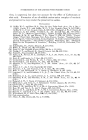
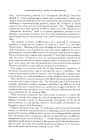
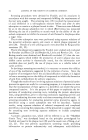
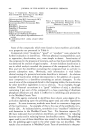
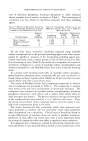
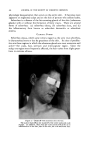
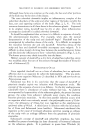
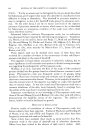
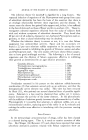
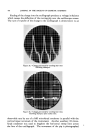
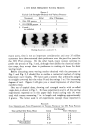
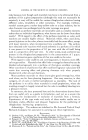
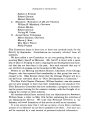
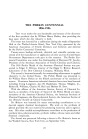
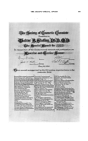
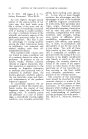
470 JOURNAL OF THE SOCIETY OF COSMETIC CHEMISTS Feeding of the charge into the oscillograph produces a voltage imbalance which causes the deflection of the moving pip over the oscilloscope screen. The rate of transfer of the charge to the oscillograph is slowed down to an .111lllllllllll& dlllllllllllllllli• tlll'lll!ll']lllllll. BIIN,I .llll IlllB ]Bill JIBlB 1111111 • II I•1 IItll liBIll gl l I Illin I lib I Illl I 1Bill B• lllll B lib 11Ill.: • •-• 11111 '!llll I lll• Figure 3a.--Charge generated by combing hair tress following shampoo. illi _ Figure 3b.--Charge generated by combing hair tress following shampoo plus creme rinse. observable rate by use of a 0.03 microfarad condenser in parallel with the vertical input terminals of the instrument. Another auxiliary 10 micro- farad condenser was used to lengthen the horizontal sweep time across the face of the oscillograph. The movement of the pip is photographed
Purchased for the exclusive use of nofirst nolast (unknown)
From: SCC Media Library & Resource Center (library.scconline.org)