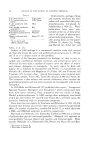
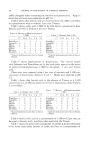
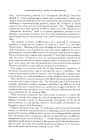
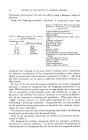
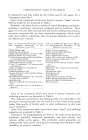
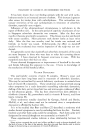
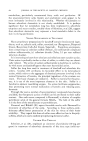
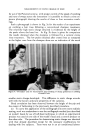
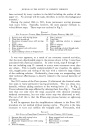
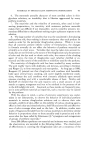
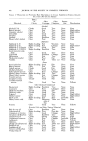
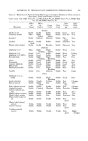
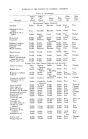
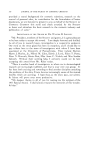
476 JOURNAL OF THE SOCIETY OF COSMETIC CHEMISTS been reviewed by many workers in the field including the author of this paper (1). No attempt will be made, therefore, to review this background material.) During the period 1946 to 1951, home permanent waving processes took many forms. Typically, however, the more popular methods in- volved fifteen steps. These steps are outlined in Fig. 1. FIGURE 1 K•¾ ST•pS I• .• TYpIC.• HOM•. P•RM.•T W•VI•G PROC•.SS, 1946-1951 1. Saturate hair with waving lotion 2. Wrap hair around rod 3. Resaturate wrapped tresses with waving lotion 4. Apply turban 5. Wait 30 minutes 6. Rinse wrapped curls with water 7. Towel blot 8. Apply oxidizing solution to wrapped curls 9. Wait 5 minutes 10. Towel blot 11. Apply oxidizing solution to wrapped curls 12. Wait 15 minutes 13. Unwrap curls 14. Pour oxidizing solution through curls 15. Rinse waved hair with water It was very apparent, as a result of our consumer research activities, that the most objectionable steps in the process shown in Fig. 1 were those associated with chemical oxidation. In other words, steps 8 through 15- but not including step 13--seemed to annoy some consumers more than any others. This is readily understandable if one visualizes the applica- tion, reapplication and rinsing of the hair with a relatively large volume of the oxidizing solution. Esthetically, these steps are unappealing, and their technical effectiveness is directly related to the manual dexterity of the user. Our 1951 version of the Prom process (2) eliminated the chemical oxida- tion steps in home permanent waving procedures. This was done, inci- dentally, without adding catalysts to the waving lotion (3). In Fig. 2, I have indicated the steps affected by deleting them from Fig. 1. You will note that not only were the steps associated with chemical oxidation rendered unnecessary, but one other minor step was eliminated as well. The net of all this is that the fifteen-step process became an eight-step procedure. It will be apparent that the simplifications inherent in the Prom 1951 procedure are not realized without paying a price. The price is the time necessary to wave and stabilize the wrapped curls. Fortunately, with FIC, URE 2 KEY STeps • PROM HoM•. PERMAnenT WAVinG PROCESS, 1951 VeRSIO• 1. Saturate hair with waving lotion 2. Wrap hair around rod 3. Resaturate wrapped tresses with waving lotion 4. Wait 30 minutes 5. Rinse wrapped curls with water 6. Apply turban 7. Wait 6 hours or overnight 8. Unwrap curls

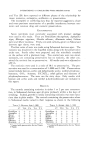
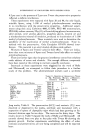
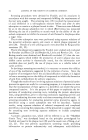
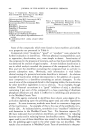
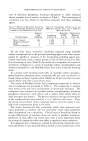
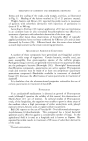
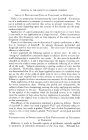
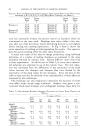
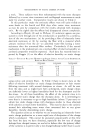
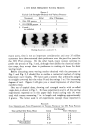
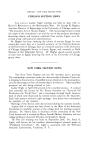
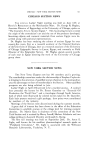
A NEW HOME PERMANENT WAVING PROCESS 477 FIGURE 3 Typical Curl Strengths Obtained with Various Processes Treatment Initial After 5 Shampoos 1946-1951 process 3 2 1951 PROM process 4 3 Control-- no oxidation 2 1 Ratings based on a scale of 1-5. many users, time is not an important consideration and over 35 nilIlion customers have demonstrated their preference over the past five years for the 1951 Prom process. On the other hand, many women continue to prefer the process of Fig. 1 and, although they dislike the chemical oxida- tion steps, they accept them in preference to waiting six hours for their waving result. Before discussing some waving results obtained with the processes of Fig. 1 and Fig. 2, I should like to outline a numerical method of rating laboratory wave results. We have used a system that arbitrarily assigns to straight unwaved hair the value O and the ratings 1 to 5 for increasing degrees of curl. Figure 3 will give you a visual impression of what these numbers mean. One set of typical data, showing curl strength results with so-called virgin hair, is shown in Fig. 3. In these experiments and in all the waving experiments reported on in this paper Spin brand curling rods (4) were used with tresses measuring 7 in. in length and weighing approximately 2 grams. The lotion used in all experiments (except those reported in FIGURE 4 CURL STRENGTH AND WAVE PERMANENCE OF TRESSES WAVED BY THE 1951 PROM PROCESS Curl Strength Time on Rod After Rinse, Hours Initial After 5 Shampoos 0 1.5 1.5 3 3.5 3.0 6 4.0 4.0 18 4.25 4.0 O plus Chemical Neutralization 3.25 2.75
Purchased for the exclusive use of nofirst nolast (unknown)
From: SCC Media Library & Resource Center (library.scconline.org)