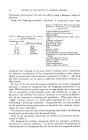
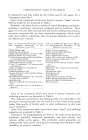
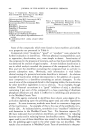
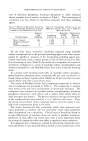
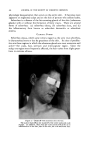
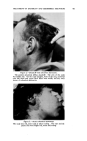
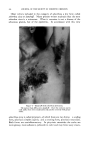
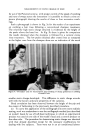
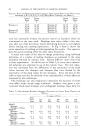
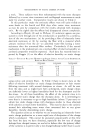
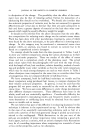
TREATMENT OF DANDRUFF AND SEBORRHEIC ERUPTIONS 447 Although these forms are common on the scalp, the face and other portions of the body may be the sites of the disease. The term seborrheic dermatitis implies an inflammatory complex of the seborrheic disorders of the scalp and other regions of the body, notably the face, ears and opposing surfaces of the body (Figs. 2, 3, 4). The only common denominator in all these forms is the sebaceous glands. Expressed in its simplest terms, dandruff may be dry or oily when inflammation accompanies dandruff it is called seborrheic dermatitis. It should be emphasized that at times it is difficult to separate clinically the aforementioned disorders. For example, when does the normal desquamation of the scalp end and dandruff begin? Dandruff may be accompanied by seborrhea oleosa of the scalp. It is difficult to recognize the transition between dry and oily dandruff. Seborrhea oleosa of the scalp and face and dandruff invariably accompany acne vulgaris. It is difficult to draw sharply dividing lines between the noninflammatory forms and the distinctly inflammatory form--seborrheic dermatitis (Figs. 1, 2, 3). The former process may shade insensibly into the latter. Hebra's concept of dandruff as a dry form of seborrhea (seborrhea sicca) was modified about the turn of the century through the studies of Unna (1) and of Sabouraud (2). PITYROSPORUM OVALE Unna regarded dandruff not as a form of seborrhea, but an epidermic affection due to an organism he called the bottle-bacillux. This was prob- ably the same organism Malassez (3) described in 1874 and now known as Pilyrosporum ovale. Sabouraud was firm in his conviction that the cause of dandruff or pityriasis simplex capitis was infection with Pityrosporum ovale. His concept of the sequence of events is as follows: In the dry scaling process (dandruff) there is abundance of scales without hair loss. At puberty accompanied by hyperactivity of the sebaceous glands, the process becomes greasy, the scales form adherent yellowish waxy crusts, the condition becomes pityriasis steatoides. At this time another infection occurs with an organism which was variously named--the polymorphic coccus of Ceder- creutz, the mirococcus of Unna, but now regarded as the staphylococcus epidermis albus of ll/elch. A third factor is infection with the microbacil- lus of Unna and Sabouraud (ache bacillus). Sabouraud attributed this organism as the cause of increased sebaceous secretion causing an oiliness of the scalp with an etiology different from the greasiness of pityriasis steatoides. Sabouraud's concept of dandruff and seborrheic eruptions has been modified by present knowledge (as later discussed) of hormonal influence on the sebaceous glands. It is pertinent to quote here Whitlock (4)

448 JOURNAL OF THE SOCIETY OF COSMETIC CHEMISTS (1953): "It is by no means easy to distinguish the minute details described by Sabouraud, and ! suspect that many who describe his classification have difficulty in doing so themselves. Dry dandruff or pityriasis simplex, is easy to recognize so also is dry dandruff made greasy by sebaceous secre- tion. On the other hand, ! am by no means convinced of the separate existence of pityriasis steatoides or serosa, which seems to be, as described by Sabouraud, an eczematous condition of the scalp more often called today seborrheic eczema." Sabouraud failed to cultivate Pityrosporum ovate, but its cultivation has subsequently been reported by the following investigators: Templeton (5), Moore, et al. (6a and b), Acton and Panja (7), MacLeod and Dowling (8), Ota and Huang (9), Durfee and Cousins (10), Bigham (11), Kite and Engman (12), MacKee, et al. (13), Benham (14a and b) Emmons (15), Gots, et al. (16), more recently by Martin-Scott (17), Leone (18) and Rocha, et al. (19). These reports need not be detailed since many of them have been reviewed by a number of writers in the controversy of what role Pityro- sporum ovate plays in the cause of dandruff. The organism is found almost constantly in seborrheic subjects, but its exact significance is still uncertain and opinion is divided among investiga- tors regarding the pathogenicity of Pityrosporum ovale. MacKee, et al. (13), examined the flora of the scalp of 100 unsetected persons divided into five groups based on clinical features common to each group. Pityrosporum ovate was frequently noted in all groups, being present in 70 per cent of normal scalps and on 66 per cent of scalps on which there was a concomitant skin disease. However, in the majorityof examina- tions the concentration of the organism was higher on scalps with dandruff than on normal scalps. It was also noted that Pityrosporum ovale was a common inhabitant of the skin, more frequently found in scrapings from the surface of the nose than in material expressed from the nose. Important contributions to our knowledge of Pityrosporum ovate were those of Ota and Huang (9) and of Benham (14) when they (and still others) demonstrated the tipophitic nature of the organism. The addition of butter, lecithin or tanotin facilitated its growth. REsu•,q's oF IsoeuL^q'•os Positive results of inoculation of culture of Pityrosporum ovate into human subjects have been reported. Studies of MacLeod and Dowling (8) of Moore, et al. (6), and of Kite and Engman (12) and others have been frequently reviewed and need not be detailed. Some writers have accepted these results as proof positive that Pity- rosporum ovate is the cause of dandruff and of seborrheic dermatitis. Others have been critical in the absence of rigid control studies. Addi-
Purchased for the exclusive use of nofirst nolast (unknown)
From: SCC Media Library & Resource Center (library.scconline.org)