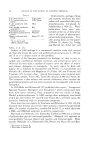
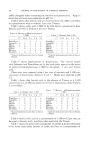
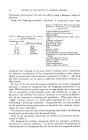
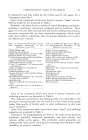
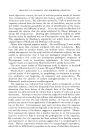
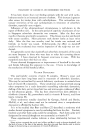
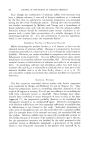
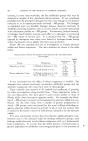
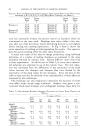
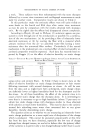
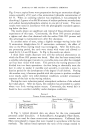
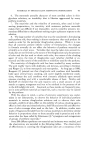
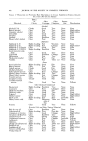
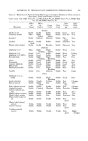
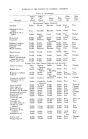
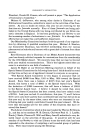
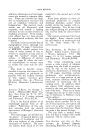
430 JOURNAL OF THE SOCIETY OF COSMETIC CHEMISTS tables alongside tubes containing the nonionic and preservative. Keep in mind that all tests were performed at pH 5.6. Table 2 shows that benzoic acid at a concentration of 1: 1000 is worthless as a preservative with or without 1 per cent Tweens. Table 3 shows sorbic acid 1:1000 to be little better a preservative than benzoic acid with or without 1 per cent Tweens. TABLE 4--METHYL p-HYDROXYBENZOATE 1: 1000 TABLE 5---BENzoIc ACID 1:500 C* T'}'8 T6 T4 T2 C* T•'8 T6 T4 T2 __ Penicillium -- -- q- -- • -b Penicillium -- q- -b -b Aspergillus q- -b -b -b q- Aspergillus -- -b 4' q- q- Mucor -b + + + + Mucor - -b q- + Monilia + + q- -b -b Monilia - -b q- -b Oidium - + -b -b -b Oidium - -t- -b + Rhizopus -- - + + q- Rhizopus - -b -b q- -b Alternaria -b q- q- q- q- Alternaria -- -b -t- -b q- * Control with preservative but no T,veen. t Tween * Control with preservative but no Tween. t Tween Table 4 shows improvement in preservation. The control results with Rhizopus and Penici//ium are in line with other reports on the action of methyl p-hydroxybenzoate 1:1000 on microbials. 1 per cent Tween used. These tests were repeated using 2 per cent of nonionic and 1:$00 con- centration of preservative Tables 5, 6 and 7. Media were adjusted to pH 5.6. Table $ shows that benzoic acid in the absence of Tweens at a 1:500 concentration is an effective preservative but in the presence of the Tweens it is worthless. TABLE 6--SoRBIC ACID 1:500 TABLE 7--ME'rHYL p-HYDP. OXYBENZOATE I: 500 C* T•8 T4 T4 T2 C* T•8 T6 T4 T2 Penicilliurn -- q- q- + -b Penicillium - q- ? -b ? q- ? Aspergillus -- -b q- q- -b Aspergillus -- q- q- -b q- Mucor -- + + q- + Mucor - + + - Monilia - q- q- -b + Monilia -- q- q- q- Oidium - -b q- q- -t- Oidium - q- + + - Rhizopus -- q- + q- + Rhizopus - + + - -- Alternaria -- + + q- + Alternaria -- + -b + * Control with preservative but no Tween. • Tween * Control with preservative but no Tween. • Tween Table 6 shows sorbic acid in a concentration of 1:500 or 0.2 per cent, to be equal to benzoic acid worthless when used with the Tweens. Table 7 shows the preservative properties of methyl p-hydroxybenzoate to be better than either benzoic or sorbic acid but at a concentration of

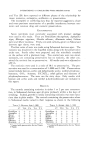
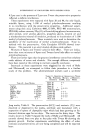
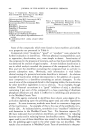
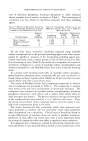
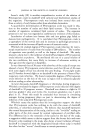
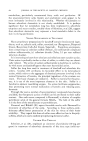
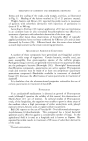
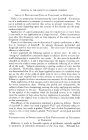
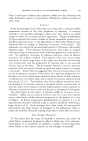
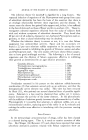
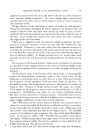
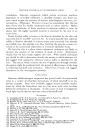
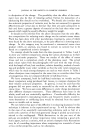
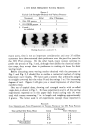
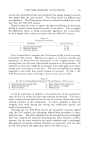
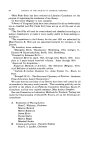
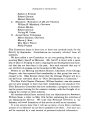
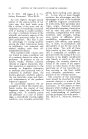
INTERFERENCE OF EMULSIFIERS WITH PRESERVATIVES 431 0.2 per cent in the presence of 2 per cent Tween the preservative properties reflected a definite interference. These experiments were repeated with Span 20 and 80, the only liquid, miscible Spans, using 1:500 of methyl p-hydroxybenzoate resulting in no interference with the preservative properties. Additional experi- ments using oleic acid, Carbowax 4000, G-3694, PEG 400 monostearate, PEG 400, sodium stearate, Myrj 59, self-emulsifying glyceryl monostearate, oleyl alcohol, cetyl alcohol, glycerin, propylene glycol, mineral oil and a triethanolamine mineral oil emulsion, produced no inactivation of 1:500 methyl p-hydroxybenzoate. These materials were used to determine the specificity of the inactivation of methyl p-hydroxybenzoate. None in- terfered with the preservative. Only Emulphor ON-870 showed inter- ference. This material is an oleyl alcohol ethylene oxide adduct. Mixtures of Spans and Tweens varied in their effect. There are indica- tions that some mixtures of Spans and Tweens have little effect on methyl p-hydroxybenzoate. There are further signs that the greatest interference comes from ethylene oxide adducts of esters and alcohols. Not enough different compounds have been tested at this writing to warrant a specific conclusion. Inasmuch as these experiments were triggered by the work of Bolle and Mirimanoff, we attempted to follow their procedure in a further study of this problem. The aforementioned workers used a synthetic TABLE 9--GgowTn or ASVEgOIkkUS NIOEg IN 2% NONIONIC, METSYk p-HYDgOX¾- BENZOATE 1:1000, JAAG MEDIA TABLE 8---JAAG MEDIA Span 20 Span 40 NaNO.• 3 gm. Span 60 KH2PO4 1 gm. Span 80 ø KCI 0.50 gm. Carbowax 4000 MgSO4.7H20 0.50 gin. Tween 20 FeSO4.7820 0.01 gm. Tween 40 Sucrose 50 gm. Tween 60 H20, q.s. 1000 cc. Tween 80 pH 5.1 Oleic acid Jaag media, Table 8. The preservative (0.1%) and nonionic (2%) were dissolved or dispersed in the media, sterilized and inoculated with a suspension of spores of Atspergillus niger which had been growing on Sa- bouraud dextrose agar for ten days. The tests ran for thirty days. The results shown in Table 9 expand the work of Bolle and Mirimanoff. All controls showed from two plus to four plus with Tween 80 showing the greatest growth. Further experiments establishing the effect of other nonionics and preservatives are now being completed and will be reported later.
Purchased for the exclusive use of nofirst nolast (unknown)
From: SCC Media Library & Resource Center (library.scconline.org)