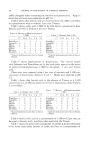
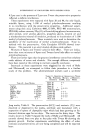
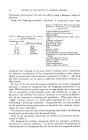
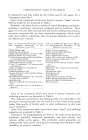
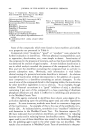
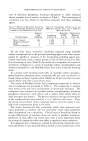
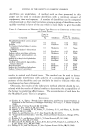
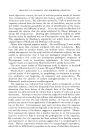
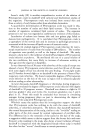
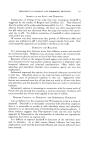
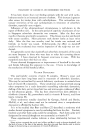
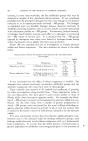
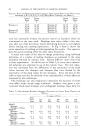
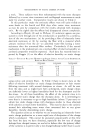
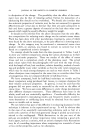
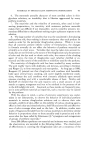
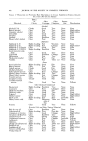
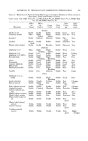
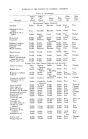
MATERIALS IN THIOGLYCOLATE HAIRWAVING PREPARATIONS 485 independent judgments of perfumers and chemists, the latter engaged primarily in work on hairwaving. The observations on fragrance stability are those ofperfumers familiar with the odors of the materials. The study of these charts will bring forth certain conclusions, some of which may be of a negative nature. For example, one must be wary of drawing conclusions prohibiting the use of a material solely because of its chemical structure. Despite the generally reactive nature of aldehydes in the presence of thioglycolic acid, some aldehydes proved stable in these tests, such as methyl nonyl acetaldehyde. Furthermore, the ability to contribute toward masking the odor of the thioglycolate is not necessarily correlated with the ability of the material to retain its true or original characteristic odor, although such correlation does take place from time to time. Cinnamon oil Ceylon, for example, changes its odor character, but the coverage or masking ability continues to be good. The same is true of citronellal. Coumarin, however, under- goes some odor changes and becomes of little value, whereas phenyl ethyl alcohol retains its character, but gives very little coverage. This observation is most interesting to the perfumer, because it offers three distinct aids: (a) It gives a key toward the use of aldehydes and other relatively un- stable materials that might otherwise have to be excluded from a formula- tion. (b) It offers an understanding of the source of difficulties encountered in an effort to obtain a known fragrance effect from a given perfume oil. (c) It can be a guide to the formulation of new fragrances that are un- usually effective in cold wave preparations. Because of the subjective and relatively unreliable character of odor judgments, one seeks from data of this nature some indication of the odor value of a material from the visual examination of the solutions. In most instances, a perfume material that does not cause discoloration or adversely affect an emulsion, that does not cause a cloud to form or does not break a cloud, will retain its true odor character. There are some important ex- ceptions, as for instance coumarin, citronellae and ethyl phenyl acetate. Nevertheless, it is possible that an insufficient number of solutions was used with these materials. A series of tests might be worked out with various dyes so that all materials undergoing odor changes would be re- flected in some visual changes. The clouds and the colors are usually suf- ficiently sensitive and critical so that any reaction of the perfume material becomes apparent upon cursory visual examination. However, one must warn against an assumption that the corollary is true. A perfume material that does affect clarity, emulsion, cloud or color does not necessarily change its odor character in a perceptible manner and does not necessarily lose any or all of its odor value. This is a very important

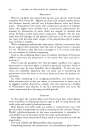
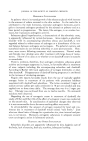
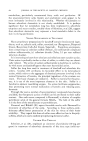
486 JOURNAL OF THE SOCIETY OF COSMETIC CHEMISTS rule, because even though such material may have to be eliminated from a perfume oil for a given preparation (although this need not necessarily be required), it may still be usable for various thioglycolate solutions having different colors, emulsifiers or other variations. For example, trichloro- styralyl acetate gave a rather deep yellow color to a clear solution, but its odor character was unchanged and the odor coverage was good. Inasmuch as perfume materials are invariably used as complex mixtures rather than as individual ingredients, what lessons can be drawn from these results? With regard to the effect of the perfume materials on color, such reactions are usually highly critical. Materials which, when used alone, proved injurious to the color, almost invariably had the same effect, except with lesser intensity, when incorporated into a perfume oil. The authors have obtained color reactions with musk ambrette in a perfume oil in which it was present in the proportion of 0.1 per cent with the oil itself being used in a proportion of 0.5 per cent. In other words, musk ambrette was present in the thioglycolate preparation in the concentration of 5 p.p.m. Yet, its elimination gave a perfume oil that was stable to the color. With regard to odor stability and covering power, it becomes more diffi- cult to generalize. Materials that offer little coverage by themselves can be blended advantageously into a perfume oil that gives excellent coverage. Other constituents of perfumes that offer excellent fragrance value alone will retain that covering effect and pleasing character only when properly blended with other oils and chemicals. Many perfume materials on these charts give good coverage but, when used alone, are far from pleasing fragrances. One may mention, in that category, oil of cade or methyl acetophenone as examples. The task of the perruiner is to utilize these materials in small proportions, where the masking strength is largely retained but the odor is modified, blending into a pleasant mixture. In summary, the data presented here and the observations drawn there- from are useful only as a guide in formulation, and not as a severe rule governing the incorporation or exclusion of materials from a formula. Experiments of the type made and study of these results enable one to formulate stable, effective and pleasant fragrances for the perfuming of thioglycolate hairwaving preparations. •lcknowledge: The authors are indebted to Mr. Leonard Viola of Caryl Richards Company for assistance in carrying out these experiments. REFERENCES (1) Gershon, S. D., and Rieger, M. M., "Thioglycolic Acid," in "Encyclopedia of Chemical Technology," Vol. 14, New York, Interscience Publishers (1955), p. 78. (2) Bongartz, J., "Ueber Verbindungen der Aidehyde, Ketone und Ketonsauren mir Thio- glycolsaure," Ber., 21,478 (1888). (3) Stricks, W., and Kolthoff, I. M., "Equilibrium Constants of the Reactions of Sulfite with Cystine and with Dithiodiglycolic Acid," •t. aim. Chem. Soc., ?3, 4569 (1951). (4) Klarmann, E.G., "Perfume and the Skin," aim. Perfumer Essent. OilRev., 64,425 (1954).
Purchased for the exclusive use of nofirst nolast (unknown)
From: SCC Media Library & Resource Center (library.scconline.org)