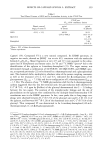
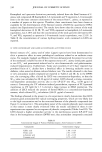
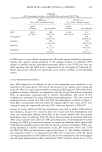
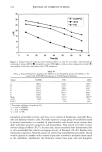
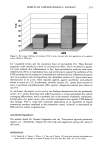
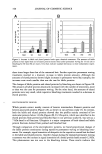
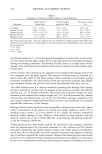
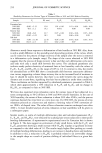
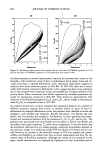
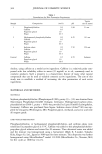
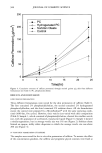
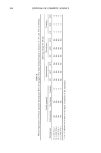
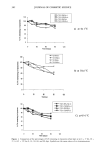
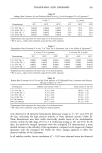
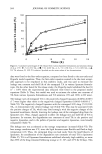
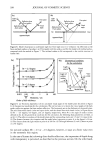
EFFECTS OF CAPPARIS SPINOSA L. EXTRACT 331 Table III LECS Antioxidant Activity in the DPPH Test and in the LP-LUV Test DPPH test SC5o (95% confidence limits) LP-LUV test IC5o (95% confidence limits) pg/ml pg/ml of extract pg of phenols of extract pg of phenols LECS 68.36 4.88 32.98 2.35 (56-83.3) (4.0-5.9) (28.3-38.4) (2.0-2.7) o•-Tocopherol 5.01 0.41 (4.65-5.32) (0.28-0.62) Ascorbate 1.89 1.44 (1.44-2.28) (1.02-1.69) Quercetin 1.33 0.69 (1.1-1.4) (0.1-3.8) Kaempferol 4.2 3 1.7 5 (3.8•4.9) (0.9-3.2) in LECS seem to act as radical scavengers more efficiently against membrane lipoperoxyl radicals than against radicals generated in the aqueous medium. In addition, LECS appears to provide discrete antioxidant/scavenging effects in the UV-IP test also one could speculate that the LECS active components act by scavenging UV-induced hy- droxyl and peroxyl radicals and superoxide anions and/or, perhaps, as UV-absorbing screens. IN VIVO PHOTOPROTECTIVE EFFECT Since LECS appeared to be effective in the in vitro antioxidant tests employed, it was tested by in vivo experiments. The aim of this section of our research was to assess the protective effect of a topical gel formulation containing LECS against UVB-induced skin erythema in human volunteers, in comparison with that of a gel formulation containing TOC, an antioxidant compound used in cosmetic formulations. The extent of skin erythema was monitored by using reflectance spectrophotometry. The time course of erythema for skin treated with LECS and TOC gel formulations is shown in Figure 2. From AE.I.-vs-time plots, the areas under the response (AE.I.)-time curve (AUC) were computed using the trapezoidal rule, and A UC values are reported in Table IV. As may be noted, LECS and TOC gel formulations were able to inhibit UVB-induced skin erythema, because A UC values for skin sites treated with these formulations were lower and significantly different from those of the control (treated with the gel base formulation only). In addition, Table IV reports the percentage of erythemal inhibition (PIE values) calculated for LECS and TOC gel formulations. As demonstrated by these findings, the LECS gel formulation appears to possess an inhibitory effect against skin UVB-induced erythema greater than that elicited by a natural antioxidant (TOC) com- monly employed in cosmetic formulations in fact, PIE values were 59.6% and 22.0% for LECS and TOC gel formulations, respectively (Figure 3). The findings obtained in the evaluation of the in vivo photoprotective effect are in agreement with the radical scavenging/antioxidant activities observed in the in vitro experiments this could suggest that the good photoprotective effect obtained for LECS could be related to its in vitro

332 JOURNAL OF COSMETIC SCIENCE 35 3O 25 20 15 10 •- CONTROL • • LECS -' TOC 0 10 20 30 40 50 60 70 80 Time (h) Figure 2. Typical trend of erythema index variations (AI.E.) vs time for one subject. Gel formulations containing C. spinosa (LECS) (I), tocopheryl acetate (TOC) (&), or without active compounds (control) ( ß ) were applied to the skin immediately after UVB irradiation. Table IV AUCo_58 Values Obtained by Applying the LECS Gel, the Tocopheryl Acetate Gel (TOC), or the Control Gel (CONTR) Formulations to UV-B Exposed Skin Sites Subject CONTR TOC LECS A 1496.1 1268.2 569.8 B 1322.5 1125.7 495.5 C 1592.7 988.3 638.7 D 1453.5 1342.5 532.5 E 1543.3 1043.2 698.4 F 1228.7 965.7 548.3 Mean 1439.4 1122.2 a 580.5 b'• ñS.D. 138.4 153.9 74.8 P.I.E.* 22.0 59.6 * Percentage inhibition of erythema (%). ap 0.01 vs CONTR. bp 0.01 vs CONTR. Cp 0.01 vs TOC. antiradical-antioxidant activity, and thus, to its content of biophenols, especially flavo- nols and hydroxycinnamic acids. Flavonols represent a large group of metabolites found as natural constituents in a number of plant families, and several recent reviews have dealt with their structure, properties, and biosynthesis. They proved to be able to elicit various biological effects (36,37). In particular, many researchers have demonstrated the in vitro antioxidant/free radical scavenging activity of flavonols (38-40). Besides their antioxidant properties, flavonols possess an interesting antiinflammatory profile, related to their capacity to interfere with a variety of processes involved in mediator release (such as the arachidonic metabolism, the histamine release from mast cells and basophils,
Purchased for the exclusive use of nofirst nolast (unknown)
From: SCC Media Library & Resource Center (library.scconline.org)