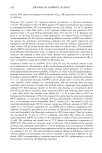
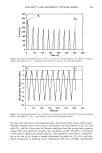
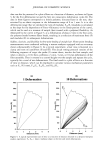
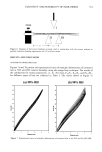
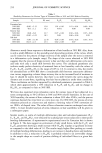
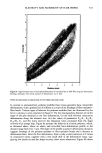
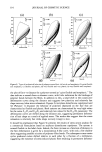
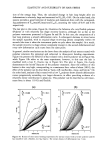
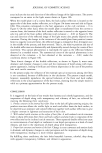
346 JOURNAL OF COSMETIC SCIENCE versible change in physical dimensions analogous to the process encountered in molding. Similarly, plasticity is synonymous with pliancy, a term that implies bending or folding with ease. All of these polymeric properties have been the recent focus of hairspray and styling product manufacturers, who stress a new consumer preference for highly elastic and flexible materials rather than traditional resins characterized by a large degree of stiff- ness. The elastic/flexible fixatives are advertised as being capable of stabilizing a hairset without making hair feel stiff or rigid, and maintaining the style even after "movement," i.e., deformation produced by grooming, bodily motion, wind, etc. The objective of this analysis was to explore the basic mechanical properties of untreated and polymer-modified hair by analyzing stress-strain relationships of bending in mul- tiple deformations. We have explored compression and bending as modes of deformation and have defined and determined parameters related to stiffness, elasticity, flexibility, and plasticity of the fiber assemblies. It should be stressed that while elongation (stretch- ing) or torsion analysis of the mechanical properties of single hair fibers has been discussed in detail (3-5), the bending deformation, especially in the context of multiple fiber assemblies, has not been discussed previously. In this work, a texture analyzer was employed as a tensile meter with the experimental procedure involving the use of hair shaped into "omega loops" (1). Alternatively, hair tresses have also been employed in combination with a three-point bending apparatus (6). Our earlier stiffness measure- ments of "omega loops" for untreated and treated hair consisted of compressions at low deformations (1 mm penetration--8% of the omega loop height) corresponding to the elastic region of a given stress-strain curve (1). The experimental procedure employed in this work involved the use of a relatively high bending deformation (25%), which produces irreversible changes in the investigated samples as a result of polymer breakage or plastic deformation. Our objective was also to explore factors affecting the elasticity/ flexibility of fixative systems, such as the thermomechanical properties of a polymer (glass transition), its molecular weight, and the polymer's behavior in the presence of low-molecular-weight additives. Throughout the text, we may refer to hair, when in fact this implies the use of hair fiber assemblies in the form of omega-loop-shaped or straight hair tresses. EXPERIMENTAL HAIR SAMPLES Experiments were performed on light brown Caucasian, dark brown Caucasian, Chinese, natural white, and yak hair purchased from International Hair Importers & Products, Inc., Valhalla, NY. All fibers were shampooed twice with ammonium laureth-2 sulfate prior to use in the experiments. Preparation of "omega loops" has been described previously (1). Tresses, employed in the dual cantilever bending experiments, were obtained by gluing hair to plastic tabs, resulting in dimensions of one inch in width and 6.5 inches in length. POLYMERS AND SURFACTANTS The samples of poly(vinyl pyrrolidone) were commercial grade products, termed PVP K12 (Mw= 4,000), PVP K15 (Mw= 8,000), PVP K30 (Mw= 60,000), PVP K60

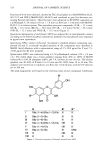
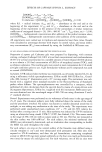
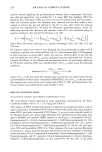
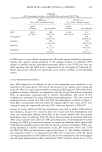
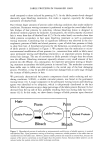
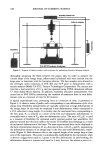
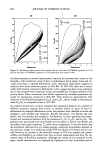
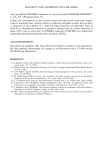
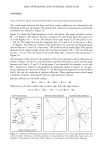
ELASTICITY AND FLEXIBILITY OF HAIR FIBERS 347 (Mw=400,000), and PVP K90 (Mw=l,300,000), from ISP. Ethyl ester of PVM/MA copolymer (PVM/MA) and isobutylene/ethylmaleimide/hydroxyethylmaleimide copoly- mer (IEHC) were commercial products from ISP sold under the trade names Gantrez © ES-225 and Aquaflex © FX-64. PVM/MA was neutralized with 2-amino-2-methyl-1- propanol, obtained from Angus Chemical Company, Buffalo Grove, IL. Acrylates di- methicone copolymer is a key ingredient in a commercial hairspray formulation that was employed in this work and sold under the name Pantene ProV Flexible Hold by Proctor & Gamble. Low glass transition polymers, identified as Polymer 1 and Polymer 2, were experimental polycondensation products of adipic acid (AA), terephthalic acid (TPA), suplphophthalic acid (SPA), and ethylene glycol (EG) represented by the general formula co(AA-TPA-SPA-EG). Oleth-10 is a nonionic surfactant manufactured by ICI under the name Brij 96. Dimethicone copolyols, structurally defined in Figure 1, were obtained from Witco. METHODS OF ANALYSIS Stiffness, elasticity, and flexibility by omega-loop bending. The instrumentation and experi- mental procedures were similar to those employed in a previous work (1) (Figure 2). Hair treatment was administered by application of a hairspray solution to hair shaped into omega loops, using an Eppendorf pipette. The deposited amount (0.15 g of a hairspray solution per 0.2 g of hair sample) was uniformly distributed over the tress surface, OCH3 I CH2--CH--CH--CH . I I O•C C •0 I I OH OCH2CH3 x Ethyl Ester of PVM/MA Copolymer CH3 o//C•/C% O CH3 o//C•N/C%o i L CH2CH3 CH2CH2OH x Y Isobutylene/Ethylmaleimide/Hydroxyethylmaleimide Copolymer (IEHC) CH3 [ CH3 ] [ CH3 ] ?H3 I /I I I I / • i--CH3 C H3--Si--O-I--Si--O•-Jr•S i--O / I /I [ I i / L CH3 J y Dimethicone Copolyol where R = CH 3 or H Figure 1. Structures of several polymers investigated in this study.
Purchased for the exclusive use of nofirst nolast (unknown)
From: SCC Media Library & Resource Center (library.scconline.org)