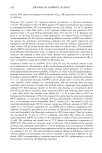
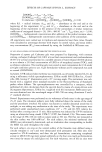
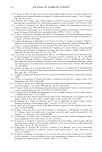
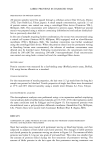
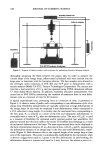
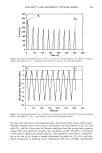
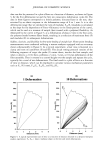
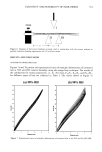
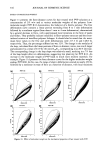
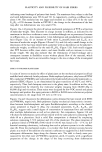
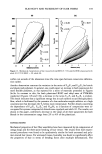
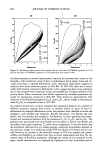
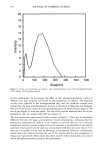
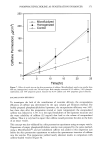
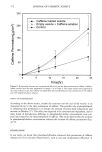
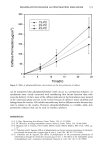
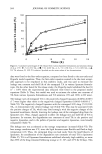
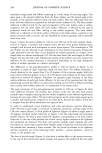
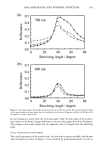
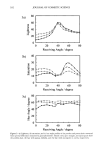
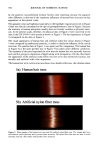
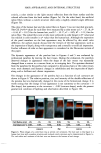
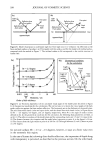
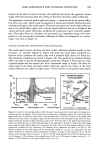
HAIR APPEARANCE AND INTERNAL STRUCTURE 391 2a) 0.5 0.4 0.3 0.2 0.1 0.0 700 nm ...... o ..... [] ,• -"o...'...•_ .... o ..... o ..... '-' ,'½'-2' '•'""'o,,.... i i i i i I i 0 20 40 60 80 Receiving Angle / degree 2b) 0.5 0.4 0.3 400 nm 0.2 0.1 0.0 0 20 40 60 80 Receiving Angle / degree Figure 2. Goniophotograms for poreless and porous hairs at (a) 700 nm and (b) 400 nm wavelength. Closed circle, open triangle, and open square show the poreless hair, the hair with porous medulla, and the hair with micropores in cortex, respectively. are not changed so much with the receiving angle. Only the hue angle of the poreless hair (closed circle) shows a bigger difference in the receiving angles from 0 to 40 degrees. This change in hue angle means that the apparent color is changed with the observing angle. VISUAL APPEARANCE OF HAIR SAMPLES The visual appearances of the poreless hair, the hair with a porous medulla, and the hair with micropores in cortex in Figure 1 were evaluated by professional panels, in order to

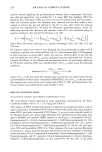
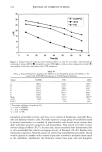
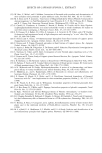
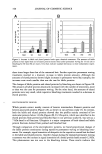
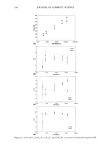
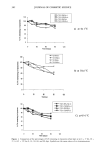
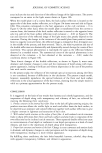
392 JOURNAL OF COSMETIC SCIENCE 3a) 80 60 0 20 40 60 80 Receiving Angle / degree 40 30 0 20 40 60 Receiving Angle / degree 80 80 3c) • 60 -- 40 • 20 0 0 20 40 60 Receiving Angle / degree 80 Figure 3. (a) Lightness, (b) saturation, and (c) hue angle profiles of the poreless and porous hairs converted from spectral reflectance measured by goniophotometer. Closed circle, open triangle, and open square show the poreless hair, the hair with porous medulla, and the hair with micropores in cortex, respectively.
Purchased for the exclusive use of nofirst nolast (unknown)
From: SCC Media Library & Resource Center (library.scconline.org)