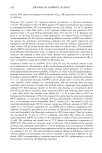
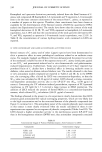
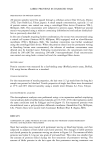
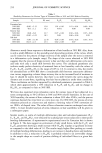
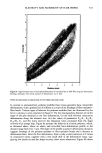
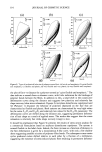
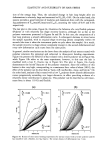
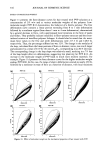
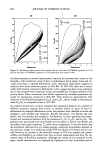
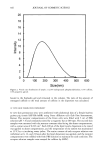
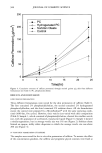
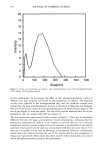
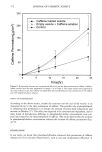
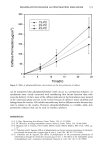
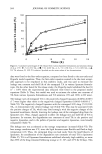
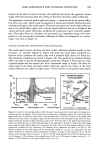
PHOSPHATIDYLCHOLINE AS PENETRATION ENHANCER 369 40 35 30 25 • 20 m 15 10 0 0 2000 4000 6000 8000 10000 Size(nm) Figure 5. Vesicle size distribution of sample 1 after homogenization step (2.0% phosphatidylcholine, 0.5 % caffeine, 10% propylene glycol). 0.5% and 10%, respectively, in all the formulations. The cumulative amounts of per- meated caffeine in the receptor compartment were plotted versus time (Figure 4), and the values at 24 hours were compared to assess the differences, using a one-tailed t-test with a 95% confidence level. Sample 1 (phosphatidylcholine) showed a significant increase in the skin permeation of caffeine compared with other samples and the control (P-value between samples 1 and 2: 0.036 P-value between samples 2 and 3: 0.012). Sample 2 (hydrogenated phosphatidylcholine) and sample 3 (sorbitan oleate) also in- creased skin permeation compared with the control, but their effects were not so strong as in sample 1. The result of this skin permeation experiment suggested that phosphatidylcholine with an unsaturated fatty acid chain would have the most effective skin-permeation- enhancing ability. Although there are some different explanations about the mechanism of action (7-9, 15,16), it is widely accepted that unsaturated phospholipids can be used to increase skin permeation, and this agrees with our experimental result. EFFECT OF VESICLE SIZE Viewed from the point of the vesicular size of the samples, it can be interpreted that the above experimental result indicates that the smaller vesicles would be the more effective

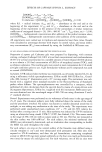
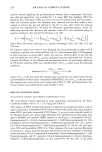
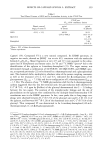
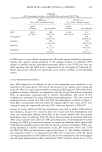
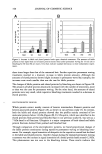
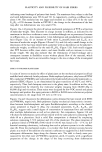
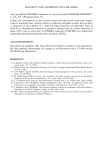
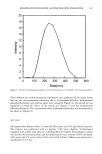
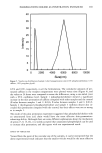
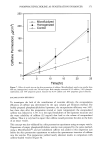
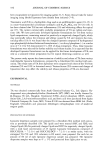
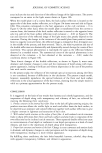
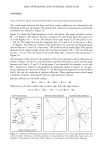
370 JOURNAL OF COSMETIC SCIENCE 20, 18 16 14 • 8 6 4 2 0 0 100 200 300 400 500 600 Size(nm) Figure 6. Vesicle size distribution of sample 1 after microfluidization step (2.0% phosphatidylcholJne, 0.5% caffeine, 10% propylene glycol). in skin permeation. To investigate the effect of size, phosphatidylcholine vesicles of different size were prepared and tested for the permeation of caffeine. The large-size vesicles were collected at the homogenization step, and the small-size vesicles were prepared by the final microfiuidization process, as described in Materials and Methods. The size of the vesicles collected at the homogenization step showed broad ranges of 700 nm-8 pm (Figure 5) with two peaks. The size of the vesicles obtained after the micro- fiuidization step was smaller than 400 nm (Figure 6). The skin permeation experimental result is shown in Figure 7. There was no significant difference between the large- and small-size vesicles preparations, indicating that the permeation mechanism of caffeine is not related to vesicular delivery. In a vesicular transdermal delivery system, a drug or an active material is encapsulated in the vesicles and these vesicles penetrate the skin to a certain depth with their structure intact (7). In this case, the smaller vesicles have an advantage in penetration. However, contradictory results about the relation between the size of the vesicles and the skin permeation of drugs were reported (8). These imply that there could be other mechanisms of action by which phosphatidylcholine increases skin permeation.
Purchased for the exclusive use of nofirst nolast (unknown)
From: SCC Media Library & Resource Center (library.scconline.org)