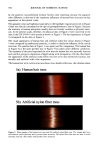
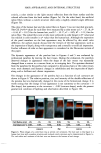
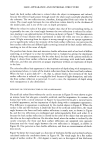
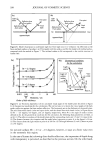
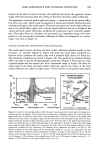
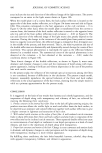
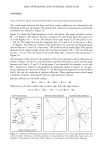
j. Cosmet. Sci., 53, 387-402 (November/December 2002) Influence of internal structure of hair fiber on hair appearance. II. Consideration of the visual perception mechanism of hair appearance SHINOBU NAGASE, NAOKI SATOH, and KOICHI NAKAMURA, Kao Corporation, Hair Care Research Laboratories, 1-3, Bunka 2-chome, Sumida-ku, Tokyo, 131-8501 Japan. Accepted for publication May 29, 2002. Based on a presentation given at the 12th International Hair-Sdence Symposium of DWI, Heidelberg, Germany, September 7, 2001. Synopsis The optical properties of hair fibers were studied, focusing on the reflections (highlights) from both the front and the back surfaces of the fiber in consideration and on the effect these have on the perceptions of hair appearance. The two reflections are distinguished from each other by sight, because only the back surface reflection is colored by melanin granules and/or dyestuffs inside the fiber. When we observe a flat plate as a model for hair without a cuticle structure, the visual angle between the two light loci correlates with the thickness of the model plate and gives an impression of depth. In the case of hair with a cuticle angle, the visual angle is maintained even when the fiber thickness is reduced. This visual angle causes an overesti- mation of the thickness and enhances the impression of depth. The visual angle changes dramatically with a curl curvature change of the hair tress, meaning that the impression of depth is also dynamically changed by a small change in hairstyle. The dynamic change in the impression of depth probably causes a vibrant impression. The following are required for beautiful hair appearance along with an impression of depth and vibrancy: (a) Internal structure without light scattering origins is essential to observe vivid colored high- lights from the back surface. (b) Well-ordered cuticles are essential to get intensive double highlights from the front and back surfaces. (c) A properly curved hairstyle is essential to obtaining a more vibrant impression. INTRODUCTION Since hair shine is one of the most important concerns of the consumer, much research has been conducted in order to understand the mechanism of hair shine and how to improve it. Hair shine has been mostly understood as an optical phenomenon of fiber surfaces, and technology to improve surface optical properties has been developed. Light penetrates, however, into hair fiber and is reflected at the back surface of the fiber, and so the internal hair structure must also affect hair appearance when the hair fiber is not completely black. The authors confirmed that the hair appearance is influenced by the 387

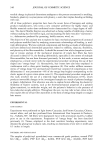
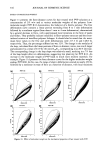
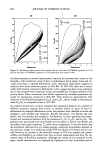
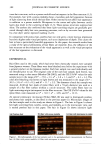
388 JOURNAL OF COSMETIC SCIENCE inner hair structure, such as a porous medulla and micropores in the fiber structure (1,2). For example, hair with a porous medulla shows a lusterless and dull appearance because of light scattering from inside the hair fiber. Other internal factors affect hair appearance in addition to a porous medulla. Micropores in the cortex and splits between cuticle layers also result in the scattering of light (3-5). These porous structures suppress hair shine. The authors also confirmed that these light-scattering origins are gradually gen- erated through daily hair care grooming processes, such as by excessive heat generated by a hot dryer and/or repeated washing (1,2,5). In comparison with porous hair, poreless hair not only gives a more lustrous impression but also a higher order visual perception, such as an impression of depth. This causes the hair to have a particularly beautiful appearance. In this paper, the research results from a study of the optical phenomena of hair fibers are reported. Also, the influence of the hair structure on the evaluation of the visual appearance as well as the visual perception of the hair appearance is discussed. EXPERIMENTAL Hair fibers used in this study, which had never been chemically treated, were sampled from Japanese women. These fibers were then bleached once before the experiment with a general product on the Japanese market. Each hair sample was used individually and not blended prior to use. The original color of the each hair sample, dark brown, was measured using a color meter (Minolta CM-2002), and the CIE L*a*b* values for each sample were in the range of L* = 25.8 + 3.1, a* = 3.6 + 1.1, and b* -- 6.4 + 3.4. The color after bleaching was brown to light brown and was measured in the range of L* = 30.2 + 3.0, a* = 6.2 + 0.3, and b* = 11.7 + 2.2. The diameter of each hair sample was measured. Artificial hair made of nylon fibers with a 70-pm diameter was used as a sample of a flat fiber surface without a cuticle structure. The nylon fibers have no light-scattering origin (micropores) in the fiber structure. The CIE L*a*b* values for the nylon fibers were measured as L* = 30.17, a* = 4.85, and b* = 12.13. An optical stereoscopic microscope (Nikon SMZ-10) was used to distinguish poreless and porous hair samples, as described in the previous paper (1). Microscopic images of the hair sample used in this study are shown in Figure 1. The hair in Figure la shows low light scattering from cuticles, cortex, and medulla, as in the microscopic view, and is named poreless hair in this paper. The hair in Figure lb shows intensive light I a) Poreless hair lb) Hair with porous medulla I c) Hair with micropores in cortex I I } I I 100 I•m 100 gm 100 Figure 1. Microphotographs of the hair samples used in the goniophotometric measurements. (a) Poreless hair. (b) Hair with porous medulla. (c) Hair with micropores in cortex.
Purchased for the exclusive use of nofirst nolast (unknown)
From: SCC Media Library & Resource Center (library.scconline.org)