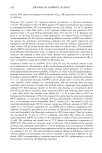
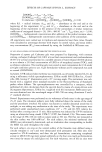
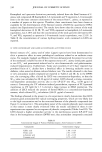
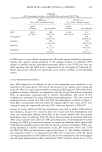
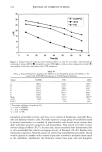
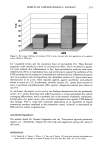
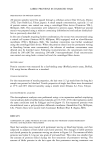
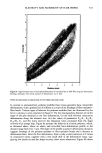
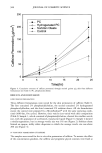
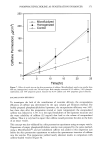
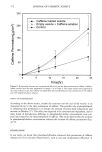
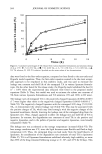
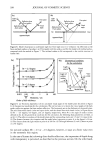
PHOSPHATIDYLCHOLINE AS PENETRATION ENHANCER 371 250 200 - 150 100 • 50 • Microfluidized ..... e ....... Homogenized --o-- Control ! I I i 0 5 10 15 20 25 Time(hr) Figure 7. Effect of vesicle size on the skin permeation of caffeine. Microfluidized, vesicle size smaller than 400 nm homogenized, vesicle size 700 nm-8 I•m. Both samples contained 0.5% caffeine, 2.0% phospha- tidylcholine, and 10% propylene glycol. Control was 0.5% caffeine and 10% propylene glycol solution. ENCAPSULATION EFFICIENCY To investigate the lack of the contribution of vesicular delivery, the encapsulation efficiency of caffeine was determined by the spin column gel filtration method. For freshly prepared phosphatidylcholine liposomes, the encapsulation efficiency was 34%, but three days after the preparation (stored at room temperature) the encapsulated caffeine was reduced to 3.3%. It is the rapid breakdown of the liposome structure and the water solubility of caffeine (22 mg/ml) that lead to the release of encapsulated caffeine. Thus it is very hard to expect that caffeine would penetrate the skin in the form of an intact vesicle. This concept was also validated by a skin permeation experiment using an empty vesicle. Dispersions of empty phosphatidylcholine vesicles were prepared by the same method, using a Microfiuidizer ©, and pre-solubilized caffeine was added to this dispersion just before the skin permeation experiment to reduce the spontaneous insertion of caffeine into the vesicles. This preparation yielded nearly identical results in comparison with caffeine-loaded vesicles (Figure 8).

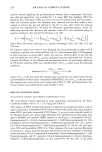
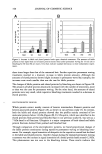
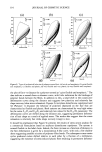
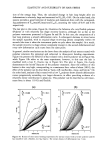
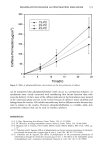
372 JOURNAL OF COSMETIC SCIENCE 250 • 200 E o 150 E Q_ 100 • 5O o Caffeine loaded vesicle Empty vesicle + Caffeine solution Control i I I 0 5 10 15 2o 25 Tirne(hr) Figure 8. Relationship between the encapsulation efficiency and the skin permeation of caffeine. Caffeine- loaded vesicles were the same preparation of sample 1 as in Table I. The empty vesicles were prepared by the same method, except that caffeine was added after the microfluidization step. Control was 0.5% caffeine and 10% propylene glycol solution. EFFECT OF PHOSPHOLIPIDS According to the above results, neither the structure nor the size of the vesicles is an important factor in the skin permeation of caffeine. The possible role of phospholipids in enhancing skin permeation is to disrupt the stratum corneum lipid composition and increase its fluidity (17). This effect was expected to be concentration-dependent, and so three kinds of formulations differing in phosphatidylcholine concentration were pre- pared and tested for the skin permeation of caffeine. The result showed that the increase in phosphatidylcholine concentration induced the increase of caffeine permeation (Fig- ure 9). CONCLUSION In our study, we found that phosphatidylcholine enhanced skin permeation of caffeine irrespective of its vesicular characteristics, such as size and encapsulation efficiency. It
Purchased for the exclusive use of nofirst nolast (unknown)
From: SCC Media Library & Resource Center (library.scconline.org)