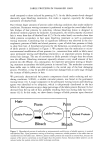
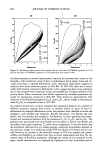
344 JOURNAL OF COSMETIC SCIENCE treatments. Taken together, we conclude that hair damage is clearly reflected in the elution property changes of these labile proteins. Development of sensitive, accurate, and reproducible assessments is required for pre- vention of hair damage from permanent waving and bleaching lotions. A newly intro- duced hair damage index based on labile protein measurement will aid in advancing hair care products. CONCLUSION The amount of labile hair proteins released by a partial extraction rises dramatically as the number of perming and bleaching treatments increase. The labile proteins accumu- late in permed and bleached hair. Through the measurement of labile protein amounts, hair damage can be assessed with high reproducibility and sensitivity. This index is useful for the assessment of hair damage. REFERENCES (1) C. R. Robbins, Chemical and Physical Behavior of Human Hair, Third ed. (Springer Verlag, New York, 1994), pp. 55-92. (2) R. Kon, A. Nakamura, N. Hirabayashi, and K Takeuchi, Analysis of the damaged components of perreed hair using biochemical technique, J. Cosmet. Sci., 49, 13-22 (1998). (3) T. Inoue, K. Kizawa, and M. Ito, Characterization of soluble protein extracts from keratinized tissues: Identification of ubiquitin universally distributed in hair, nail, and stratum comeurn, Biosci. Biotechnol. Biochem., 65,895-900 (2001). (4) T. Inoue, M. Ito, and K. Kizawa, Characterization of eluted proteins from hair fiber under permanent waving or bleaching,J. Soc. Cosmet. Chem. Jpn., 35, 237-242 (2001). (5) H. Schiigger and G. von Jagow, Tricine-sodium dodecyl sulfate-polyacrylamine gel electrophoresis for the separation of proteins in the range 1 to 100 kDa, Anal Blochem., 166, 368-379 (1987). (6) T. Horiuchi, N. Ichinose, and I. Kashiwa, Physical properties of damaged hair, J. Soc. Cosmet. Chem. Jpn., 14, 116-119 (1980). (7) M. L. Tare, Y. K. Kamath, S. B. Ruetsch, and H.-D. Weigmann, Quantification and prevention of hair damage, J. Soc. Cosmet. Chem., 44, 347-371 0993). (8) C. R. Robbins, Chemical and Physical Behavior of Human Hair, Third ed. (Springer Verlag, New York, 1994), pp. 299-370. (9) W.W. Edman and M.E. Marti, Properties of peroxide-bleached hair, J. Soc, Cosmet. Chem., 12, 133-145 O961). (10) M. Oku, H. Nishimura, and H. Kanehisa, Dissolution of proteins from hair. II. The analysis of proteins dissolved into permanent waving agent and the evaluation of hair damage, J. Soc: Cosmet. Chem. Jpn., 21, 204-209 (1987). (11) S.S. Sandhu and C. R. Robbins, A simple and sensitive technique, based on protein loss measurements, to assess surface damage to human hair, J. Soc: Cosmet. Chem., 44, 163-175 (1993). (12) S.S. Sandhu, R. Ramachandran, and C. R. Robbins, A simple and sensitive method using protein loss measurements to evaluate damage to human hair during combing, J. Soc. Cosmet. Chem., 46, 39-52 (1995). (13) A. S. Rele and R. B. Mobile, Effect of coconut oil on prevention of hair damage, Part I,J. Cosmet. Sci., 50, 327-339 (1999). (14) T. Inoue, I. Sasaki, M. Yamaguchi, and K. Kizawa, Elution of S100A3 from hair fiber: New model for hair damage emphasizing the loss of S100A3 from cuticle,J. Cosmet. Sci., 51, 15-25 (2000).

j. Cosmet. Sci., 53, 345-361 (November/December 2002) Mechanical analysis of elasticity and flexibility of virgin and polymer-treated hair fiber assemblies J. JACHOWICZ AND R. McMULLEN, International Specialty Products, Wayne, NJ Accepted for publication June 18, 2002. Synopsis The elasticity and flexibility of virgin and polymer-treated hair fiber assemblies were investigated by employing straight hair tresses or hair shaped into omega loops. Polymer treatment was accomplished by saturating fibers with polymeric solutions, resulting in a deposition of 10-90 mg of polymer per gram of hair. The mechanical testing procedure consisted of subjecting omega-loop-shaped hair or straight hair tresses to multiple bending deformations at 25% strain in a texture analyzer. A total of ten deformations were typically carried out, and elasticity or flexibility parameters were evaluated from data such as (a) the force at 8% deformation, i.e., within the elastic region of bending deformation for hair shaped into an omega loop, (b) maximum force in the first (F1) and tenth (F•o) deformation cycles, (c) elastic modulus in the first (E•) and tenth (E•o) deformation cycles, and (d) the change in hair sample dimensions between the first (H•) and tenth (H•o) deformation cycles. Parameters such as stiffness ratio (1), F•o/F•, E•o/E•, and H•o/H • were employed to characterize hair tress rigidity, flexibility or resistance to breakage, and plasticity. Untreated hair was found to be almost perfectly elastic and flexible at 50% RH, evident by the linear dependence of force vs deformation. Flexibility parameters F•o/F•, E•o/E•, and H•o/H • were in the range of 0.95 to 1.0 at low humidity, while the parameters F•o/F 1 and E•o/E • and were 10% lower at 90% RH. Examination of polymer-modified hair allowed for classification of treatments into categories termed brittle, quite flexible and nonplastic, flexible and plastic, very flexible and very plastic, and very flexible and nonplastic. Poly- (vinyl pyrrolidone) is shown as an example of a quite flexible and nonplastic material, with its flexibility and stiffness dependent upon its molecular weight. The effect of plasticizers on polymer behavior is also discussed. INTRODUCTION Elasticity is commonly defined in relation to solid objects as their ability to recover size or shape after deformation. In scientific terms, elasticity implies a linear relationship between the stress (or force) and strain (deformation distance) measured in a sample. A similar term, sometimes used in relation to the mechanical properties of materials is resiliency, which implies free return to a previous position, shape, or condition after deformation. It also describes a material capable of withstanding shock without perma- nent deformation or rupture. Another term frequently employed to describe mechanical properties is flexibility. According to a dictionary definition, it describes an object that is capable of being flexed, turned, bowed, or twisted without breaking (2). It may also be characterized by plasticity, which suggests that the material can undergo an irre- 345
Purchased for the exclusive use of nofirst nolast (unknown)
From: SCC Media Library & Resource Center (library.scconline.org)