j. Cosmet. Sci., 53, 363-374 (November/December 2002) The skin-permeation-enhancing effect of phosphatidylcholine: Caffeine as a model active ingredient CHINHAN KIM, JONGWON SHIM, SANGHOON HAN, and IHSEOP CHANG, Skin Research Institute, Pacific Co./ROD Center, 314-1, Bora-ri, Kiheung-eup, Yongin-si, Kyounggi-do, 449-900, Korea. Accepted for publication April 29, 2002. Synopsis Phospholipids or liposomes are recognized to have skin permeation enhancing ability, although their mechanisms are still controversial. The aim of this study was to establish a method of increasing the skin permeation of active ingredients, using phosphatidylcholine as a permeation enhancer. Caffeine was used as a model active ingredient and in vitro skin penetration experiments were performed using Franz-type diffusion cells to determine the amount of absorbed caffeine. Lipid vesicles were prepared by the micro- fluidization process. The encapsulation efficiency of caffeine was found to be very low due to the instability of the liposome structure and the water solubility of caffeine. However, the amount of absorbed caffeine was nearly independent of the encapsulation efficiency and the vesicle size, but increased with the increase of phosphatidylcholine concentration. These results indicated that phosphatidylcholine could act as a penetra- tion enhancer, irrespective of its presence in vesicular form or solubilized form. INTRODUCTION Recently, many cosmetic products have claimed biological functions such as anti- wrinkle, anti-aging, anti-acne, alepigmentation, etc. To take real effect on the skin, the biologically active ingredients should be absorbed into the skin. For that reason, topical delivery of active ingredients has gained considerable interest in cosmetic science (1,2). However, the stratum corneum of the skin forms an excellent barrier to external appli- cation and it is necessary to employ some penetration enhancers or appropriate vehicles to increase the skin permeation of the active ingredients (3). The use of phospholipids to increase skin permeation has been studied widely. Phos- pholipids are used in solubilized form as penetration enhancers (4,5) or used as a vesicular delivery system (6-9). The major advantage of phospholipids is a lower level of the tendency toward the inducement of skin irritation, compared with that of typical penetration enhancers (10,11). In this study, we investigated the skin permeation enhancing ability of phosphatidyl- Address all correspondence to Ihseop Chang. 363

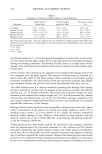
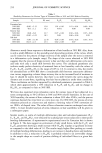
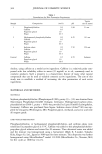
364 JOURNAL OF COSMETIC SCIENCE Table I Formulations for Skin Permeation Experiments Vesicle Sample Composition (wt%) pH size (Z mean) 1 Phosphatidylcholine 2.0 5.98 51 nm Caffeine 0.5 Propylene glycol 10 Water 87.5 2 Hydrogenated phosphatidylcholine 2.0 6.45 141 nm Caffeine 0.5 Propylene glycol 10 Water 87.5 3 Sorbitan oleate 2.0 5.50 224 nm Caffeine 0.5 Propylene glycol 10 Water 87.5 Control Caffeine 0.5 6.70 Solution Propylene glycol 10 Water 89.5 choline, using caffeine as a model active ingredient. Caffeine is a relatively polar com- pound with low solubility either in water (22 mg/ml) or in oil, commonly used in cosmetic products. Such a property is a characteristic feature of many other natural compounds that can be used as valuable cosmetic active ingredients. The aim of this study was to establish a method of increasing the skin permeation of such active ingredients. MATERIALS AND METHODS MATERIALS Soybean phosphatidylcholine (Phosphoripon© 90G, purity 93 + 3%) was obtained from Nattermann Phospholipid GmbH (Cologne, Germany). Hydrogenated soybean phos- phatidylcholine (S100-3, purity 90%) was provided by Lipold GmbH (Ludwigshafen, Germany). Caffeine was purchased from Sigma. Sorbitan oleate (Arlace © 80) was sup- plied by Uniquema (Wilmington, DE). Propylene glycol, methanol, and acetic acid were all reagent grade. LIPID VESICLE PREPARATION Phosphatidylcholine, or hydrogenated phosphatidylcholine, and sorbitan oleate were solubilized in propylene glycol at 55øC. Caffeine was added to this phosphatidylcholine- propylene glycol solution and stirred for 20 minutes. Then deionized water was added and the mixture was homogenized using a homomixer (Mark II, F-model, Tokushu Kika, Kogyo Co. Ltd., Japan) at 5000 rpm for three minutes. This dispersion was further homogenized using Microfiuidizer © model 110 E/H (Microfluidics Co., Newton, MA) for five cycles at 1000 bar (12,13).
Purchased for the exclusive use of nofirst nolast (unknown)
From: SCC Media Library & Resource Center (library.scconline.org)