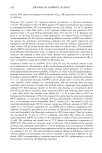
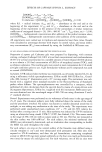
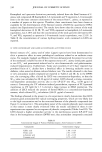
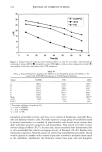
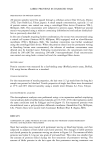
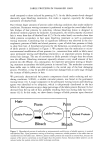
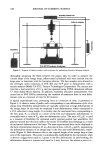
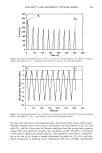
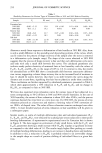
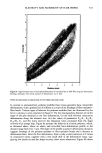
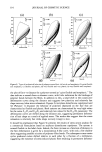
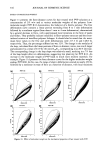
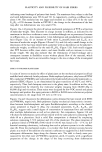
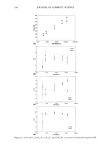
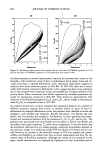
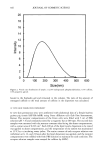
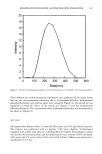
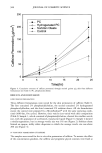
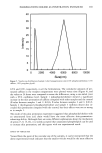
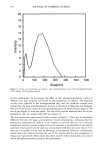
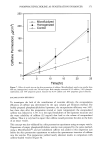
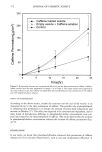
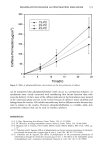
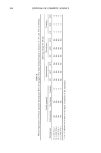
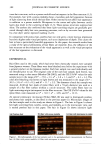
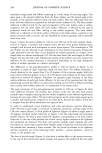
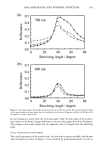
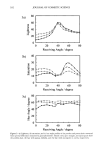
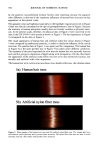
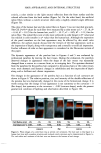
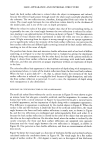
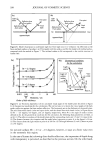
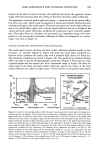
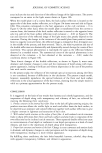
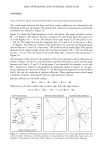
348 JOURNAL OF COSMETIC SCIENCE Humidity Control Unit Humidifier • Cables to computer .... [I TA-XT2 Texture Analyzer . Figure 2. Diagram of texture analyzer and accessories for performing dynamic hairspray analysis. thoroughly saturating the fibers between the plastic tabs. In order to preserve the circular shape of the omega loops, teflon-coated cylindrical rods were inserted into the loops prior to treatment with the hairspray solution. The hair samples were allowed to dry overnight under conditions of 50% RH and 70øF prior to measurement with a texture analyzer (Model TA-XT2, Texture Technologies Corporation). The texture ana- lyzer has a load sensitivity of 0.1 g and was operated using XTRA dimension software 3.7 from Stable Micro Systems. In addition, humidity resistance measurements were carried out at 90% RH by monitoring the variation of maximum force in each defor- mation cycle as a function of time for 80 minutes. A typical experimental trace, portraying force as a function of time, is presented in Figure 3. It shows a series of peaks, each corresponding to one deformation cycle of an omega loop. Flexibility measurements are typically carried out at large deformations of the omega loops. In this work we employed 4-mm deformations, which correspond to a 25% reduction in loop height. It is evident that the maximum force corresponding to the first peak, F•, is reduced as a result of the first and subsequent deformations, to eventually reach a value of Flo after ten deformation cycles. The ratio of Flo/F t is used as a measure of flexibility for untreated and/or polymer-treated hair assemblies. For polymer-treated hair this ratio reflects the extent of interfiber bond breakage as a result of mechanical deformation of the loops. The same experimental data can be displayed in the form of penetration distance, H, as a function of time, with Hlo and H i representing the deformation distance of an omega loop in the first and tenth deformations, respec- tively (Figure 4). Both distances refer to the original height of the omega loop at time zero of the experiment. This point is automatically established by the instrument when it detects a trigger force equal to 2 grams in the first deformation. In each bending, the deformation distance is constant and equal to 4 mm however, the reference point (i.e.,

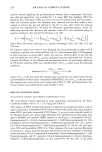
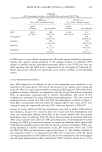
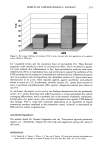
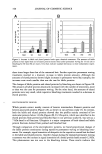
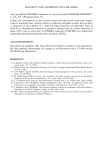
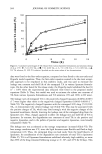
ELASTICITY AND FLEXIBILITY OF HAIR FIBERS 349 350 Flo 300 •, 250 o • 200 u. 150 100 5O 0 50 100 150 200 250 300 350 Time (s) Figure 3. A typical experimental trace of force as a function of time obtained in a dynamic hairspray analysis experiment. Fx, Fxo = maximum values of force in the first and tenth deformations. H• Hlo 4 -10 -12 0 50 1 O0 150 200 250 300 350 Time (s) Figure 4. A typical experimental trace of distance as a function of time obtained in a dynamic hairspray analysis experiment. Hx, Hxo = loop height in the first and tenth deformations. the top of the loop prior to any deformations) is decreased for hair treated with a plastic (flowable) material due to a reduction in the height of the loop. Moreover, H 1 is 4 mm while H•o will be 4 mm plus the distance resulting from the omega loop geometry change. The ratio, denoted as H1o/H•, and calculated as {(2H1-H1o)/H1}, is employed in this work to characterize sample plasticity. This parameter scales from 1, correspond- ing to the case of no change in sample dimensions (no plasticity, H1o--H1), and zero, which corresponds to doubling of the deformation (2Hi=H•o). Finally, experimental
Purchased for the exclusive use of nofirst nolast (unknown)
From: SCC Media Library & Resource Center (library.scconline.org)