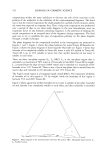
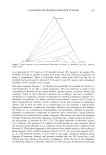
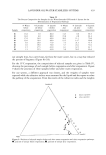
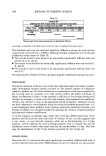
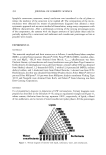
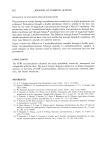
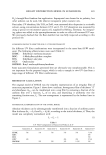
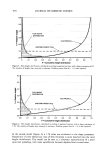
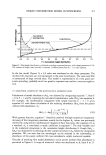
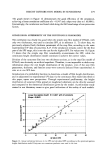
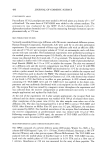
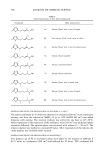
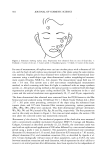
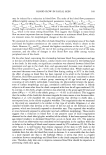
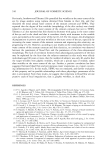
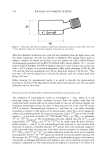
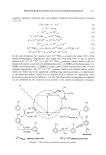
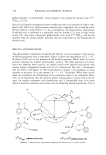
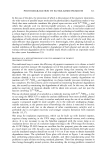
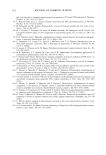
458 JOURNAL OF COSMETIC SCIENCE alkylbenzoatelethanol 2/1 4-Methylbenzilidencanpho r •l• Cyclomethicone Figure 6. Ternary diagram of systems with C12_15 alkylbenzoate, ethanol, cyclomethicone, and 4-meth- ylbenzilidene camphor. The best systems were those obtained by mixing 90%, 80%, and 70% of the 10/90, 20/80, 30/70, or 40/60 cyclomethicone/(C•2-C•5 alkylbenzoate/ethanol 2:1) mixture with methylbenzilidene camphor. Octylrnethoxycinnarnate had a higher affinity for the lipids than did 4-methylbenzilidene camphor and required less ethanol for its dissolu- tion. Two transparent systems with high percentages of sunscreen agents were chosen to avoid their excessive dilution in the final microemulsions: A: 32.7% C•2_•5 alkylbenzoate, 16.3% ethanol, 21.0% cyclomethicone, 30.0% 4-meth- ylbenzilidene camphor. B: 33.6% C•2_•5 alkylbenzoate, 8.4%, 18.0% cyclomethicone, 40.0% octylmethoxy- cinnamate. These solutions, with the highest percentages of lipids and sunscreens, were chosen to reformulate microemulsions with good amounts of water, and pseudoternary systems were drawn to prepare more O/W microemulsions with water:l,2-hexanediol (2/1) or water:2-methyl,2,4-pentanediol (4/1) as polar phase and decylpolyglucose/soya lecithin as surfactant. As an example, a ternary diagram of the mixtures with 2-rneth- ylbenzilidene camphor and with 1,2-hexanediol as cosurfactant is presented in Figure 7. Table III shows the compositions of transparent systems with 4-methylbenzylidene camphor. Figure 8 shows the ternary diagrams of the system with octylmethoxycinnamate in the presence of water/1,2-hexanediol 2/1. The compositions of microemulsions with octyl- methoxycinnamate are shown in Table IV. By using octylmethoxycinnamate with 1,2-hexanediol and water as polar phase, the replacement of the lipid phase with the complex system changed the existence area and gave systems with the lowest percentage of the surfactant/lipid mixture. With 2-rnethyl- 2,4-pentanediol as polar phase, the mixture of 60% lipid/surfactant to 40% polar phase was not obtained. The microemulsion with octylmethoxycinnamate chosen was the system obtained by diluting 50% of the 30/70 lipid/surfactant mixture with 50% polar phase, with hexanediol as cosurfactant. The microemulsions with 4-methylbenzylidene camphor at 4.5% and octylmethoxy- cinnamate at 6.0% had the following compositions:

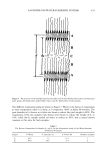
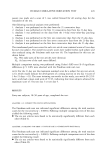
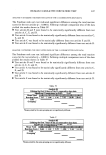
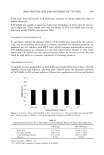
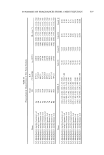
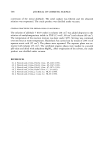
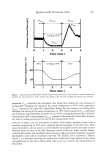
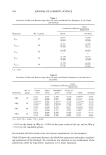
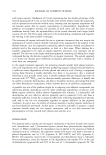
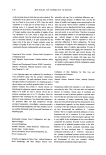
OW MICROEMULSION IN SUNSCREENS 459 C•2-C•e alkylbenzoate 32.7% ethanol 16. 3% cvclornethicone 21% 4-methylbenzylidencamphor 30% / \ / \ / / \ ^ ß crystals Water/ A_.-•/• \ 1,2.hexanediol =•----•-•o • •i • •! Decylpolyglucose 67% Figure 7. Ternary diagram of the complex mixtures with C•2_•5 alkylbenzoate, ethanol, cyclomethicone, 4-methylbenzylidene camphor, soya lecithin, decylpolyglucose, water, and 1,2-hexanediol. Table III W/W Percentages of Components of Microemulsions With 4-Methylbenzylidene Camphor (MBC), Soya Lecithin (SL)/Decylpolyglucose (DPG)/C•2_• 5 Alkylbenzoate (CAB)/Cyclomethicone (CMC)/Ethanol/ Water and 1,2-Hexanediol (HD) or Water and 2-Methyl, 2,4-Propanediol (MPD) Total Surfactant/lipid Dilution HD water DPG SL CAB Ethanol CMC MBC 60/40 50/50 16.67 42.38 11.05 9.90 6.54 3.26 4.20 6.00 60/40 60/40 20.00 47.24 8.84 7.92 5.23 2.61 3.36 4.80 70/30* 50/50* 16.67' 43.88* 12.90' 11.55' 4.91' 2.44* 3.15' 4.50* 80/20 50/50 16.67 45.39 14.74 13.20 3.27 1.63 2.10 3.00 80/20 90/10 30.00 62.41 2.95 2.64 0.65 0.33 0.42 0.60 MPD 60/40 50/50 14.29 44.76 11.05 9.90 6.54 3.26 4.20 6.00 60/40 90/10 25.71 66.10 2.21 1.98 1.31 0.65 0.84 1.20 70/30 90/10 25.71 66.40 2.58 2.31 0.98 0.49 0.63 0.90 80/20 50/50 14.29 47.77 14.74 13.20 3.27 1.63 2.10 3.00 80/20 90/10 25.71 66.70 2.95 2.64 0.65 0.33 0.42 0.60 In the most stable system,* no crystals of methylbenzylidene camphor formed over time, but over time sedimentation occurred, and so 2.5% 1,2-hexanediol was replaced by 2.5% ethanol. With 2-methyl-2,4- pentanediol, the stability of the systems appeared to increase. C: 4-methylbenzylidene camphor 4.5 %, cyclomethicone 3.15 %, ethanol 2.44%, C•2_•5 alkylbenzoate 4.91%, decylpolyglucose 23.45 %, soyalecithin 11.55 %, 1,2-hexanediol 16.67%, water 33.33%. D: octylmethoxycinnamate 6.0%, cyclomethicone 2.7%, ethanol 1.26%, C•2_•5 alkyl- benzoate 5.04%, decylpolyglucose 23.45%, soyalecithin 11.55%, 1,2-hexanediol 16.67%, water 33.33%. System C was modified by adding allantoin, menthol, and stearyl methicone so as to produce a fresh, waterproof, and moisturizing product: E: 4-methylbenzilidene camphor 3.0%, cyclomethicone 3.24%, ethanol 2.52%, C•2_•5 alkylbenzoate 5.04%, menthol 0.40%, stearyl methicone 0.80%, decylpolyglucose
Purchased for the exclusive use of nofirst nolast (unknown)
From: SCC Media Library & Resource Center (library.scconline.org)