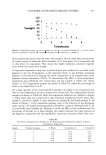
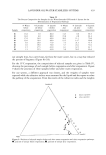
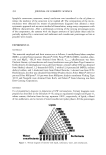
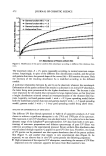
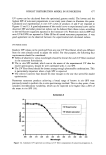
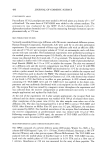
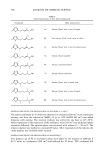
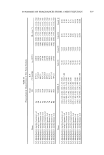
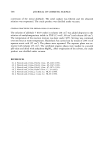
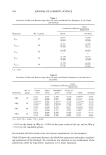
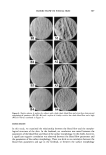
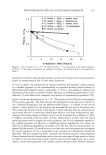
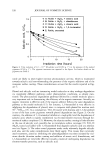
478 JOURNAL OF COSMETIC SCIENCE Sunscreen F • Experimental 1,4 1,2 • Model calculation m 1 0,6 0,4 0,2 0 290 300 310 320 330 340 350 360 370 380 390 400 Wavelength Figure 13. Calculated UV spectrum according to UV filter composition of sunscreen preparation F. Table III Comparison Between Experimental In Vitro Indices and Calculated Indices In vitro SPF Ratio UVA/UVB Experimental Calculated Experimental Calculated Sunscreen A 13.2 12.9 0.32 0.31 Sunscreen B 17.4 17.7 0.60 0.59 Sunscreen C 21.7 22.9 0.79 0.77 Sunscreen D 23.8 24.2 0.71 0.66 Sunscreen E 18.9 18.6 0.55 0.54 Sunscreen F 29.8 28.5 0.53 0.53 According to these requirements, calculated SPF, comparable to in vivo SPF, can be obtained. A very common O/W cosmetic base was used to formulate sunscreen products A-F. Thus, a lot of sunscreen formulations can be simulated in that way. To prove that the SPFs of 41 different sunscreen preparations were calculated through the gamma height distribution model, in order to be compared to the in vivo values. New UV filters were incorporated in the study they are called by their INCI names: ethylhexyl triazone, diethylhexyl butamido triazone, phenyl benzimidazole sulfonic acid, isoamyl p- methoxycinnamate, octocrylene, methylene bis-benzotriazoyl tetramethylbutylphenol (MBBT), bis-ethylhexyloxyphenol methoxyphenyl triazine (BEMT), and titanium diox- ide (TiO2). The in vivo SPFs were determined according to European protocol (COLIPA sun pro- tection factor test method). In some cases, instead of using ten volunteers, the studies were carried out with only five volunteers. A broad range of SPFs could be selected in order to test the model: minimum SPF = 3, maximum SPF = 57.

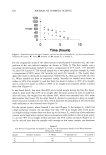
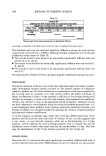
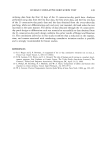
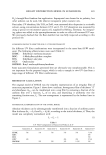
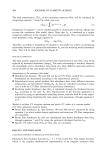
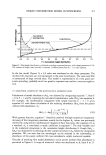
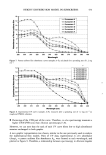
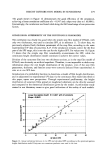
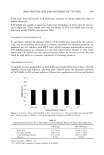
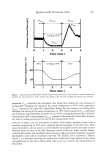
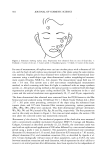
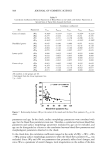
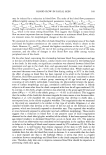
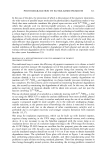
HEIGHT DISTRIBUTION MODEL IN SUNSCREENS 479 The graph shown in Figure 14 demonstrates the good efficiency of the simulation, achieving a linear correlation coefficient of r = 0.947 and a slope very close to 1 (0.9841). Interestingly, the correlation was found valid along the full broad range of sun protection factors. CONCLUSION: SUPERIORITY OF THE CONTINUOUS FILM MODEL The correlation was clearly less good when the simple step film model of O'Neill, with only two thicknesses, was used to simulate SPF, as in reference 11. To show that, we previously adjusted both thickness parameters of the step film, accoMing to the same experimental UV data of sunscreens A-F. If the simulation remains correct for the first part of the SPF range, this is not the case for the highest SPF. For values over 30, Figure 15 shows that the simple step film considerably overestimates the SPF, while the continuous height distribution model continues to achieve the correct values. Division of the sunscreen film into two thickness sections, as in the step film model of O'Neill, was obviously an artificial expedient. Therefore, it was impossible to deduce any information about the real height distribution of the product, even if the step film parameters, thickness, and fraction areas were correctly deduced from experimental in vitro or in vivo SPF data. Introduction of a probability function to determine a model of film height distribution, and its adjustment to experimental UV data via the continuous film model described in this paper, opens new perspectives. Through experimental profilometry, the height distribution of sunscreen films spread on roughened substrates can be directly assessed and compared to the theoretical distribution given by the model. A preliminary study started in our laboratory seems to give good indications of the reality of such models. 60 Linear Correlation Coeff. R = 0,947 with 41 products Slope = 0,9841 50 ....................................................................... -•'- '"t .... -'- 30 ............................... -•- ........... ,• ............................ 0 0 10 20 30 40 50 60 IN VIVO SPF Figure 14. Linear correlation between in vivo SPF and calculated SPF, according to the optimized gamma height distribution model. Forty-one new sunscreen products were used in the test.
Purchased for the exclusive use of nofirst nolast (unknown)
From: SCC Media Library & Resource Center (library.scconline.org)