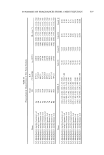
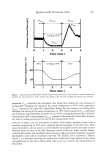
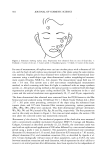
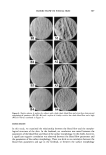
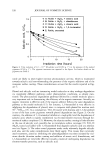
510 JOURNAL OF COSMETIC SCIENCE Previously, Imokawa and Takema (30) quantified fine wrinkles at the outer corner of the eye by image analysis using replicas obtained from females in their 30s, and they measured the mean annual water content of the stratum corneum and TEWL. They reported that the degree of fine wrinkles (morphology of the skin surface) was closely related to decreases in the water content of the stratum comeurn but not to TEWL. Takema eta/, also reported that skin elasticity decreases with aging in the outer corner of the eye and in the cheek and that it correlates closely with increases in the wrinkle score, particularly at the outer corner of the eye (21,22). For this reason, the development of preparations to prevent and treat wrinkles at the outer corner of the eye, especially by increasing the water content of the stratum corneum and improving skin elasticity, are progressing (31,32). However, according to our results on the relationship between the water content of the stratum corneum and skin elasticity, no correlation was observed between the parameters of blood flow and the parameters of the three-dimensional morphology. The lack of correlation between these physiological parameters of the skin may be explained by the facts that the subjects examined in this study were elderly individuals aged 60 years or more, that the number of subjects was only 40, and/or that the target wrinkles were glyphic wrinkles, which are a special type of wrinkle, rather than wrinkles at the outer corner of the eye. Further, a positive correlation has been suggested between blood flow and percutaneous water evaporation, in a report concern- ing inflammation (16). In this study, TEWL was not measured, and further evaluation of this property and its possible relationships with these physiologic parameters of the skin is anticipated. From these results, we suggest that reductions in blood flow are one putative cause of local irregularities, that is, glyphic wrinkles, in cheek skin. REFERENCES (1) P. G. Agache, J. Mignot, and S. Makki, "Microtopography of the Skin and Aging," in Cutaneous Aging, A.M. Kligman and Y. Takase, Eds. (University of Tokyo Press, Tokyo, 1988), pp. 475-490. (2) G. L. Grove and M.J. Grove, "Objective Methods for Assessing Skin Surface Topography Noninva- sively," in Cutaneous Investigation in Health and Disease, J. L. Leveque, Ed. (Marcel Dekker, New York, Basel, 1980), pp. 1-32. (3) J. L. Leveque, and P. Cotcuff, "The Surface of the Skin," in Noninvasive Methods for the QuantijS'cation of Skin Functions, P.J. Frosch and A.M. Kligman, Eds. (Springer-Verlag, Berlin, 1993), pp. 223-240. (4) P. Corcuff, J. L. Leveque, G. L. Grove, and A.M. Kligman, The impact of aging on the microrelief of peri-orbital and leg skin, J. Soc Cosmet. Chem., 82, 145-152 (1987). (5) S. Hayashi, T. Matsuki, K. Matsue, S. Arai, Y. Fukuda, and T. Yoneya, Changes of facial wrinkles by aging and application of cosmetics, J. Sot'. Cosmet. Chem. Jpn., 27, 355-373 (1993). (6) S. Hayashi, K. Mimura, and Y. Nishijima, Changes in surface configuration of skin caused by aging and application of cosmetics, Int. J. Cosmet. Sci., 11, 67-85 (1989). (7) P. Corcuff, J. de Rigal, J. L. Leveque, S. Makki, and P. Agache, Skin relief and aging, J. Soc. Cosmet. Chem,, 34, 177-190 (1983). (8) T. Ishida, N. Kashibuchi, K. Morita, and S. Tuasa, Measurement of skin roughness by computerized surface tracing and applications in cosmetic efficacy substantiation, Cosmet, Toi/etr., 94, 39•i7 (1979). (9) S. Nicholls, C. S. King, and R. Marks, Short term effects of emollients and a bath oil on the stratum corneum, J. Soc Cosmet. Chem., 29, 617-624 (1978). (10) Y. Takema, K. Tsukahara, T. Fujimura, and M. Hattori, Age-related changes in the three-dimensional morphological structure of human facial skin, Skin Res. Tech., 3, 95-100 (1997). (11) R. I. Murahata, D. M. Crowe, and J. R. Roheim, Evaluation of hydration state and surface defects in the stratum comeurn: Comparison of computer analysis and visual appraisal of positive replicas of human skin,J. Soc. Cosmet. Chem., 35, 327-338 (1984). (12) M. Mochizuka, H. Inoue, M. Shaku, H. Koiso, S. Nozawa, N. Kashibuchi, M. Makino, H. Nakano,

BLOOD FLOW IN FACIAL SKIN 511 (13) (14) (15) (16) (17) (18) (19) and S. Karo, The physiological condition of skin surface and skin type, Cosmet. Toilerr., 7, 51-61 (1982). A. Takagi, S. Goto, F. Sugita, K. Ishigo, and M. Shikano, Influence of aging and sex on skin temperature, Biotaed. Techno/., 13, 29-31 (1993). Y. Tsuchida, O. Fukuda, and S. Kamata, The effect of anemia on skin blood flow in humans, J. Dermato/. Sd., 9, 117-122 (1995). Y. Nagashima, Y. Yada, T. Suzuki, and A. Sakai. Evaluation of the use of an integration-type laser-Doppler flowmeter with a temperature-loading instrument for measuring skin blood flow in elderly subjects during cooling load: Comparison with younger subjects, Int. J. Biometeoro/., 47, 139-147 (2003). D. Van Neste, G. Mahmoud, and M. Masmoudi, Experimental induction of rough dermatitic skin in humans, Contact Dermatitis, 16, 27-33 (1987). T. Fordin, L. Molin, and M. Skogh, Effects of single dose ofUVA, UVB and UVC on skin blood flow, water content, and barrier function measured by laser-Doppler flowmetry, optothermal infrared spec- trometry and evaporimetry, Photodermato/ogy, 5, 187-195 (1988). Y. Nagashima, Y. Yada, T. Suzuki, and A. Sakai, Development and clinical application of an inte- gration type laser-Doppler flowmeter equipped with temperature load instrument for skin blood flow, Jpn. J. App/. Physio/., 31,305-314 (2001). Y. Nagashima, Y. Yada, T. Suzuki, and A. Sakai, Comparison of the skin blood flow under cooling loads at various body sites using an integration-type skin blood laser-Doppler flowmeter with a temperature loading instrument (ILD-T),Jpn. J. App/. Physio/., 32, 109-118 (2002). (20) M. Uesugi, Three-dimensional curved shape measuring system using image encoder, J. Robot. Mecha- tron., 3, 190-195 (1991). (21) Y. Takema, Y. Yorimoto, M. Kawai, and G. Imokawa, Age-related changes in the elastic properties and thickness of human facial skin, Br. J. Dermato/., 131,641-648 (1994). (22) Y. Takema, Y. Yorimoto, and M. Kawai, The relationship between age-related changes in the physical properties and development of wrinkles in human facial skin, J. Soc Cosmet. Chem., 46, 163-173 (1995). (23) P. G. Agache, C. Monneur, J. L. Leveque, and J. de Rigal, Mechanical properties and Young's modulus of human skin in vivo. Arch. Dermato/. Res., 269, 221-232 (1980). (24) A.M. Kligman, P. Zheng, and R. M. Lavker, The anatomy and pathogenesis of wrinkles, Br. J. Dermato/., 113, 37•42 (1985). (25) S. Imayama, Aging changes of the blood vessels in the skin, Nagoya Med. J., 43, 113-119 (2000). (26) H. Yamaba, Evaluation of skin function by measurement of blood flux, FragraneJ., 30, 54-60 (2002). (27) D.L. Bisset, D.P. Hannon, and T.W. Orr, An animal model of solar-aged skin: Histological, physical, and visible changes in UV-irradiated hairless mouse skin, Photochem. Photobid., 46, 367-378 (1987). (28) Y. Takema, T. Fujimura, H. Ohsu, and G. Imokawa, Unusual wrinkle formation after temporary skin fixation followed by UVB irradiation in hairless mouse skin, Exp. Dermato/., 5, 145-149 (1996). (29) K. Tsukahara, Y. Takema, S. Moriwaki, N. Tsuji, Y. Suzuki, T. Fujimura, and G. Imokawa, Selective inhibition of skin fibroblast elastase elicits a concentration-dependent prevention of ultraviolet B- induced wrinkle formation. J. Invest. Dermato/., 117, 671-677 (2001). (30) G. Imokawa and Y. Takema, Fine wrinkle formation: Etiology and prevention, Cosmet. Toilerr., 108, 65-77 (1993). (31) E. Shishido, M. Kawashima, K. Tsukahara, T. Fujijura, S. Moriwaki, Y. Takema, and G. Imokawa, Effect of amidino-L-proline on fine wrinkles at the eye corners, Skin Res. 1, 355-362 (2002). (32) T. Fujimura, K. Tsukahara, and H. Kawada, Development of anti-wrinkle agent based on improving skin elasticity, FragranceJ., 30, 38•42 (2002).
Purchased for the exclusive use of nofirst nolast (unknown)
From: SCC Media Library & Resource Center (library.scconline.org)