J. Cosmet. Sci., 54, 513-524 (September/October 2003) Photodegradation of phenol and salicylic acid by coated rutile-based pigments: A new approach for the assessment of sunscreen treatment efficiency DAVIDE VIONE, TATIANA PICATONOTTO, and M. EUGENIA CARLOTTI, Dipartimento di Chimica Analitica, Universit2• degli Studi di Torino, Via P. Giuria 5 (D. V., T.P.), and Dipartimento di Scienza e Tecnologia del Farmaco, Universita degli Studi di Torino, Via P. Giuria 9 (M.E.C.), 10125 Turin, Italy. Accepted for publication April 11, 2003. Synopsis The treatments used in many commercial sunscreen pigments (organic additives and inorganic surface coating) to lower the pigments' ability to degrade molecules under photocatalytic conditions are effective in inhibiting the degradation oF phenol, but much less effective towards the degradation of salicylic acid. The reason is in the different degradation pathways that phenol and salicylic acid follow under photocata- lytic conditions. The treatments are thus effective in inhibiting the degradation pathways initiated by TiIV-øOHsurf (also named øOHa,•s), as in the case of phenol, but much less effective towards electron-transfer processes involving surface complexes, as in the case of salicylic acid. These results indicate that the techniques currently adopted by the cosmetic industry to develop organic additives for use as pigment treatments are likely to be inadequate. The problem most likely is that treatments are optimized following the inhibition of the photocatalytic degradation of a single model molecule, which results in blocking just one photocatalytic degradation pathway (usually the one initiated by TiIV-'OHs•) and not the other (electron transfer processes). The possible implications for sunscreen pigments are briefly discussed, and a new approach for the evaluation of the photocatalytic activity of inorganic sunscreens is proposed. INTRODUCTION Solar creams and gels make wide use of sunscreen agents with the aim of protecting the skin from solar UV radiation exposure. Sunscreens act via absorption of UV radiation, thus lowering the radiation flux reaching the skin. Among these compounds, white inorganic pigments such as titanium dioxide and zinc oxide are widely used for their photostability and relevant absorption in the UV region (1). However, an important drawback connected with the use of these pigments is their being semiconductor oxides, thus showing photocatalytic activity upon radiation absorption. This means that semi- Address all correspondence to M. Eugenia Carlotti. 513

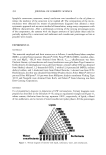
514 JOURNAL OF COSMETIC SCIENCE conductor oxides under irradiation can catalyze the degradation of a wide range of organic and inorganic molecules, a positive feature for application in waste decontami- nation techniques (2,3), but a problem from the point of view of cosmetics (4-7). Some semiconductor oxides also undergo self-degradation upon irradiation, but this is not the case for titanium dioxide and zinc oxide (2). The photoinduced transformation of organic compounds is potentially harmful in the case of topically applied sunscreens, since, for instance, damage to DNA and RNA (4,5) and enzyme inactivation (6) have been observed in the presence of irradiated titanium dioxide. In this context, much effort has been devoted to limiting the ability of titanium dioxide and zinc oxide to photodegrade organic molecules. Among the possible strategies, surface treatment with organic compounds or with inert inorganic oxides (usually alu- mina) is the most common one. In a comparative evaluation of treatment efficiency, organic treatments proved to be more effective than inorganic oxide surface coatings in reducing the photocatalytic degradation rate of acetaldehyde (7). The optimization of treatments relies upon the photocatalytic transformation of a model compound, with the purpose of assessing the efficiency of each treatment. Indeed, the best performing treat- ment is the one that provides the lowest photocatalytic degradation rate of the model compound under standardized conditions. Among the possible model compounds, uric acid (8), acetaldehyde (7), glycerin coupled with Pb 2+ reduction (9), and 1,1-diphenyl- 2-picrylhydrazyl radical (10) have been suggested. The use of a single model compound in the evaluation of the photocatalytic activity of inorganic pigments faces, however, a problem, since different degradation pathways are possible under photocatalytic conditions. When considering the oxidative pathways, reaction with surface hydroxyl radicals (Tiiv-'OH•u•o also named 'OHads) and with subsurface photoformed holes (Ti•v-o-'-Ti •v, also named h+•ub_•,rf) is possible (11,12). Each organic compound has a different reactivity towards Ti•v-'OH•rf and Ti•v-o-'- Ti Iv. For instance, 2-propanol and many other alcohols are particularly interesting molecules as they preferentially react with TiIV-'OH•u•f, which makes them an impor- tant tool in the evaluation of photocatalytic degradation pathways (13). Ti•v-'OH•rf + =CHOH --- Ti•V-oH-•rf + =C'-OH + H + (1) :C'-OH + 0 2 • =C=O -t- HO 2' (2) •Vde have recently evaluated the photocatalytic activity of various commercial sunscreens using phenol as a model molecule, which also allowed an indirect assessment of the degradation pathways by analysis of the degradation intermediates (14). Biogenikko UV Sperse (futile-based, coated with alumina and 1,3-butanediol) proved to be one of the least active pigments, and it has been studied in greater detail to gain insight into the effects of the different treatments (organic and inorganic) on its photocatalytic activity (15). The TiO 2 treatments we tested were very effective in inhibiting phenol photo- catalytic degradation, but almost completely ineffective in inhibiting degradation of salicylic acid (15). The consequence of these findings is that the use of a single model molecule is not conclusive in the evaluation of the activity of a pigment. Phenol and salicylic acid are interesting model molecules if used together since they undergo pho- tocatalytic degradation via different pathways (phenol mainly upon reaction with Ti tv- 'OH, L•rf, and salicylic acid mainly with Ti•v-o-'-Ti•V (13,16,17)). As a consequence, results obtained with these model molecules can be generalized to a wide variety of other
Purchased for the exclusive use of nofirst nolast (unknown)
From: SCC Media Library & Resource Center (library.scconline.org)