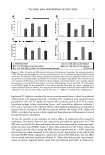
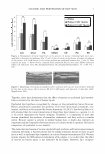
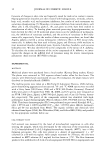
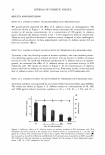
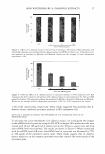
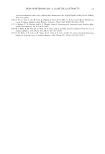
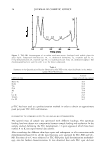
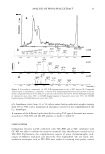
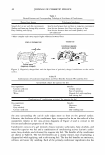
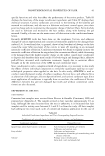
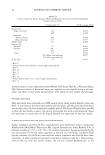
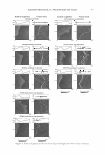
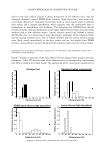
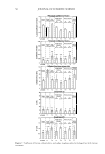
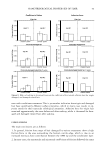
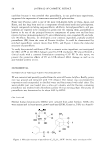
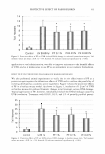
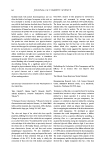
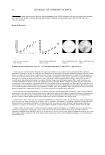
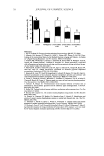
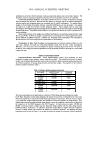
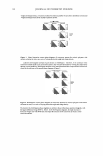
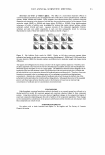
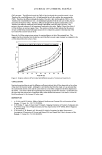
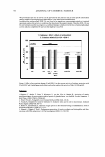
50 JOURNAL OF COSMETIC SCIENCE 2.0 ,---__,.. M=ac:..: rO�SC :.:: ale ,:.:: COeffiICi:::. ::.::c,::,:. ::.: en t Of ::.:....:.:..::::.::.::..:...:...._ friCtiOn ----,-----, C: 0 n :S 1.5 - 0 c .!1! � 1.0 Q) 8 � 0.5 X Q) .E Damaged I Damaged I BTIMC I PDM_ blend I Amino silicone I BAPDMA untrealed treated surfactant SIii Cone slX't'actant 1.19 Jcommercial1No S11iconel IOw high I low high I No Siticone 1.24 I deposition deposition I deposition deposition I i.32 0.96 0.81 0,88 0.51 T1 T2 T3 T4 TS T6 T7 0_25 ____ ...;.N ano:..::..: ;,:c sc a;;.:e:....co l effi1ci.;;.;_;,:...o :..:.::..:. ent f f ric"-o:..:.n .;;. ti .:....... __. _ __, § 0.20 � �= I o,:_:�d I ,e:;' r,1 I PD� s i ! o b� : nd I Amino silicone I =-�: �commerc181� No Silicone I � high I low hig�. I No Silicone ::: 0.15 0 c -� 0.10 !E Q) 0 0 0.05 untreated depos1bon depos11:Jon deposibon deposition I I 0.083 0.088 T1 T2 T3 T4 TS T6 T7 120 __ __,..---!..Ad:..:..;.:,::::s:!.:::.:.!.,fro�m�i.::::..:c�e:... .!: he io n o r -V.:.:o l::::.um:.:.:.::e:.=lo�t::::s� ...- BAP - DMA ---. z 100 � 80 � ,E 60 Q) -� a, 40 .c "C ( 20 82 I PDM_S blend I Amino silicone I N��f �� Damaged I D ed I BTIMC s11icone 77 untreated �c:� :iall��f����e l d �°:bon de���on ldep:lion de:��on I I I I I I I s2 I I I 50 I I I PDMS blend I Amino silicone I BAP D MA :a� I o :d I�=� I silicone I l�ourlsac,,c1aon1ne 40 E .S 30 b 1.5 E 2, 1.0 ca. 0.5 commercral) No S11!cone ,� high low high I I l deposilion depos1bon 1 depOS11ion deposition I I I I I Damaged I Damaged I BTMAC I PD� s � o �: nd I Amino silicone I B APDMA urireated lco=��lal)INS:��:!1 low high I IOw tlgh l ���:�8 I I 1.1 l d aposib on depo 1 -� tion ! deposition deposition I I o.753 o.n 0.1◄1 0.ee I 0.78 untreated T 1 T2 T3 T4 TS T6 T7 Figure 7. Coefficient of friction, adhesive force, and surface roughness plots for damaged hair with various treatments.

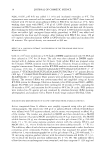
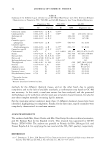
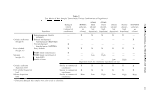
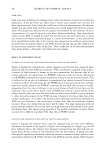
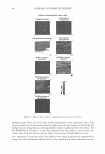
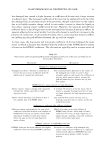
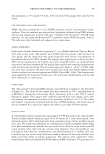
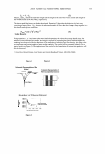
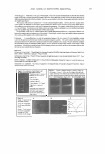
NANOTRIBOLOGICAL PROPERTIES OF HAIR 51 the damaged hair caused a slight decrease in coefficient of friction and a large increase in adhesive force. The decreased coefficient of friction may be explained by the fact that the damaged hair accumulates much of the positively charged conditioner on the surface due to its highly negative charge, which in turn makes it easier to shear the liquid on the surface, causing a lower coefficient of friction. However, the nanoscale pull-off force (adhesive force) is much larger than on the untreated hair because of meniscus effects. In general, adhesive force varied widely, but typically showed a significant increase in the presence of conditioner. As discussed previously, this is a clear sign that meniscus effects are influencing the pull-off force between the tip and the sample. In most cases, the macroscale and microscale coefficient of friction followed the same trend, in which a decrease was observed with the addition of the PDMS blend or amino silicones to the BTMAC surfactant. The silicones are typically used as a major source of Table VII Observations and Corresponding Mechanisms Regarding Coefficients of Friction and Adhesion for Various Hair Treatments Observation Mechanism Damaged vs. damaged treated hair Damaged hair shows a decrease in coefficient of friction but an increase in adhesion from the application of commercial conditioner. The conditioner layer deposited on the surface of the damaged hair results in a lower shear strength, which in turn lowers the coefficient of friction, while meniscus effects increase the pull-off (adhesive) force between the tip and hair sample. PDMS blend vs. amino silicone (at high deposition) Amino silicones interact strongly with negatively charged hair surface, especially at high deposition levels. Amino silicone thickness distribution on hair is less uniform than with PDMS blend. A stronger electrostatic attraction exists, which results in stronger binding forces (which leads to higher adhesion) for high-deposition amino silicone. Less mobility with amino silicones, and so molecules attach to hair at contact and do not redistribute easily. Surfactant vs. surfactant plus addition of silicone Adhesion remains approximately the same while coefficient of friction decreases with addition of PDMS-blend silicone and amino silicone (low- deposition). Coefficient of friction remains about the same us that of high-deposition amino silicone. Mobility becomes easier with addition of PDMS-blend silicone, which leads to lower coefficient of friction. At high deposition of amino silicones, mobility ceases and coefficient of friction becomes high again. BTMAC surfactant vs. BAPDMA surfactant BTMAC surfactant has lower adhesion but higher coefficient of friction than BAPDMA surfactant. Interaction of surfactants with damaged hair surface causes inherent differences in coefficient of friction and adhesion. BAPDMA has both amino and amine groups, which increases polarity.
Purchased for the exclusive use of nofirst nolast (unknown)
From: SCC Media Library & Resource Center (library.scconline.org)