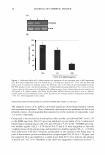
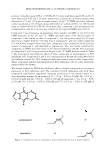
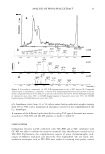
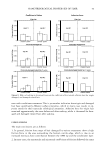
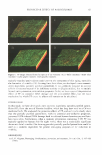
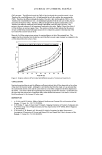
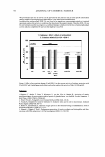
54 JOURNAL OF COSMETIC SCIENCE trend, in which a decrease was observed with the addition of the PDMS blend or amino silicones to the BTMAC surfactant. The silicones are typically used as a major source of lubrication and thus give the conditioner more mobility on the hair surface compared to just surfactants and fatty alcohols. The inverse trend was seen only for the amino silicone group at high deposition. The dampened mobility of the amino silicone at high depo- sition levels, with respect to hair surface and tip, may account for this wide variation in coefficient of friction. 3. Adhesive force varied widely, but typically showed a significant increase with the presence of conditioner ingredients. This is a clear sign that meniscus effects are influ- encing the pull-off force between the tip and the sample. At high deposition levels, the amino silicones showed much more distinct regions of high and low friction and adhe- sion, which shows that there is less mobility for these molecules and much less redis- tribution as they coat the hair. 4. Virgin (undamaged) hair exhibits a decrease in coefficient of friction after soaking, while damaged and damaged treated hair both show an increase. Virgin hair is more hydrophobic, and so more water is present on the surface and results in a lubrication effect after soaking. Damaged hair absorbs water, which softens the hair and increases the real area of contact (and thus friction) with the tip. This is yet another indication that virgin and damaged hair have significantly different surface properties, which in many cases results in opposite trends for their nanoscale tribological properties. ACKNOWLEDGMENTS The financial support for this project was provided by the Procter & Gamble Company (Cincinnati, OH) and Procter & Gamble Far East (Kobe, Japan). The authors thank Yu jun Li and Hoyun Kim of Procter & Gamble Far East for preparing all of the damaged treated hair samples. A special thanks is given to Rob Willicut and Matt Wagner of P&G for insightful discussions, and to Nianhuan Chen for helpful suggestions and the contribution of chemical structure diagrams of conditioner ingredients. REFERENCES (1) J. A. Swift and J. R. Smith, Atomic force microscopy of human hair, Scanning, 22, 310-318 (2000). (2) R. McMullen and S. Kelty, Investigation of human hair fibers using friction force microscopy, Scanning, 23, 337-345 (2001). (3) C. LaTorre and B. Bhushan, Nanotribological characterization of human hair and skin using atomic force microscopy, Ultrarnicroscopy, 105, 155-175 (2005). (4) C. LaTorre and B. Bhushan, Nanotribological effects of hair care products and environment on human hair using atomic force microscopy,]. Vac. Sci. Technol. A., 23, 1034-1045 (2005). (5) C. Robbins, Chemical and Physical Behavior of Hurnan Hair, 3rd ed. (Springer-Verlag, New York, 1994). (6) C. Bolduc and]. Shapiro, Hair care products: Waving, straightening, conditioning, and coloring, Clin. Derrnatol., 19, 431-436 (2001). (7) J. Gray, Hair care and hair care products, Clin. Derrnatol., 19, 227-236 (2001). (8) R. Molina, F. Comelles, M. R. Julia, and P. Erra, Chemical modifications on human hair studied by means of contact angle determination,]. Colloid Interface Sci., 237, 40-46 (2001). (9) B. Bhushan and Z. Burton, Adhesion and friction properties of polymers in microfluidic devices, Nanotechnology, 16, 467-478 (2005). (10) C. Jalbert, J. T. Koberstein, I. Yilgor, P. Gallagher, and V. Krukonis, Molecular weight dependence

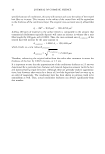
NANOTRIBOLOGICAL PROPERTIES OF HAIR 55 and end-group effects on the surface tension of poly(dimethylsiloxane), Macromolecules, 26, 3069-3074 (1993). (11) G. Lerebour, S. Cupferman, C. Cohen, and M. N. Bellon-Fontaine, Comparison of surface free energy between reconstructed human epidermis and in situ human skin, Skin Res. Technol., 6, 245-249 (2000). (12) H. Schott, Contact angles and wettability of human skin,]. Pharm. Sci., 60, 1893-1895 (1971). (13) M. E. Ginn, C. M. Noyes, and E. Jungermann, The contact angle of water on viable human skin,]. Colloid Interface Sci., 26, 146-151 (1968). (14) H. Yanazawa, Adhesion model and experimental-verification for polymer SIO2 system, Colloids Surf, 9, 133-145 (1984). (15) B. Bhushan, Principles and Applications of Tribology (Wiley, New York, 1999). (16) B. Bhushan, Introduction to Tribology (Wiley, New York, 2002). (17) B. Bhushan, Handbook of Micro/Nanotribology, 2nd ed. (CRC Press, Boca Raton, Florida, 1999). (18) B. Bhushan (Ed.), Springer Handbook of Nanotechnology (Springer-Verlag, Heidelberg, Germany, 2004). (19) B. Bhushan and C. Dandavate, Thin-film friction and adhesion studies using atomic force microscopy, ]. Appl. Phys., 87, 1201-1210 (2000). APPENDIX A: SHAMPOO AND CONDITIONER TREATMENT PROCEDURE This appendix section outlines the steps involved in washing hair swatches with sham- poo and/or conditioner. SHAMPOO TREATMENTS Shampoo treatments consisted of applying a commercial shampoo evenly down a hair swatch with a syringe. The hair was lathered for 30 seconds, rinsed with tap water for 30 seconds, and the process was repeated. The amount of shampoo used for each hair swatch was 0.1 cc of shampoo per gram of hair. Swatches were hung to dry rn an environmentally controlled laboratory, and then wrapped in aluminum foil. CONDITIONER TREATMENTS A commercial conditioner was applied, 0.1cc of conditioner per gram of hair. The conditioner was applied in a downward direction (scalp to tip) thoroughly throughout the hair swatch for 30 seconds. The swatch was then rinsed thoroughly for 30 seconds. Swatches were hung to dry in an environmentally controlled laboratory, and then wrapped in aluminum foil. APPENDIX B: CONDITIONER THICKNESS APPROXIMATION We consider a cylindrical hair fiber of diameter D = 50 µm (radius R = 25 µm). For conditioner thickness calculations, the following assumptions are made: (a) hair and the material being added have the same density, (b) the coating of material is uniform on the hair surface, (c) the cross-sectional area of a hair fiber remains constant along the longitudinal axis of the fiber (i.e., from root to tip) the hair fiber is perfectly cylindrical (circular cross section), and (d) the deposited conditioner remains bonded to the cuticle surface (no absorption into the cuticle layer). The cross-sectional area of an untreated hair fiber is initially calculated. By adding a
Purchased for the exclusive use of nofirst nolast (unknown)
From: SCC Media Library & Resource Center (library.scconline.org)