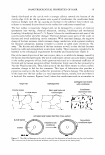
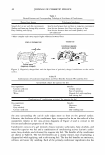
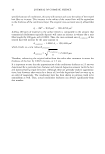
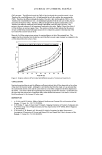
56 JOURNAL OF COSMETIC SCIENCE specified amount of conditioner, this area will increase and cause the radius of the treated hair fiber to increase. This increase in the radius of the treated hair will be equivalent to the thickness of the conditioner layer. The original cross-sectional area A c of hair fiber lS Ac = TIR 2 = 7r(25µm)2 = 1963.4954 µm2 Adding 200 ppm of material to the surface (which is comparable to the amount that commercial conditioners typically deposit) will cause an increase in volume (for a unit fiber length) by 200 ppm, or by 0.0002. Thus, the cross-sectional area Ac,conditioner of the treated hair will increase by the same amount to Ac,conditioner = 1.0002 Ac = 1963.888 µnz2 which results in a new radius Rconditioner' Rconditioner = Ac,conditioner = 25.0025 µm Ti Therefore, subtracting the original radius from the radius after treatment increases the thickness of the hair by 0.0025 microns, or 2.5 nm. It is important to note that the approximation of the conditioner thickness as 2.5 nm was determined for a particular hair diameter and material deposition amount (with the hair and material having equal densities). Although these are generally realistic approxima- tions, hair diameter often varies by a factor of 2 and the deposition level can vary up to an order of magnitude. The conditioner layer has been shown in previous work to be nonuniform as well. Thus, actual conditioner thickness can deviate significantly from this number.

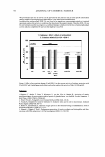
J. Cosmet. Sci., 57, 57-64 (January/February 2006) Partially purified paeoniflorin exerts protective effects on UV-induced DNA damage and reduces facial wrinkles in human skin SANGHWA LEE, JUN MAN LIM, MU HYUN JIN, HYUNG KOOK PARK, EUI JUNG LEE, SANGJIN KANG, YOUN SOO KIM, and WAN GOO CHO, C. I. Center, Research Park, LG Household & Healthcare, Ltd. (S. L., J. M. L., M. H.J., H.K. P., E.j. L., S. K., W. G. C.), and CnU Skin Clinic & CnU Skin Laboratory, Ltd., (Y. S. K.), Taejeon, Korea. Accepted for publication October 3 , 200 5. Synopsis Partially purified paeoniflorin (PF), a new cosmetic ingredient from roots of Paeoniae lactiflora, has been developed. Its paeoniflorin content is about 64%, far higher than that of conventional, cosmetic-grade peony root extracts (-10% ). In this report, we studied the effects of PF on UV-induced DNA damage in both cultured human keratinocytes and hairless mouse skin. We also investigated the anti-wrinkle effects of PF-containing cosmetic preparations on human skin. From the in vitro and in vivo comet assay, it was revealed that PF protected cells from DNA damage induced by ultraviolet B (UVB) irradiation in both cultured normal human keratinocytes (19.4% decrease at 0.001 %) and hairless mouse skin keratinocytes (41 % decrease at 0.01 %). An eight-week clinical trial using 0.5% PF-containing formulation with 20 volunteers resulted in a statistically significant reduction in facial wrinkles (p 0.05 ). These results suggest that the partially purified paeoniflorin has potent anti-aging and anti-wrinkle activities and should be a useful ingredient for these purposes. INTRODUCTION Chronic exposure of human skin to solar ultraviolet radiation (UVR) is thought to be a major environmental factor that has serious adverse effects on the structure and function of the skin. UV irradiation may cause sunburn, immunosuppression, oxidative stress, and skin cancers, as well as premature skin aging, so-called "photoaging" (1). There is numerous evidence for the generation of reactive oxygen species (ROS) in skin upon UV exposure. Accumulation of molecular oxidative damage to cellular components such as lipid, protein, and DNA may lead to photoaging (2). There have been many articles concerning the protective effects of exogenous antioxidants on the harmful effects of UVR (3-5). In this context, we investigated by comet assay the protective effects of partially purified paeoniflorin (PF) against UV-induced DNA damage. PF came up as a 57
Purchased for the exclusive use of nofirst nolast (unknown)
From: SCC Media Library & Resource Center (library.scconline.org)