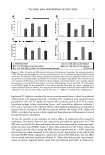
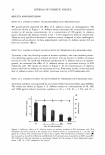
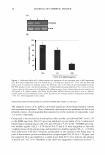
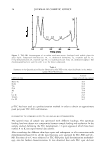
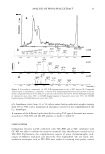
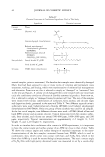
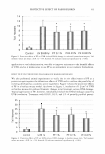
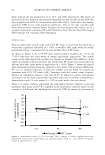
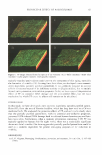
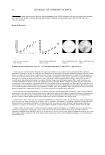
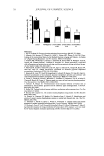
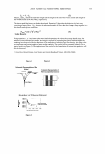
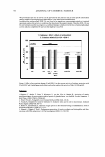
60 JOURNAL OF COSMETIC SCIENCE surface roughness Sq (RMS) was calculated, and the anti-wrinkle activity was deter- mined by comparing the data before and after treatment. STATISTICS All data were expressed as means ± S.D. The statistical significance for the comet assay was evaluated with Student's t-test and with one-way ANOVA for the clinical study. P 0.05 was considered significant. RES UL TS AND DISCUSSION EFFECT OF PF ON DVB-INDUCED DNA DAMAGE IN CULTURED NORMAL HUMAN KERATINOCYTES Ultraviolet radiation (UVR) is thought to be one of the major environmental factors in wrinkle formation. Since exposure to UVR causes many changes in skin, which in turn make the skin photo-aged, it is very important to protect skin from the harmful effects of UVR. Providing exogenous antioxidants or sunscreens by topical application has long been used for this purpose (14, 15 ). We tested the protective effects of PF using the comet assay. The comet assay or single-cell gel (SCG) electrophoresis is a rapid and very sensitive fluorescent microscopic method to examine DNA damage and repair at the individual cell level. This assay has critical applications in the field of toxicology, ranging from aging and clinical investigations to genetic toxicology and molecular epidemiology. Since the introduction of the alkaline comet assay in 1988, a number of advancements have greatly increased the flexibility and utility of this technique for detecting various forms of DNA damage (e.g., single- and double-strand breaks, oxi- dative DNA base damage, and DNA-DNA/DNA-protein/DNA-drug crosslinking) and DNA repair in virtually any eukaryotic cell (16). In the comet assay, the cells are embedded in a thin agarose gel on a microscope slide. The cells are lysed to remove all cellular proteins, and the DNA subsequently is allowed to unwind under alkaline/ neutral conditions. Following unwinding, the DNA is electrophoresed and the DNA is stained with a fluorescent dye. During electrophoresis, broken DNA fragments (dam- aged DNA), or relaxed chromatin, migrates away from the nucleus. The extent of DNA liberated from the head of the comet is directly proportional to the DNA damage. Because of its high sensitivity and reliability, the comet assay was adopted for assessing the oxidative DNA damage caused by stresses like UVR. As shown in Figure 2, partially purified paeoniflorin protected the cultured human keratinocytes from oxidative DNA breakage caused by UVB irradiation. The treatment of PF with concentrations of 0.001%, 0.01%, and 0.1% reduced the tail moment by 19%, 22%, and 23%, respectively. It was reported that extract of Paeoniae radix inhibited the oxidative DNA cleavage induced by phenylhydroquinone. According to the article by Okubo et al. (17), Paeoniae radix extract exerted its effect by scavenging the superoxide and hydroxyl radical gen- erated by the chemical. Although the causative agent was different from theirs, our result shows the potential antioxidative capacity of PF. In many articles with experi- mental animals and humans, the supplying of exogenous antioxidants, either by topical

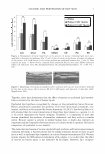
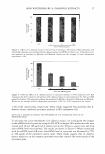
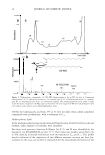
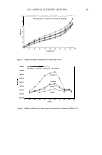
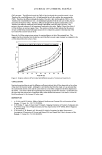
14 12 +-' 1 0 E 0 � 8 6 I- 4 2 0 PROTECTIVE EFFECT OF P AEONIFLORIN 61 * * * Control UV B 60 mJ PF 0 .1 % PF0.01 % PF 0.001 % Figure 2. Protective effects of PF on DVB-induced DNA damage in cultured human keratinocytes. Tail moment values are mean ± S.D. (n = 50). Asterisk (*) indicates statistical significance (p 0.01). application or oral administration, was able to improve resistance to the harmful effects of UVR, and so it makes sense to use PF as an antioxidant in our cosmetic formulation. EFFECT OF PF ON UVB-INDUCED DNA DAMAGE IN HAIRLESS MOUSE SKIN We also performed animal experiments to verify the in vivo effectiveness of PF as a protective agent against the deleterious effects of UVR and to confirm the possibility of its being developed as a cosmetic active ingredient. Figure 3 shows the protective effects of PF in a hairless mouse model. As shown in Figure 3, irradiation of 1 J/cm2 of UVB on hairless mouse skin induced dramatic changes in tail moment, serious DNA damage. Topical application of PF, however, remarkably blocked the DNA breakage caused by UVB irradiation. Treatment with 0.01%, 0.1%, and 1% of partially purified paeoni- 35 30 +-' 25 C E 20 0 � 15 co I- 10 5 0 control UVB 1J * * PF 1% PF 0.1 % PF 0.01 % Figure 3. Protective effects of PF on DVB-induced DNA damage in hairless mouse skin. Tail moment values are mean ± S.D. (n = 50). Asterisk (*) indicates statistical significance (p 0.01).
Purchased for the exclusive use of nofirst nolast (unknown)
From: SCC Media Library & Resource Center (library.scconline.org)