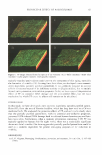
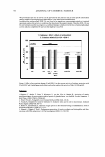
72 JOURNAL OF COSMETIC SCIENCE to the epidermis, skin color could be darkened or lightened. The objective of this study was to find safe and effective methods to inhibit or promote melanosome transfer by the shrinkage or expansion of melanocyte dendrites. Methylophiopogonanone B and centaureidin inhibited melanosome transfer to keratinocytes as well as melanocyte dendrite outgrowth. Methylswertianin and comfrey extract promoted not only melanosome transfer to keratinocytes but also expansion of melanocyte dendrites. Methylophiopogonanone B and centaureidin suppressed pigmentation in a three-dimensional skin culture model through the inhibition of melanocyte dendrite outgrowth. Methylswertianin and comfrey extract activated pigmentation in a three-dimensional skin culture model by expansion of melanocyte dendrites. Our experimental findings suggest the possibility of manipulating human skin color by controlling melanosome transfer to cause shrinkage or expansion of dendrites. A combination of effective agents, in addition to the ones identified in this work, could result in the creation of very unique cosmetic products that would precisely control the darkening or lightening of skin tone. Comparative Topical Absorption and Antioxidant Effectiveness of Two Forms of Coenzyme Q10 after a Single Dose and after Long-Term Supplementation in the Skin of Young and Middle-Aged Subjects Joe Vinson, Sunil Anamandla Department of Chemistry, The University of Scranton, Scranton, PA 18510-4626, USA Coenzyme Q10 is an endogenous antioxidant found in the skin along with vitamins A, C and E. Coenzyme Q10 is used increasingly in cosmetic products and is advertised as a skin energizer, protector against skin aging, skin repairer, and an anti-wrinkling agent. As the outermost layer of skin, the stratum comeum is the interface between the body and the environment and requires antioxidants to protect it and the epidermis and dermis below it. Nutrient levels in the stratum corneum correlate with those in the skin. Two forms of coenzyme Q10 (pure coenzyme Q10 and a yeast- based coenzyme Q10) were investigated in a commercial vehicle. Two groups of subjects were tested aged 21-29 and 51-70, respectively. Coenzyme Q10 absorption in the stratum corneum was determined after a I-hour application and ethanol extraction. Significantly more yeast coenzyme Q10 was absorbed than the pure coenzyme Q10 and the middle-aged subjects absorbed about twice as much coenzyme Q10 as did the younger subjects. Skin antioxidants were significantly increased by yeast coenzyme Q10 but not by pure coenzyme Q10• Peroxides declined in the stratum corneum after twice daily application of coenzyme Q10 with both forms but the decrease was greater with the yeast form. The older subjects had significantly higher baseline levels of lipid peroxides than did the younger group, indicating an increase in skin oxidative damage with age. The yeast coenzyme Q10 is the superior form of coenzyme Q10 for human skin application. Technological Strategies to Improve Photostability of a Sunscreen Agent Paola Perugini1, Manuela Vettor 1 , Rosanna Tursilli2, Santo Scalia2, Ida Genta 1 , Tiziana Modena\ Franca Pavanetto 1 , Bice Conti1 1 Department of Pharmaceutical Chemistry, University of Pavia, Pavia, Italy 2 Department of Pharmaceutical Sciences, University of Ferrara, Ferrara, Italy Due to the reduction of the ozone layer, there is an increasing need of effective UV protection systems with minimised side-effects. Trans-2-ethylhexyl-p- methoxycinnamate (trans-EHMC) represents one of the most widely used sunscreen compound. Several studies demonstrated that trans-EHM:C is unstable following UV irradiation both in solution and in emulsion formulations. Moreover, various reports of photocontact sensitization induced by trans-EHMC have appeared in the literature. Consequently, in order to ensure adequate efficacy and safety for this sunscreen agent, there is a need for new carrier systems to enhance trans-El-IMC photostability. In the present study the photostability of the filter in different formulation types (emulsion-gel, gel and emulsion) with various ingredients is evaluated. In addition, nanoparticles based on poly-D,L-lactide-co-glycolide (PLGA) as carrier for trans-EHMC are investigated. The influence of nanoparticle matrix on the photochemical stability of the sunscreen agent is also presented. The results obtained demonstrated that PLGA nanoparticles are effective in reducing the light-induced degradation of the sunscreen agent. Moreover, the choice of formulation type and the excipients used play an important role in order to obtain a stable cosmetic product containing trans-EHMC.

J. Cosrnet. Sci. 1 57, 73-94 Qanuary/February 2006) Papers Presented at the 2005 Annual Scientific Meeting and Technology Showcase (Thursday's Program) December 8-9, 2005 New York Hilton New York, NY 73
Purchased for the exclusive use of nofirst nolast (unknown)
From: SCC Media Library & Resource Center (library.scconline.org)