74 JOURNAL OF COSMETIC SCIENCE THE CHALLENGES FACING TODAY'S COSMETIC CHEMIST Harvey Gedeon Estee Lauder Companies, 125 Pine/awn Road, Melville, NY 1 J 747 There was a time when the Cosmetic Chemist was expected to be only a good formulator, to have a broad knowledge of biology and lipid chemistry, to understand the HLB requirements of his or her emulsion, and to focus primarily on the aesthetics, stability and safety of his or her formula. Today's chemist is faced with many more challenges: 1. Competition: because of consolidation, the market is dominated by very large companies with large technical resources. In addition, the doctors' brands and increased medical intervention are forcing the cosmetic chemists to develop more and more sophisticated products that provide instant and long term benefits 2. Regulations: the cosmetic chemist must be aware of not only current regulations in various countries but also of new pending rules being discussed in places like California and European Union that will have a tremendous impact on the number and quality of raw materials that will be available to him or her to formulate and maintain his or her competitive advantage. In addition, the cosmetic chemist should pay attention to the various interest groups that are questioning the safety and the very usefulness of his or her products. 3. Globalization: most companies are now competing globally. The cosmetic chemist must appreciate the cultural and ethnic differences that exist around the world in order to compete effectively. No longer is whatever is American accepted all over the world: more and more groups appreciate their distinct ethnicicity and demand products that are relevant to them. In summary: today's cosmetic chemist must have broad scientific knowledge covering not only covering fields as diverse as biology and physiology, but also pharmacognosis and ethnobotany, not to mention genetics and polymer chemistry. The cosmetic chemist must appreciate the politics of interest groups and be prepared to dialogue and answer their concerns, and the cosmetic chemist must be a person of the world, understanding and respecting ethnic and cultural divergences.

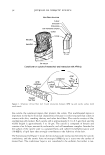
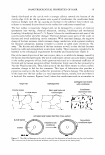
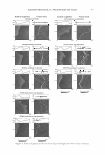
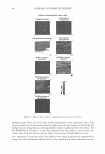
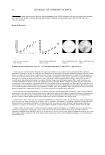
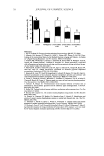
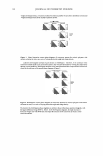
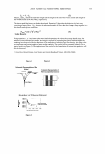
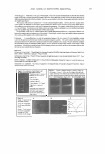
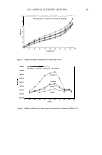
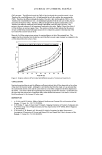
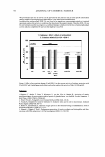
2005 ANNUAL SCIENTIFIC MEETING CHROMOPHORE MAPPING: A NEW TECHNIQUE TO EXPLAIN THE APPEARANCE OF AGING HUMAN SKIN, IN VIVO Introduction Paul J. Matts, Ph.D.', Robert Morse2 and Symon D. Cotton2 1 P&G Beauty, Egham, UK 2 Astron Clinica, Cambridge, UK 75 It is simple fact that we judge one other, consciously or unconsciously, based in part on the aesthetic appearance of our outer integument, "skin". As the human retina responds to a narrow bandwidth of the electromagnetic spectrum (so-called "visible light", a nominal 400-700nm), the interaction of these wavelengths with skin, therefore, is of primary importance in our understanding of the way we perceive others and are ourselves perceived. A modem understanding of cutaneous optics is based largely on the development of increasingly-sophisticated mathematical models to explain the interaction of light with skin. This understanding of cutaneous light transport highlights the surprising fact that normal human skin appearance is driven primarily by surface topography and only three internal chromophore components, that is, the concentration and spatial distribution of melanin, haemoglobin and collagen. Whereas there are a plethora of methods to characterise and quantify skin surface topography, chromophore mapping remains a remarkably on-researched area. A new technique "Spectrophotometric Intracutaneous Analysis" ("SIA") has been developed, commercialised and shown to have excellent sensitivity and specificity in the early identification of malignant melanoma in human skin. The technique is based upon a unique combination of dermatoscopy and contact remittance spectrophotometry. The SIA hardware comprises a hand-held imaging probe, attached by umbilical to a laptop computer, which is placed in contact with the skin surface. High-intensity LEDs illuminate the skin surface with four consecutive discreet wavebands between 400nm and I 000nm, spanning the visible spectrum and a small range of near infrared radiation. A digital image is captured for each waveband. Custom SIA algorithms then solve the complex relationship that exists between R-G-8-NiR "colour-space" and melanin- haemoglobin-collagen "histology-space", using a sophisticated model of cutaneous light-transport. Since there is a proven one-to-one mapping between colour-space and chromophore parameters, individual chromophore parameter values can be retrieved from the model, given the colour vector obtained from each point in a colour skin image. The magnitude of each chromophorc parameter is displayed at each pixel location in a separate image, giving three parametric maps: epidermal melanin, dermal haemoglobin and collagen (a dermal melanin map is also provided as a diagnostic criterion for melanoma). In short, the SIA technique is able to obtain a high-resolution white-light image of the skin over a 12xl2mm area and four additional maps that display the concentration of epidermal melanin and haemoglobin, collagen and melanin in the papillary dermis, pixel by pixel. Whilst the SIA technique has proven highly valuable in the measurement of diseased skin, namely the early diagnosis of malignant melanoma, it was not known whether it could be used to successfully map chromophores in normal skin in order to explain changes in human cutaneous colouration with age. This presentation, therefore, describes a study to evaluate the utility of the SIA technique for this purpose: Methods Subjects: 400 Caucasian female subjects (Fitzpatrick skin types I-III) aged I 0-70 with normal, on-diseased skin were recruited in Reading, UK. Subjects were recruited so that they fell equally across the 10-70 age range into 12 cohorts of 5 years each, containing approximately 33 subjects per cohort (i.e., Group I, 10-15 years Group 2, 15-20 years, etc.). Measurement Site: The skin between the thumb and the first finger of each subject's right hand was used as the measurement site for this study. The dorsal hand was chosen as it has been shown to receive approximately one half of the dose of erythemally-effective solar UV radiation relative to vertex (the face receives only one third). The dorsal hand, therefore, represented a site where we had confidence that both chronological eITects and actinic damage to the chromophorcs of interest in this study should be well-expressed. Measurements: Subjects were equilibrated for 20 minutes in a controlled atmosphere (20+ loC 50+ 10%RH). The measurement site on the subject's right dorsal hand was then lightly sprayed with a 20% (v/v) aqueous ethanol solution (to act as an optical "matching fluid"). SIA measurements were then taken each lasted approx 6 seconds. Image analysis: The SIA parametric maps ("SIAgraphs") constituted 8-bit 1024xl024 256 level greyscale maps of chromophorc concentration in PNG image file format and, as such were readily amenable to sophisticated image analysis techniques for calculation of a variety of relevant endpoints. The following analyses were undertaken: (a) mean global grey-scale (corresponding to mean chromophore concentration) (b) internal image standard deviation (corresponding to chromophore homogeneity) and (c) for melanin SIAgraphs, contiguous cluster analysis and subsequent spot count / area calculations.
Purchased for the exclusive use of nofirst nolast (unknown)
From: SCC Media Library & Resource Center (library.scconline.org)