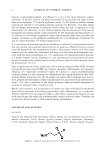
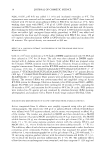
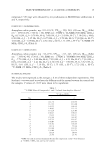
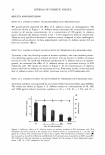
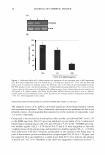
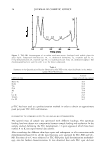
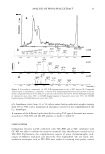
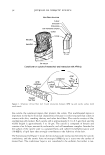
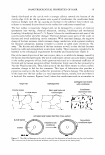
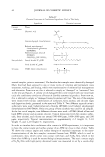
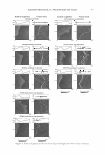
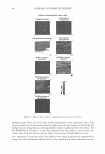
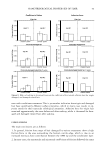
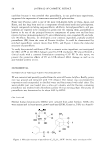
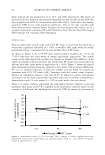
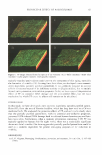
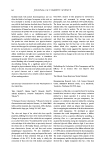
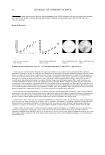
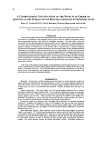
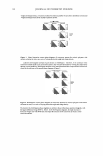
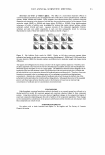
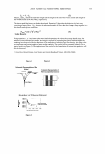
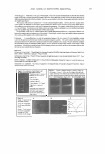
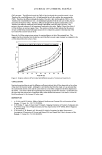
76 JOURNAL OF COSMETIC SCIENCE Data analysis: Image analysis interval data were treated using multi-factor ANOVA techniques with age as the main factor (grouped per 5-year cohort). Results constituted the SlAgraphs themselves and plots of image analysis means and 95% LSD intervals vs respective age group. Results & Discussion II 33 qII }2 !1 I I I I 10 II l 9 1 2 3 4 5 6 $ 9 1011 12 Figure I: melanin concentration (mean+95%LSD) Figure 2: melanin inhomogeneity (mean+95%LSD) fl Figure 3: sample melanin map, young skin Figure 4: sample melanin map, old skin Examples of data from the study note 1-12 = 12 5-year age groups, where 1 = ages 10-15, 2 = ages 15-20, etc. Visual inspection of the chromophore SIAgraphs of young and aged subjects reveal a dramatic contrast, particularly for the melanin and haemoglobin chromophores. In short, in young skin, these chromophores are distributed in an extremely homogeneous manner, consistent with the delicate, even palette of youth. With age, a significant increase in both total concentration and inhomogeneity is evident for both chromophores. This is wholly consistent with the known changes in these chromophores as a function of actinic ageing -· namely the accumulation of damaged melanogenic units (producing hypcr-melanotic lesions such as solar lentigos, diffuse hypcrpigmentation and hypo-melanotic lesions such as idiopathic guttate hypomelanosis) and damaged vasculature (including telangiectasia and low-grade purpura). These visual observations were confirmed emphatically by objective analysis of the S!Agraphs by custom algorithms. Results confirmed an apparent "lag'' phase for total skin concentrations of both chromophores (lasting until approx age 30 for melanin and 40 for haemoglobin), after which there was a steady increase in each chromophore total concentration. There was also a concurrent progressive increase in inhomogeneity of each pigment. More detailed analysis of the melanin S!Agraphs revealed a progressive accumulation of melanin "spots" across a lifetime, with a linear increase in total spot area and an apparent merging of spots at approximately age 50-55 (continued area increase with parallel drop in spot count). Visual inspection of the collagen S!Agraphs reveal an apparent overall loss with age both of density and the fine "egg-box" lattice attributed to dermal papillae. Once again, these subjective observations are supported by analysis of the SlAgraphs. A progressive decrease in collagen density was noted across the entire age span, accompanied by a progressive decrease in homogeneity. These trends fit extremely well with the known progressive atrophy of dermal papillae and total demial collagen bnlk, consistent with intrinsic and extrinsic ageing. The observations of this current study were predicted and modelled by one of the present authors. A model was proposed that described human skin texture and color changes with age in the unorthodox terms of·'amplitude" and "frequency". The principle components of human skin color, namely melanin and haemoglobin, both display overall increases in total concentration (increased "amplitude") and heterogeneity (decreased "frequency") as a ftmction of chronological / actinic ageing. Effective treatments to improve appearance, therefore, need to reverse this effect. Overall, therefore, these data appear to confirm chromophore mapping using the SIA technique as a remarkable new tool to characterize and explain the visual appearance of ageing skin. Finally, recent results will also be presented demonstrating (a) the successful translation of chromophore mapping from the hand-held contact device described herein, to a non-contact system capable of mapping chromophores across large areas of skin, including a human face and (b) the inherent utility and advantages of non-contact chromophore mapping as a new documentation and measurement tool.

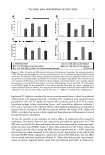
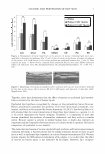
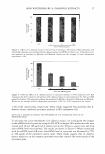
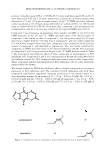
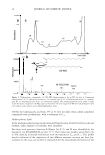
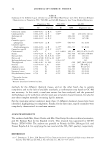
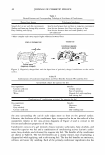
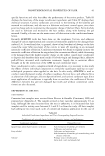
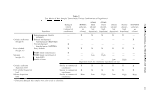
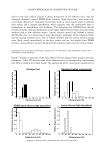
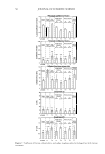
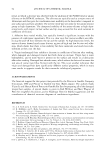
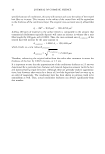
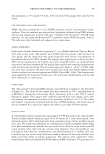
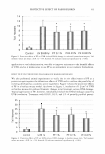
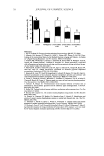
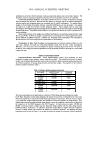
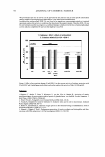
2005 ANNUAL SCIENTIFIC MEETING THE BIOENERGETIC CONSEQUENCE OF GLYCATION IN THE AGING HUMAN SKIN Lieve Declercq', Ph.D., H. Corstjens', Ph.D.,A. Neven', G. Eyckmans', L. Hellemans', Ph.D., and Daniel Maes2, Ph.D. Introduction 1 Estee Lauder Companies, Oevel, Belgium 2 Estee Lauder Companies, Melville, NY The reaction between sugars and proteins (glycation) leads to the reversible formation of intermediate reaction products like methylglyoxal and glycolaldehyde. Through complex rearrangements these early glycation products react with proteins to give rise to protein modifications, inter-and intra-molecular cross-links and formation of Advanced Glycation Endproducts (AGEs). These AGEs have been demonstrated to accumulate as a function of age (1) and in age-related diseases such as diabetes (2) and chronic renal failure (3). Glycation in the aging human skin Some glycated modifications show typical fluorescent properties. Skin autofluorescence is correlated with the increased presence of specific AGEs as a function of age and diabetes duration (4) and has been proposed as a clinical tool for assessing risk of progression of long-term diabetic complications (5). We have measured in vivo fluorescence intensity in the skin of 94 panellists, 78 non-smokers and 16 smokers. Multiple linear regression analysis was used to take into account individual differences in skin color, after which the fluorescence intensity attributed to AGEs (�xf�m 3 701440nm) and elastin-collagen cross-links (�xl�m 4401520nm) increased as a function of panelist age and smoking behavior. An aqueous extract of cigarette smoke was found to induce AGE-related fluorescence in a model protein, consistent with its presumed role as a source of reactive glycation intermediates (6). Consequences of glycation for the human skin It is generally accepted that the cross-linking of long-lived structural proteins like collagen and elastin may contribute to the loss of elasticity in aging skin (7). Enzymes are susceptible to glycation-induced deactivation when modifications in functional groups are introduced by reaction with glycation propagators (8). This can lead to a decrease in antioxidant defense capacity when enzymes like catalase and superoxide dismutase are affected, and a loss of bioenergetic capacity when mitochondrial energy production is compromised. The latter can be the result of an overall increase in intracellular free radicals causing mitochondrial DNA mutations, as well as a direct consequence when mitochondrial enzymes are deactivated by glycation. Creatine kinase provides a biological system to store the free energy of adenosine triphosphate in the form of phosphocreatine, and to release this free energy upon acute energetic demand (9). Normal human skin expresses cytosolic and mitochondrial creatine kinases as well as the creatine transporter (10, 11). Using in vivo 31 P magnetic resonance spectroscopy we have previously demonstrated that the phosphocreatine reserve in human skin was depleted shortly after exposure to a mild stress (a single UV A dose of 6 J/cm2) and recovered more slowly in older subjects than in younger ones ( 12). Our current results indicate that creatine kinase is susceptible to deactivation by glycation intermediate products (methylglyoxal) and upon incubation with a smoke condensate in a concentration-dependent fashion (Fig. 1 ). Modifications induced by glycation may therefore contribute to the loss of energetic rebound capacity in aged subjects. Conclusion Creatine kinase, one of the key enzymes in the bioenergetic response of human skin, was found to be susceptible to deactivation by mediators that are formed during the early steps of the glycation process and upon incubation with a smoke condensate. We hypothesize that the process of glycation may compromise the bioenergetic capacity of aging skin, especially in smokers. 77
Purchased for the exclusive use of nofirst nolast (unknown)
From: SCC Media Library & Resource Center (library.scconline.org)