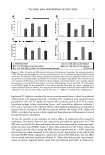
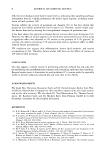
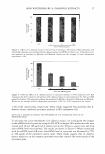
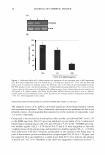
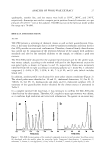
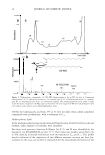
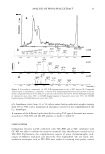
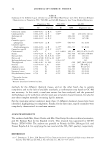
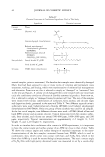
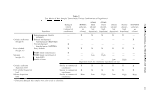
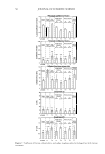
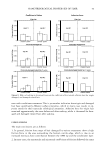
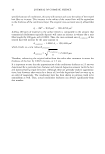
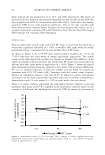
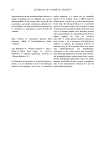
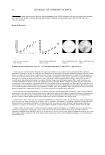
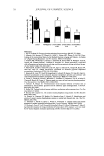
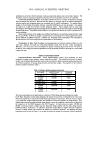
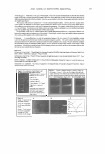
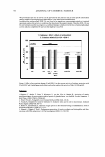
78 JOURNAL OF COSMETIC SCIENCE 120 0 0 0 0 � 0 100 80 u ,...._ n, (0 Cl) 60 1/) CX) CX) n, C 'V 'V � Cl) 40 C � � 20 u 0 control methytglyoxal smoke extract smoke extract smoke extract 1/100 1/10 1/1 References I. Suji G, Sivakami S. Glucose, glycation and aging. Biogerontology. 5(6):365-373 (2004). 2. Monnier VM, Mustata GT, Biemel KL, Reihl 0, Lederer MO, Zhenyu D, Sell DR. Cross- Linking of the Extracellular Matrix by the Maillard Reaction in Aging and Diabetes: An Update on "a Puzzle Nearing Resolution". Ann NY Acad Sci. 1043:533-544 (2005). 3. Sulirnan ME, Heimburger 0, Barany P, Anderstam B, Pecoits-Filho R, Rodriguez Ayala E, Qureshi AR, Fehrman-Ekholm I, Lindholm B, Stenvinkel P.J. Plasma pentosidine is associated with inflammation and malnutrition in end-stage renal disease patients starting on dialysis therapy. Am Soc Nephrol. 14(6): 1614-1622 (2003). 4. Meerwaldt R, GraaffR, Oomen PH, Links TP, Jager JJ, Alderson NL, Thorpe SR, Baynes JW, Gans RO, Smit AJ. Simple non-invasive assessment of advanced glycation endproduct accumulation. Diabetologia. 47(7): 1324-3130 (2004). 5. Meerwaldt R, Links TP, GraaffR, Hoogenberg K, Lefrandt JD, Baynes JW, Gans RO, Smit AJ. Increased accumulation of skin advanced glycation end-products precedes and correlates with clinical manifestation of diabetic neuropathy. Diabetologia. 48(8):1637-1644 (2005). 6. Cerami C, Founds H, Nicholl I, Mitsuhashi T, Giordano D, Vanpatten S, Lee A, Al-Abed Y, Vlassara H, Bucala R, Cerami A. Tobacco smoke is a source of toxic reactive glycation products. Proc Natl A cad Sci US A. 94(25): 139 I 5-13920 ( 1997). 7. Reihsner R, Menzel EJ. Two-dimensional stress-relaxation behavior of human skin as influenced by non-enzymatic glycation and the inhibitory agent aminoguanidine. J Biomech. 31(11):985-993 (1998). 8. Seidler NW. Carbonyl-induced enzyme inhibition: mechanisms and new perspectives. Curr Enz lnhib 1(1):21-27 (2005). 9. Bessrnan SP, Carpenter CL. The creatine-creatine phosphate energy shuttle. Ann Rev Biochem 54:831-862 ( 1985). 10. Zemtsov A, Cameron GS, Bradley CA, Montalvo-Lugo V, Mattioli F. Identification and activity of cytosol creatine phosphokinase enzymes in normal and diseased skin. Am J Med Sci. 308:365-369 (1994). 11. Schlattner U, Mockli N, Speer 0, Werner S, Wallimann T. Creatine kinase and creatine transporter in normal, wounded, and diseased skin. J Invest Dermatol. 118(3):416-423 (2002). 12. Declercq L, Perin F, Vial F, Savard S, Petitcollin B, Beau P, Collins D, Mammone T, Maes D. Age-dependent response of energy metabolism of human skin to UV A exposure: an in vivo study by 31 P nuclear magnetic resonance spectroscopy. Skin Res Technol. 8(2): 125-132 (2002).

2005 ANNUAL SCIENTIFIC MEETING FRONTIERS OF SCIENCE AWARD LECTURE SPONSORED BY COSMETICS AND TOILETRIES® ACTIVE NANOSYSTEMS: TOWARD A BOTTOM-UP REVOLUTION IN ORGANIZING MATTER K. Eric Drexler, Ph.D. Nanorex, Inc. We live in a world made of atoms, and how they are arranged makes an enormous difference - the difference between coal and diamond, between sand and silicon chips, between aged and young tissues. Nanotechnologies are making progress at this fundamental level, giving us better control over the arrangement of atoms and thus of the properties of the matter that makes up our world. The most powerful of these emerging technologies will be based on machines that make things from the bottom up, with precise atomic control. We know that nanoscale machines guided by digital signals can make large quantities of complex, atomically precise structures cleanly and at low cost. Biology provides the existence proof. Artificial productive nanosystems will be able to make products that equal or exceed biological structures in their complexity and capabilities. The recently announced Technology Roadmap for Productive Nanosystems, a project led by an alliance of Battelle and the Foresight Nanotech Institute, will describe how these systems can be developed. Each stage of development will bring a new range of nanoscale products. Better control of the structure matter always makes possible better products. Sometimes better control can give ordinary molecular structures radically different properties: for example, by aligning molecular chains, polyethylene can be made into fibers stronger than steel. Similarly, combining familiar molecular building blocks in new patterns will make possible substances with new properties. Some of these products will be inexpensive, biocompatible, and able to protect and modify biological surfaces. Advanced products will include micron-scale systems that are active and reconfigurable, able to bind and unbind to surfaces, to become lighter or darker, and to protect surfaces or modify them, all in response to signals encoded in light or water-soluble molecules. 79
Purchased for the exclusive use of nofirst nolast (unknown)
From: SCC Media Library & Resource Center (library.scconline.org)