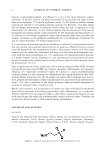
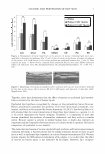
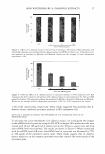
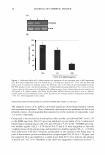
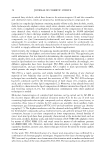
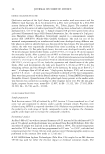
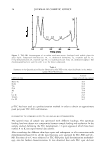
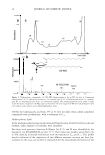
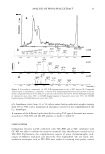
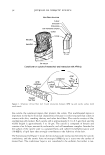
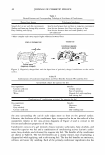
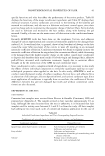
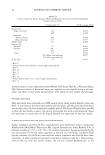
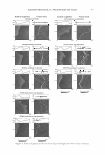
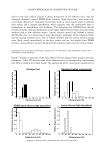
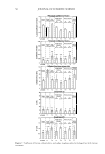
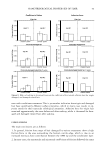
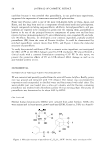
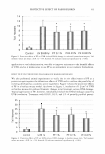
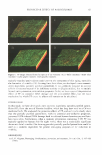
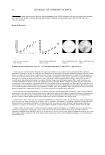
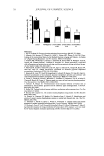
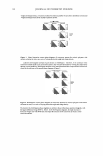
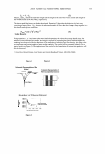
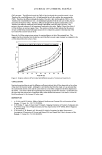
82 JOURNAL OF COSMETIC SCIENCE weight and charge density, or if given an unknown cellulosic polymer we are able to determine its molecular weight and charge density from its phase separation profile. J :�� -- ··1 i1' .. I I' . . . ·- -·- Figure I. Phase Separation contour phase diagrams of coacervate amount for cationic polymers with anionic surfactant in water, as a series of varying molecular weight and charge density. Lamellar and hexagonal lyotropic liquid crystals are birefringent. Therefore, if the surfactant in the coacervate formed liquid crystal association spatters, they would be detectable by viewing the sample array through crossed polarizers. Birefringent structures were indeed found and their compositional locations are shown by the red-areas of the pseudo-phase diagrams of figure 2 Figure 2. Birefringence contour phase diagrams of coacervate structure for cationic polymers with anionic surfactant in water, as a series of varying molecular weight and charge density. The trends in the birefringence phase diagrams are similar to those in the phase separation diagrams, with the largest difference being JR400 vs. JR125. In the birefringence diagrams, the slight increase in molecular weight seen with JR400 does not impact the structure of the coacervate as much as it did coacervate amount.

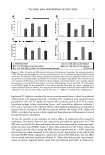
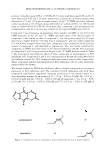
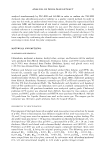
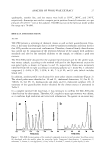
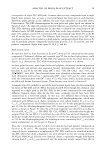
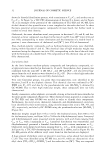
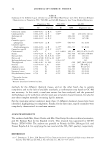
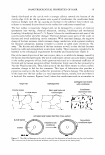
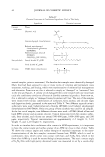
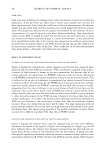
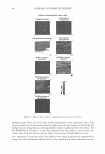
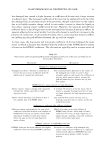
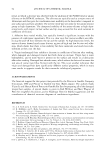
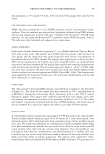
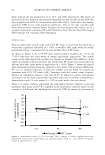
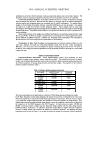
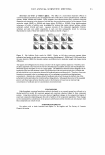
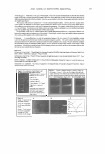
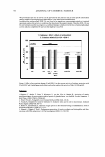
2005 ANNUAL SCIENTIFIC MEETING Electrolyte and Order of Addition Effects. The effect of a monovalent electrolyte (NaCl) on coacervate amount and structure was investigated for three of the above cationic polymer/anionic surfactant systems JR400, JR30M and LRJ0M. These polymers were chosen because they exhibited coacervate formation and structuring in the absence of salt and they also provide direct analysis of the impacts of both molecular weight (JR400 vs. JRJ0M) and charge density (LRJ0M vs. JRJ0M). Using high-throughput techniques, six orders of addition were investigated for systems that contain cationic polymer, anionic surfactant, sodium chloride and water. Aqueous solutions of the component ingredients (Polymer, surfactant and salt) were added sequentially to each vial then subsequently mixed by vortexing. Representative results of these Salt Addition Order studies are shown in Figure 3. �2 potynw,,awtac:tard..watert,. �J �. WIAf/11 .... polymef Figure 3. Salt Addition Order results for JR400. Graphs on left show coacervate amount (phase separation) and graphs on right show coacervate structure (birefringence). JRJ0M and LRJOM results show the same trends as JR400, but absolute numbers are different due to molecular weight and charge density differences. The regions of birefringence do not always coincide with the regions of phase separation. Therefore, there are phase separated coacervates that do not have micellar liquid crystalline structure and mesomorphically structured regions that appear to exist in a single-phase. The differences observed in these diagrams can be explained on the basis that intimate contact of polyelectrolyte with salt causes the polyion to collapse and the salt shields the ion-ion interaction between the surfactant anions and the polyion. Therefore, coacervate formation is prevented in the ion-exchange region of low surfactant concentration and high polymer concentration. Alternatively, intimate contact of surfactant and salt will increase the intrinsic size of the surfactant micelles and reduce the micellar surface charge density. Subsequent interaction of the expanded polyion with these large surfactant micelles results in the formation of coacervate at relativity high concentrations of surfactant and low concentrations of polyelectrolyte. CONCLUSIONS High-throughput screening formulation methods developed in our research group have allowed us to develop predictive models for coacervate amount and coacervate structure formed in three component systems. Using these methods we have also observed significant changes in the compositional region of coacervate composition depending upon the order of addition of the component ingredients. These changes can be rationalized by consideration of the polyion conformation and the mice liar size and structure when these components are initially mixed. ACKNOWLEDGEMENTS The authors wish to thank Amerchol and Stepan Co. for supplies and The Society of Cosmetic Chemists for funding. 83
Purchased for the exclusive use of nofirst nolast (unknown)
From: SCC Media Library & Resource Center (library.scconline.org)