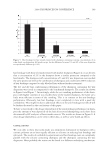
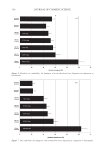
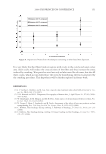
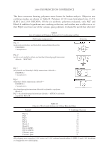
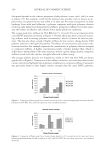
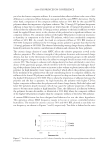
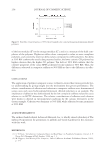
125 J. Cosmet. Sci., 60, 125–133 (March/April 2009) Approaches to polymer selection for mascara formulation YELENA LOGINOVA, VIBHA SHAH, GLENN ALLEN, RALPH MACCHIO, and ALAN FARER, COTY, Inc., 410 American Road, Morris Plains, NJ 07950. Synopsis The use of hair-care and hair-styling polymers in mascara formulation is well known. This paper introduces pre-formulative evaluation of fi lm formers which are intended to be applied on eyelashes for mascara develop- ment to screen fi lm formers more effectively. The fi lm-forming characteristics of randomly selected hair- styling polymers were evaluated under the infl uence of pH, temperature, surfactant, and pigment dispersion. The selected polymers included acrylics, polyurethanes, and a pyrrolidone, all of which are used throughout the hair-care and mascara industries. An Erichsen Model 299/300 Pendulum Damping Tester was used to determine fi lm hardness. In analyzing samples by the effect of temperature, the hardest neat polymer, a sty- rene-acrylate, softened 30% after heating. For most of the other polymers, the hardness was slightly lower compared to the neat polymer. The addition of pigment didn’t signifi cantly infl uence the hardness of one acrylic copolymer and a urethane dispersion, but most of the other polymers exhibited a reduction in fi lm hardness. Various hardnesses were observed with different surfactants and different pH’s. INTRODUCTION The key to successful mascara formulation is a fl exible lash-styling and shape-holding coating. The complex physical-chemical structure of mascara comes from the relationship between waxes, fi lm formers and other functional ingredients. The polymer behavior after interaction with other constituents in mascara formulation unpredictably changes. The empirical way of polymer selection requires a number of mascara batches until the right polymer will be chosen for the particular mascara system. Traditionally, the selection and testing of polymers for mascara formulations is based on related hair-care and hair-styling technologies, but mascara technology is different than a hydroalcoholic solution of fi lm-forming polymers, aerosol foams and setting hair gels which are used in the majority of hair-styling products. Although hair-spray technology seems to be not that close to mascara formulation, it could be considered in terms of fi lm formers and testing of their properties. The essential components of hair styles and hair sprays compared to mascara are presented in Table I. Reviewing formulations for hair products in comparison to mascara (Table II) shows that mascara development requires special thought for selection of fi lm-forming polymers. Table II represents the similarities and differences in formulation approaches for these products.

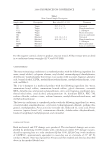
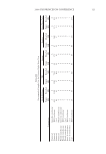
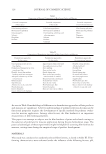
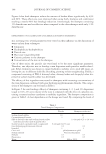
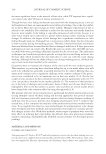
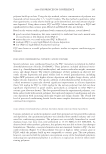
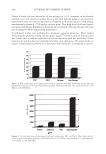
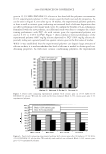
JOURNAL OF COSMETIC SCIENCE 126 As seen in Table II methodological differences in formulation approaches of hair products and mascara are signifi cant. A better understanding of polymer selection for mascara by functional properties requires the development of specifi c methods for polymer evalua- tion for mascara application. Among other factors, the fi lm hardness is an important characteristic of fi lm forming polymers. This paper is an attempt to adopt a test for fi lm hardness of paint and related coatings to the selection of polymers for mascara application during the pre-formulation stage. The practical advantages of these experiments might be helpful for screening fi lm formers for mascara, cutting time during the empirical stage of product development. MATERIALS This study was conducted on randomly selected fi lm formers, as listed in Table III. Film- forming characteristics were evaluated under the infl uence of the following factors: pH, Table I Comparison of Essential Components of Hair Sprays/Styles and Mascara Essential components of hair sprays Essential components of hair styles Essential components of conventional mascara Film-forming polymers Film forming polymers Film-forming polymers Plasticizers for polymers Plasticizers for polymers Plasticizers for polymers Glossing agents Solvents Disentangling, softening, and glossing agents Waxes Pigments Propellant Solvents Surfactants Perfume Perfume Colorants Table II Comparison of Formulation Approaches of Hair Sprays/Styles and Mascara Formulation approaches for hair sprays Formulation approaches for hair styles Formulation approaches for conventional mascara Good spraying results in very fi ne droplets Improvement of hair style hold Easy application on wet hair Flexible coating of lashes All-day lash hold Formation of transparent or clear, translucent fi lm Easy combing Does not feel sticky No-fl ake wear Easy gliding Flexible, elastic fi lm without breaking with hair movement Quick drying time Does not become powdery Quick drying time Increased lash fullness Adequate substantivity of fi lm to hair keratin when brushed or combed Ensures hair body and bounce No-clump application Supple lashes Enhanced gloss Increased hair volume Non-hydroscopic fi lm Rapid drying Hairs do not clump Non-sticky or tacky fi lm Absence of a sticky, tacky feel Non-hydroscopic fi lm Easy to remove with makeup Non-hydroscopic Greater hair gloss remover or soap and water Easy to brush out Does not cause excess stiffness Easy to remove with shampoo
Purchased for the exclusive use of nofirst nolast (unknown)
From: SCC Media Library & Resource Center (library.scconline.org)