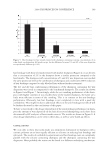
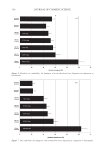
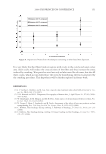
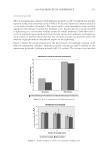
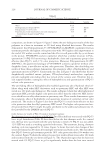
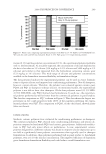
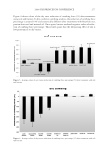
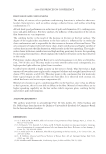
2008 TRI/PRINCETON CONFERENCE 133 5. The neat polymer may not exhibit the hardness desired, but may be more appealing when subjected to heat or blended with typical formulation ingredients (surfactants, pigment), as can be seen with Sample G. 6. More data need to be compiled on polymers with similar technology in order to better understand the correlation between fi lm hardness and the performance of the fi nal product, especially the effect of different pH adjusters on fi lm hardness as well as the effect of various emulsifi ers. 7. The hardness test does not necessarily correlate with mascara performance, but it helps to defi ne the formulation approaches and better understanding of polymer performance in a mascara formula. All of these factors, and their effect on the fi nal formulation, continue to be investigated in our laboratory. ACKNOWLEDGMENTS The authors are grateful to Coty’s Nail Lab personnel sharing their experience in fi lm hardness determination and appreciate Rossana Lanza’s participation in this study as well as all volunteers who participated in the study. REFERENCES (1) A. Prada, Experimental Study of the Effectiveness of Gels for Profi le Modifi cation (Master’s Thesis, The Univer- sity of Oklahoma, Norman, Oklahoma, 1998). (2) J. E. Glass, Water Soluble Polymers: Beauty with Performance (Advances in Chemistry Series 213), (Ameri- can Chemical Society, Washington, D.C., 1986). (3) C. R. Robbins, Chemical and Physical Behavior of Human Hair, 3rd ed. (Springer, New York, 1994). (4) C. R. Robbins and M. J. Bhal, Analysis of hair by electron spectroscopy for chemical analysis, J. Soc. Cosmet. Chem., 35, 379–390 (1984). (5) C. Zviak. The Science of Hair Care (Marcel Dekker, New York, 1986).

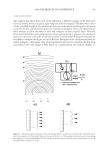
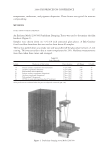
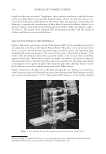
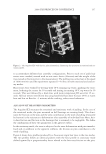
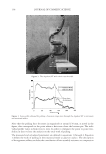
J. Cosmet. Sci., 60, 135–141 (March/April 2009) 135 The Aqualon SLT: A novel device for measuring hair stiffness and lubricity K. ABRAHAM VAYNBERG and M. NALL, Ashland Inc., 500 Hercules Road, Wilmington DE 19804. Synopsis The ability to quantify hair property changes in response to treatment is essential to the successful develop- ment of new formulations and benefi ting agents. In the attempt to expand the toolbox of hair tress testing tools, we developed a device that allows hair scientists to measure hair tress changes in stiffness and lubricity. The tool is based on a system of pins mounted on free rotating bearings and is operated in two modes: rotating and stationary. The hair attributes are measured by threading a hair tress through the pin assembly and measuring the total work of pulling through in rotational and stationary modes (the latter mode is obtained by immo- bilizing pins by a retaining plate). The data thus obtained is de-convoluted into the work of apparent stiffness (rotational mode) and the work of the friction-on-pins or lubricity (stationary mode minus the apparent stiff- ness). The data can be further reduced to produce an apparent friction coeffi cient defi ned as a ratio of the apparent lubricity to the apparent stiffness. This work demonstrates the utility of the parameters measured by the Aqualon SLT and illustrates how the device can be used to predict and understand the impacts of various hair treatments. INTRODUCTION Consumer panel studies are the ultimate in decision making when it comes to personal care products. These studies, however, are expensive and time consuming to be suitable for day-to-day R&D activity and thus, not surprisingly, every application lab contains devices intended to quantify hair attributes to help streamline the development process. The single most widely used test is based on measuring the combing forces in both the wet and dry state, fi rst described by Newman et al. (1) and further improved by Kamath et al. (2). The test captures the effect of conditioning treatments and generally refl ects the combined characteristics of comb-to-hair friction, hair-to-hair friction, hair entangle- ment, stiffness and volume (applicable in dry state). Hair stiffness is an attribute recognized to be important to hair styling and relates to the body and volume of a hair assembly (3). Several methods exist to measure hair fi ber stiff- ness. For example, hair fi ber stiffness can be deduced from fi ber bending characteristics (4) or through torsional rigidity (5). These methods provide fundamental mechanical infor- mation for individual hair fi bers but the information can not be readily extended to the hair assembly stiffness due to the hair fi ber variability and the fi ber to fi ber interaction. A three-point bending experiment had been recently described to measure “hair supple- ness.” In this experiment, a tool imposing the three-point bend was slid along the tress
Purchased for the exclusive use of nofirst nolast (unknown)
From: SCC Media Library & Resource Center (library.scconline.org)