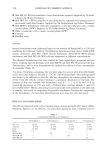
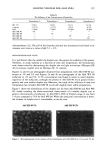
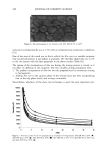
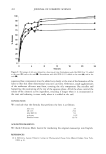
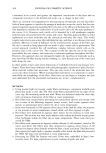
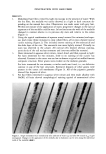
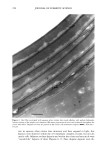
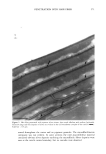
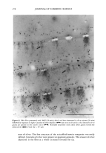
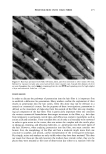
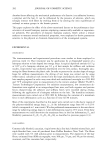
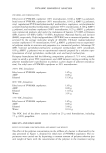
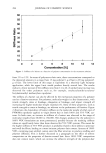
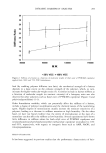
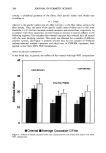
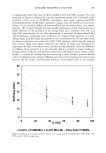
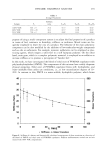
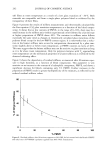
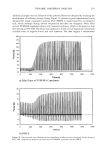
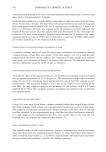
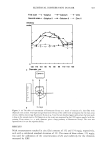
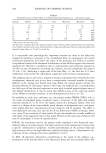
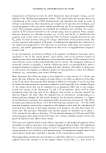
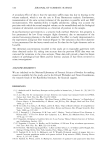
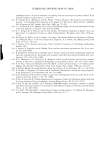
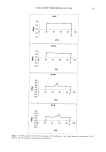
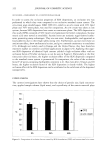
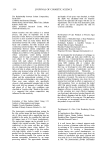
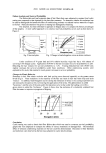
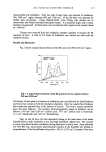
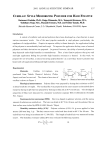
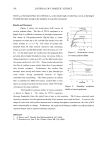
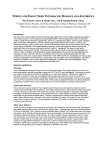
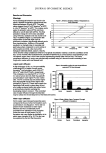
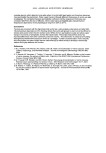
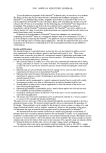
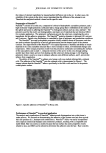
284 JOURNAL OF COSMETIC SCIENCE 6O 55 5O o 45 • 40 • 35 • 3o • 25 2o 15 0 2 4 6 8 10 12 14 Concentration [%] Figure 1. Stiffness of a hairset as a function of polymer concentration in the treatment solution. from 2% to 12%. In terms of polymer-to-hair ratio, these concentrations correspond to the deposited amounts in a range from 15 mg polymer/1 g of hair to 90 mg polymer/1 g of hair. The lower limit of this range is equivalent to a relatively light hairspray application, while the upper limit would produce heavily treated hair. The results indicate a linear increase of the stiffness ratio from 14 to 46. A similar linear increase was observed for other polymers such as, for example, octylacrylamide/acrylates/ butylaminoethyl methacrylate copolymer. The stiffness of a hairset can also be affected by the mechanical properties of a polymer used as a fixative treatment. For polymers, molecular weight is a key characteristic, with tensile strength, stress at breakage, elongation at breakage, and impact strength all increasing for higher-molecular-weight materials (4). Some of these properties, such as tensile strength or stress at breakage, are relevant to the performance of fixatives. Figure 2 illustrates the dependence of hairset stiffness on the molecular weight of ethyl ester of PVM/MA copolymer applied to virgin brown hair in both 100% and 55% VOC sys- tems. In both cases, an increase in stiffness of a hairset was observed in the range of molecular weights from 60,000 to 180,000. The changes produced by the polymer in 100% VOC formulation are more pronounced, possibly because the resulting stiffness values are significantly lower than those observed for 55 % VOC systems. The reason for the higher stiffness of 55% VOC products is probably related to their ability to penetrate and swell the fibers, leading to a more intimate polymer-hair contact. Systems of 100% VOC, containing pure alcohol, cannot enter the fiber structure to produce swelling and polymer diffusion. This is further discussed in a paragraph on the effect of solvent composition on the properties of fixative-treated hair. Since 100% VOC composition does not contain water, which can increase the adhesive strength of the polymer-hair

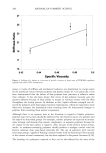
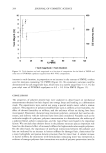
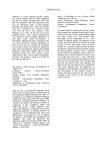
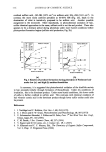
DYNAMIC HAIRSPRAY ANALYSIS 285 3O 28 26 24 22 20 18 16 14 12 10 50000 90000 130000 170000 M.W. * 55% VOC ß 100% VOC Figure 2. Stiffness of a hairset as a function of molecular weight of ethyl ester of PVM/MA copolymer applied from 100% and 55% VOC formulations. link (by enabling polymer diffusion into hair), the mechanical strength of a hairset depends to a large extent on the cohesive strength of the polymer, which, in turn, increases for higher-molecular-weight resins (5). A similar increase in hairset stiffness as a function of molecular weight (or intrinsic viscosity) of a hairspray resin was also observed for other polymers such as butyl ester of PVM/MA copolymer (Figure 3) and poly(vinylpyrrolidone) (1-3). Other formulation variables, which can potentially affect the stiffness of a hairset, include a degree of polymer neutralization and the chemical nature of the neutralizing agent. Higher degrees of neutralization usually increase the moisture sensitivity of a polymer, leading to a decrease in stiffness retention at high humidity. On the other hand, we have not found evidence that the extent of neutralization or the type of a neutralizer can also affect the stiffness at low humidity. Several experiments have shown little difference in stiffness values for both ethyl ester of PVM/MA copolymer and octylacrylamide/acrylates/butylaminoethyl methacrylate copolymer neutralized to 10% and 95%, respectively, with organic or inorganic bases such as AMP, NaOH, and triisopropanolamine. EFFECT OF HAIR TYPE It has been suggested in previous studies that the performance characteristics of hair-
Purchased for the exclusive use of nofirst nolast (unknown)
From: SCC Media Library & Resource Center (library.scconline.org)