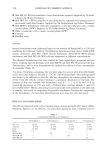
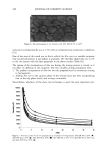
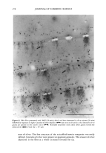
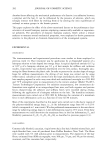
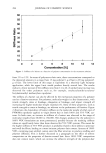
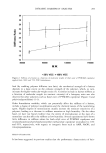
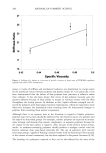
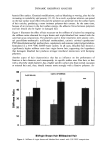
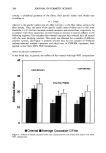
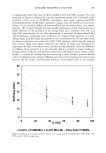
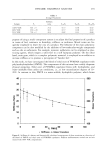
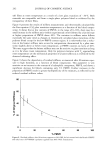
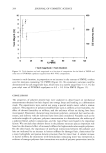
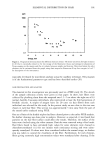
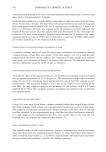
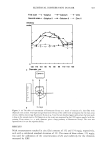
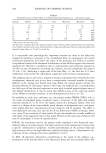
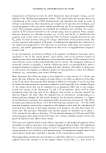
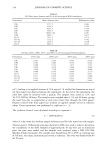
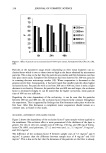
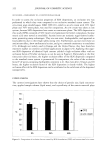
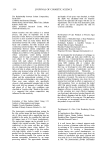
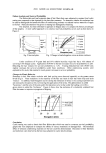
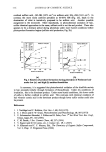
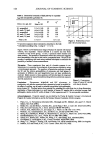
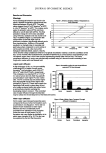
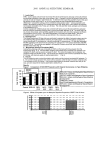
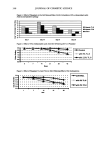
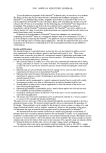
292 JOURNAL OF COSMETIC SCIENCE soft films at room temperature as a result of a low glass transition of -20øC. Both materials are compatible and form a single-phase polymer blend as evidenced by the transparency of their films. Figure 8 presents the results of stiffness measurements and theoretically calculated [by the Fox equation (13)] glass transition temperatures as a function of the blend compo- sition. It shows that at low contents of PMVE, in the range of 0-10%, there may be a small increase in the stiffness ratio (within experimental error) followed by a fast decrease at higher proportions of PMVE above 40%. The variation in stiffness ratios follows essentially the same trend as changes in theoretically calculated glass transitions of the polymer blend except for the low-PMVE content region. It is noteworthy that a reduc- tion in the hairset stiffness ratio occurs for compositions characterized by a glass tran- sition slightly above or below room temperature, at PMVE contents in excess of 40%. This may suggest that the hairset stiffness may not be sensitive to glass transition as long as it is far above room temperature. Only for polymer mixtures with Tg approaching room temperature are the mechanical properties of a hairset affected, as evidenced by the observed softening effect. Figure 9 shows the dependence of residual stiffness, as measured after 80-minute expo- sure to high humidity, as a function of blend composition. This parameter is very sensitive to an increase in the content of a hydrophilic component, PMVE, and shows a significant decrease for blends containing only 5% PMVE. Further increases in the proportion of PMVE result in greater hydrophilicity of the mixtures, as reflected by the reduced residual stiffness values. 8O o• 60 • 40 0 o • 20 0 20 40 60 80 100 % PMYE Figure 9. Residual stiffness, after gO-minute exposure to 90% RH, for hair treated with the blend of PMVE and ethyl ester of PVM/MA copolymer applied from 80% VOC fbrmulations.

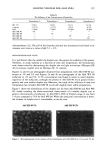
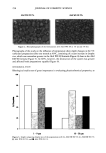
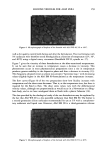
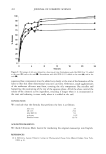
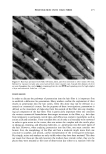
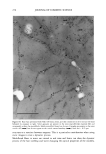
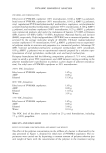
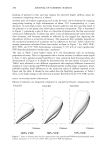
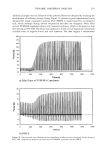
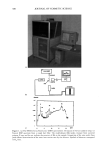
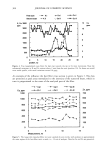
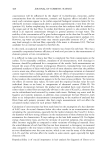
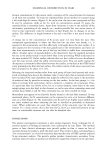
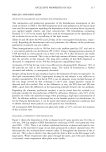
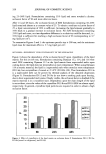
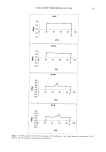
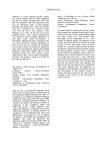
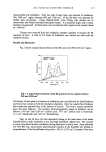
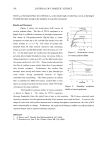
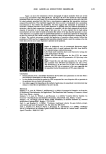
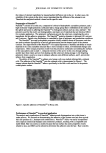
DYNAMIC HAIRSPRAY ANALYSIS 293 Additional insight into the behavior of this polymer blend was obtained by studying the development of tackiness during drying. Figure 10 presents typical experimental traces obtained for single component systems. Pure PMVE is characterized by a permanent tack, which develops during solvent evaporation and does not disappear, while ethyl ester of PVM/MA copolymer shows only transient tackiness, which is decreased to zero after drying at 50% RH. The blend was analyzed in terms of tack magnitude (maximum recorded value of negative force) and tack duration. The data suggest a monotonous 190 170 150 130 • 110 • 90 ,, 70 5O 3O 10 -10 0 200 400 600 800 Time {s} a) Ethyl Ester of PVM/MA Copolymer lOOO 12oo 1400 25 2O 15 -lO o 200 400 600 800 lOOO 12oo 14oo Time (s) b) PMVE Figure 10. Experimental traces illustrating time dependence of adhesive forces developed during drying of 80% VOC compositions based on (a) ethyl ester of PVM/MA copolymer and (b) PMVE.
Purchased for the exclusive use of nofirst nolast (unknown)
From: SCC Media Library & Resource Center (library.scconline.org)