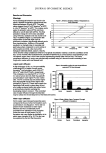
314 JOURNAL OF COSMETIC SCIENCE The stratum corneum contains 10-20% water (11). If the water content falls below this value (i.e., if water evaporation from the skin to the atmosphere is increased), the protective layer of the skin is no longer intact and starts to get chapped. In this case, occlusive topicals have to be applied in order to regenerate the water content of the stratum corneum and thus repair the surface of the skin (11). Due to occlusion, water evaporation from the skin to the atmosphere is decreased and water is thus retained within the skin. The stratum corneum swells, which leads to a drug permeation- enhancing effect (12,13). However, many of the topicals with good occlusive properties (e.g., petrolatum, fats, fatty acids, silicon oil, and polyacrylate foils) have an unacceptable cosmetic or aesthetic appearance. Therefore, different w/o and o/w emulsions have been developed (10,11). They represent a compromise between occlusive performance and appearance on the skin. An advantage of SLN is the easily performed incorporation into various topicals such as gels and creams (14). During production, a part of the water is replaced by concentrated aqueous SLN dispersion. Alternatively, creams can be produced with a lower water content and the SLN dispersion is admixed in the last production step. It has been shown that SLN remain intact after incorporation into an o/w cream, i.e., they do not dissolve within the lipid phase if the lipids are chosen carefully (15). That means one can easily combine the advantages of an existing cream or gel with the additional benefits of SLN. The occlusive character of SLN is due to film formation after application to the skin, leading to decreased water evaporation (4,16). To produce SLN and creams with maxi- mum occlusive effect, one needs to know the factors controlling the extent of occlusion. Therefore, in this study the occlusive effect has been investigated in detail regarding dependency on the volume of the sample applied to the skin, SLN particle size, con- centration of the lipid phase, and crystallinity of the lipid phase. Further, to assess the efficiency of SLN suspensions (and SLN added to creams) in enhancing occlusion, a comparison to a conventional cream was made. MATERIALS AND METHODS MATERIALS Cetyl palmirate (Gattefoss•, France), Dynasan 112, 114, and 116 (Contensio, Germany), TegoCare © 450 (Goldschmidt, Germany), sucrose ester 1670 (Mitsubishi-Kogaku Foods Corp., Japan), and Lipofundin 20% N (Braun Melsungen, Germany) were kindly pro- vided as gifts. Ungt. emulsific. aquos. was obtained from Caelo GmbH (Germany), and Tyloxapol © was obtained from Sigma Chemicals. METHODS Production of SLN. SLN were produced using high-pressure homogenization (hot tech- nique) or ultrasonication. The lipids were melted at approximately 85øC, and then the hot surfactant solution was added and mixed for one minute using a high-speed stirrer (Ultra Turrax T25, Janke & Kunkel, Germany) at 8000 rpm. The obtained pre-emulsion was homogenized using a Lab 40 high-pressure homogenizer (APV Deutschland GmbH, Germany) with temperature control, applying a pressure of 500 bar and three homog- enization cycles if not stated otherwise. Details of the production method are described

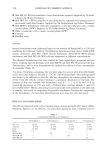
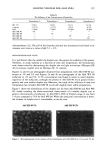
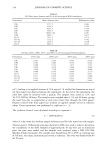
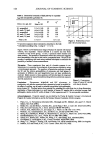
OCCLUSIVE PROPERTIES OF SLN 315 in prior publications (1,4,17). For the formulation produced by ultrasonication, the pre-emulsion was ultrasonified using a Labsonic 2000 (B. Braun, Germany) with a standard ultrasonic detector (B. Braun, Germany). Table I shows the formulations, production parameters, and storage conditions used for the investigations presented. Particle size examination. Particle size was analyzed by photon correlation spectroscopy (PCS) using a Zetasizer 4 (Malvern Instruments, UK). PCS gives information about the mean diameter of the bulk population and about the width of the distribution via the polydispersity index (PI). The measuring range is 3 nm to approximately 3 pm. Table II shows the PCS data of the investigated formulations. Particle size was also analyzed by laser diffraction (LD) using a LS230 (Coulter Elec- tronics, Germany) with a measuring range from 40 nm to 2000 pm. This method results in a volume distribution. Characteristic parameters are the diameters d50%, d90%, d95%, and d99%, where, e.g., d99% means that 99% of the particles are smaller than the given size. The value of the mean diameter d50% is usually greater than the value obtained by PCS because of the measurable size range (LD includes the micrometer range). The formation of aggregates is characterized by d95% and d99%. Table III shows the LD data of the investigated formulations. In vitro occlusion test. An in vitro occlusion test adapted by de Vringer (18) was used. Beakers (100 ml) were filled with 50 ml of water, covered with filter paper (cellulose acetate filter, 90 mm, Schleicher, Germany cutoff size: 4-7 pm), and sealed. If not stated otherwise, a 200-mg sample were spread evenly with a spatula on the filter surface (18.8 Table I Composition of SLN Formulations and their Production Method Production Formulation Lipid Surfactant parameters ZPa 500 bar, 3 cycles ZPb 1500 bar, 3 cycles ZPc Cetyl palmirate TegoCare 450 (5%) Ultrasonic (40%) 1 min, 150W ZPd 150 bar, 1 cycle CPe High-speed stirrer CPZ Cetyl palmirate Sucrose stearic acid (30%) ester (5%) D112 Dynasan 112 (20%) 500 bar, 3 cycles Dl14a Dynasan 114 (20%) Tyloxapol (5%) Dl14b D116 Dynasan 116 (20%) All samples were stored at room temperature, except D114b (stored at 4ø-8øC).
Purchased for the exclusive use of nofirst nolast (unknown)
From: SCC Media Library & Resource Center (library.scconline.org)