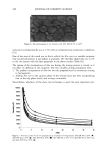
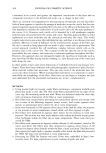
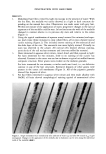
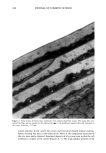
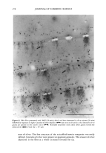
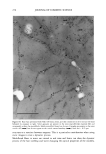
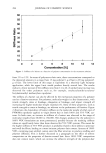
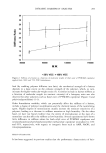
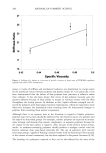
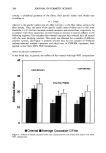
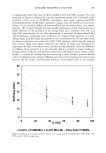
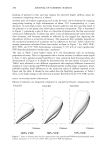
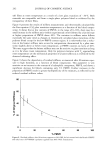
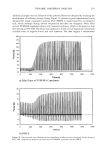
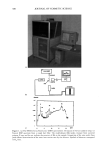
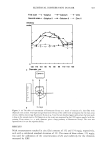
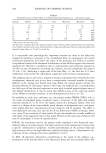
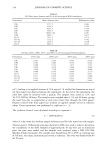
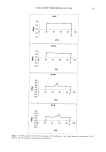
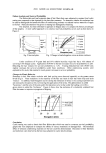
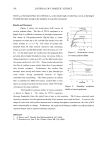
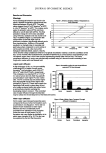
2001 ANNUAL SCIENTIFIC SEMINAR 331 Failure Analysis and Survival Probability The failure data and load extension data of hair fibers that were subjected to constant load cyclic testing was compared to that obtained for the hair after treatment. To determine whether this technique can be used to distinguish the beneficial effect of conditioning products we selected various materials to apply to the hair. Particular attention was given to treating hair damaged by bleaching. The simplest, but least informative approach to fatigue data is to compare the failure percentages of the samples. A more useful approach is to construct survival probability curves such as that shown in Figure 2. 0• o4. • 0• & • + Fig. 2 Survival plots. /.•• -- first Cycle 60 --•o •s ,• 40 21 cycles '• 20 m41 •s 0 • • • • 29 30 31 32 -- lo•o wdes Elongation (ram) --•o• •.s Fig 3 Chan•e in Io•d-e]on•ation cu•es as stress continues. Under conditions of 70 gram load and 30% relative humidity virgin hair has a 16% chance of surviving 5,000 fatigue cycles. Application of JR400 to the hair increases the survival probability to 22%. Bleaching the hair reduces the survival probability to 1.2%. Treating bleached hair with JR400 only slightly increases the survival probability under these conditions. Other conditioning systems were explored in this study that resulted in much greater increases in survival probability. Changes in Elastic Behavior Decreases in hair fiber elastic modulus with load cycling were observed especially at the greater stress levels (Fig 3). These reductions in the elasticity of the hair can result in hair that looks limp and lacks 'bounce'. In addition, load-elongation curves during the relaxation of stress in the cycling experiment are not necessarily the same as they were during the application of the stress. This phenomenon is called "hysteresis", and the ratio of the area under the relaxation curve to that under the loading curve (for a given strain) is called the "resilience". Figure 4 shows how the resilience of a chemically unaltered hair fiber decreases in response to progressive fatiguing. 0 ß 29 31 33 First Cycle 40 cycles 35 Elongation (mm) Conclusion Cyclic testing was used to obtain hair fiber failure data which was used to construct survival probability graphs that were employed to compare the effects of various treatments on damaged hair. The beneficial effect of selected conditioning materials on the hair could be demonstrated. Decreases in fiber elasticity and resilience were observed as the hair was subjected to cyclic tensile stresses.

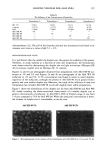
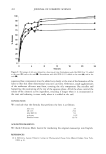
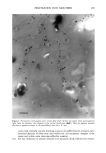
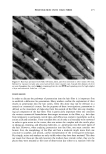
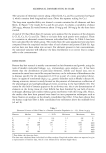
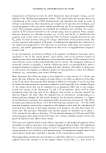
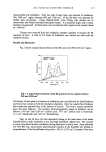
332 JOURNAL OF COSMETIC SCIENCE DIFFERENTIAL SCANNING CALORIMETRY (DSC) STUDY OF HAIR DAMAGE AND HAIR RESTRUCTURING BY PROTEIN DERIVATIVES Tao Gao, Ph.D., and Ann Bedell Croda, Inc., 180 Northfield Avenue, Edison, NJ 08837 INTRODUCTION Extensive DSC studies have been carried out to investigate the structural changes in the microfibril- matrix complex of extended and thermally treated (annealed) keratin samples (1-4). An endothermic peak in the temperature range of 230 ø - 250øC of DSC curves of ct-keratins has been indexed as the ct-helix peak and the area under the peak represents a measure of the Relative Helix Content (RHC) of the sample (2). Recently, Wortmann (5) reported their studies on cosmetically treated hair by High-Pressure DSC in water. They concluded that the area of the helix peak depends on the structural integrity of the ct-helical material in the intermediate filaments (IFs). The cross-link density of the matrix, in which the intermediate filaments are embedded, kinetically controls the helix peak temperature. In this paper we present our studies on effects of weathering, bleaching, and relaxing on ct-helix peaks of virgin brown and Afro-American hair. The effects of cosmetic treatments of bleached and relaxed hair with protein derivatives on the recovery of deformed ct-helix peaks are also discussed. EXPERIMENTAL ß Materials: Virgin brown, bleached blond, and virgin Afro black hair samples were purchased from International Hair Importers & Products Inc., Bellerose, NY. Protein derivatives were commercial samples from Croda Inc, Parsippany, NJ. ß Sample Preparation: The hair was immersed in 1.5% active aqueous solution or in tested formulas for three minutes, rinsed (for rinse-off products)), air-dried, and chopped into small pieces having lengths less than 1.0 min. ß Moisture Content: Hair samples were equilibrated in a chamber at 23øC and 50% relative humidity for 48 hours. The moisture content of the equilibrated hair was determined as 11.48% and 10.15% for the bleached and the virgin brown hair samples, respectively. ß Instrument: A DSC 2010 (TA Instruments, New Castle, DE) was used for measurements. 5 - 7 mg of hair sample were placed in an open aluminum pan at a nitrogen environment (N2 flow rate = 50 ml/min). The sample was heated to 70øC and kept at that temperature for 30 minutes to remove moisture and then cooled to 25øC. The hair sample was re-heated this time to 270øC at a rate of 10ø/min. Three trials were conducted for each hair sample and the average peak temperature and peak area were calculated. RESULTS AND DISCUSSION ß Data Analysis A typical DSC curve of a virgin hair sample is presented in Figure I. The peak temperature is defined as the temperature of denaturation (Td) of the e-helix in the IFs. The denaturation includes phas. e transition and protein degradation. The area of the peak represents the denaturation enthalpy ZXHa, which is the energy required for denaturation of the ct-helix and expressed by the heat of absorption per gram of dry hair (J/g). zXHa is used to determine RHC. RHC = 100 X (zXHa/zSHaø)%, where zXHa ø is the average denaturation enthalpy of the untreated hair. ß Weathering Effects Helix peaks with different intensities and positions were observed along the fiber axis of a virgin brown hair sample having a length of 18 cm. Data are summarized in Table I. Table I Weathering Effects on ct-Helix Peak of Hair [ Hair components Tip I •oot l z•Ha (J/g) 3.44 (85.6% RHC) 3.77 (93.9% PdqC) 4.02 (100% PdqC) Ta (øC) 234.4 233.9
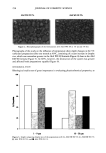
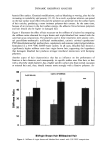
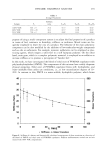
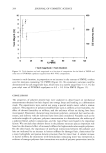
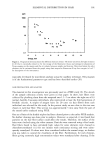
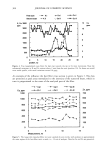
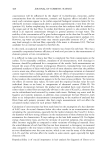
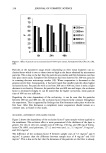
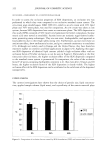
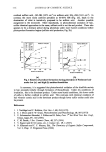
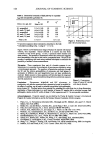
Middle 233.6 It can be seen that AHa decreases and Ta increases from the tip to the root of the hair, The R_I-IC in the tip of the hair is 85.6% of that in the root end. This is a clear indication of the weathering effect. ß Bleaching and Relaxing Effects Figure 2 depicts the effects of bleaching time on the Ta and RHC of virgin hair, The Pd-IC decreases with the increase in bleaching time. The Z•Hd is 3,85 J/g and 1.07 J/g for the virgin and bleached hair,
Purchased for the exclusive use of nofirst nolast (unknown)
From: SCC Media Library & Resource Center (library.scconline.org)