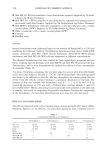
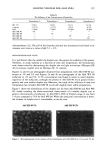
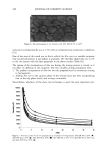
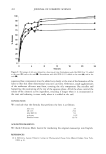
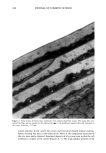
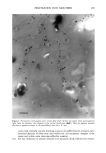
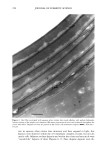
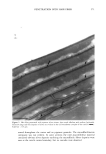
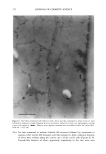
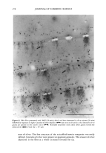
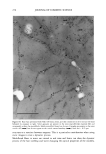
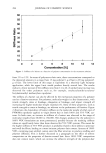
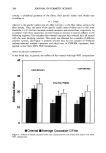
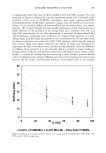
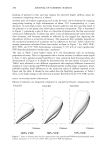
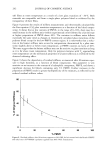
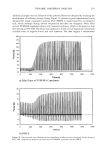
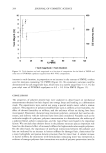
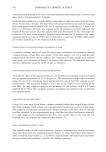
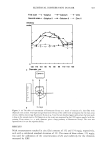
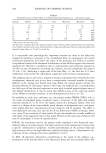
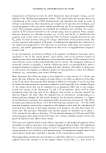
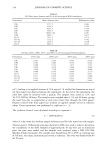
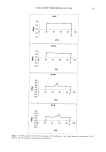
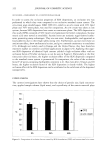
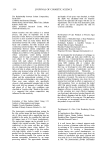
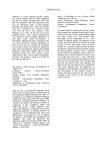
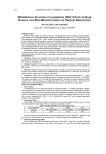
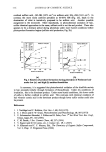
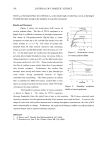
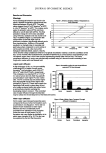
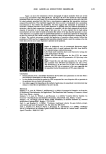
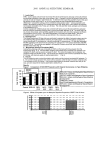
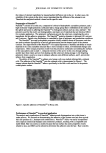
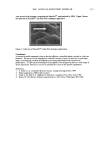
2001 ANNUAL SCIENTIFIC SEMINAR 345 Figure 1A shows the transmission electron micrograph of typical nanotubes which are several microns long and diameter ranges from 30-60 nm. The figure lB shows the amount of retinol palmitate penetrated in the skin over time. Nearly 70% of retinol from nanotubes penetrated into skin while only 48% of retinol palmitate penetrated into skin from a nano-dispersion suggesting that nanotubular structures enhanced the penetration. This experiment suggests that when an active is incorporated into a nanotubular microstructures it may enhance the penetration. Our data suggests that mechanism of penetration of nanotubes is different than that of oil-in-water dispersion. A possible reason for enhanced penetration by nanotubes is that the lipid composition of nanotubes is compatible with skin lipid composition and also the diameter of nanotubes is in the same range of skin pore size. It is also reported that the lipid tubular microstructures are more stable in harsh environment like surface of the skin than the liposomes or oil-in- water dispersions. In a separate study we applied blank nanotubes to a model skin epidermis for 30min then the skin was rinsed off with a buffer solution and applied a solution of nano-dispersion containing ODF in oil phase. The confocal microscopy revealed that application of nanotubes almost entirely blocked the penetration of ODF (see Fig. 2) suggesting that nanotubes probably formed a mesh like coating on the skin which did not let the oil-in water dispersion to penetrate in the epidermis. Conclusions Figure 2: Orthogonal view of reconstructed fluorescent images from optical slices of model epidermis (Epi 606 from MatTek, Inc.) acquired using a confocal microscope. Left: Blank model epidermis shows auto fluorescence arising due to the lipids present in the skin. Middle: 10% EFA-nano-dispersion for 2hr (37øC) the intense fluorescence indicates that ODF penetrated to 10-12•tm deep in the skin. Right: Treated the skin with blank nanotubes for 30 min (37øC) then incubated with 10%-EFA-nano-dispersion for 2hrs (37øC). The fluorescence is at the same level as that of the background indicating that ODF did not penetrate in this case suggesting that the nanotubes blocked the penetration of EFA-nano-dispersion. Retinol palmitate from a nanotubular formulation showed 20% more penetration in skin than from a nano-dispersion formulation over 6hrs of time period In-vitro studies showed that the marker dye ODF incorporated in a nano-dispersion did not penetrate in the epidermis that was treated with nanotubes Our studies suggest that depending on the method of application, the nanotubular microstructures may enhance or retard the rate penetration of an active in skin. References Kulkarni, V. S., Aust, D., Wilmott, J., and Hayward, J. A. (2001a) "Liposomes In Cosmetics: An Overview Of Production, Characterization, And Applications" The Manufacture and Chemist• of Cosmetics, Allured Publ. Corp., Illinois, --in press Kulkarni, V. S., Aust, D., Wilmott, J., and Hayward, J. A. (200lb) "Cosmetic Delivery Systems: An Overview" The Manufacture and Chemistry of Cosmetics, Allured Publ. Corp., Illinois, --in press Kulkarni, V.S.J.M Boggs, and R.E. Brown (1999) "Modulation of nanotube formation by structural modification of sphingolipids" Biophys. J. 77, 319-330 Zarif, L., and Mannino, R. J. (2000a) "Cochleates. Lipid-based vehicles for gene delivery-concept, achievements and future development" Adv. Exp. Med. Biol. 465:83-93 Zarif, L., Graybill, J. R., Periin, D., Najvar, L., Bocanegra, R., and Mannino, R. J. (2000b) "Antifungal activity of amphotericin B cochleates against Candida albicans infection in a mouse model" Antimicrob. Agents Cheroother. 44(6): 1463-1469

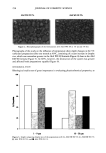
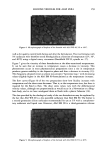
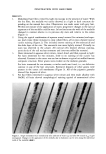
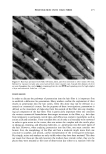
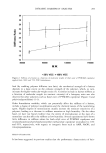
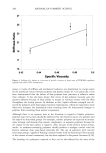
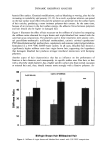
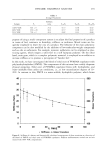
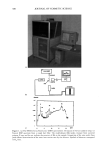
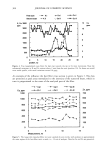
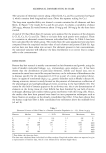
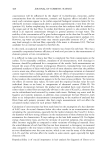
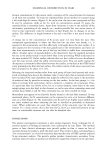
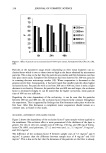
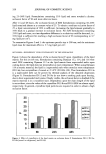
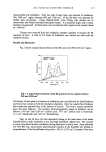
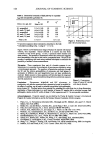
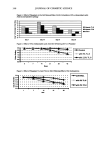
346 JOURNAL OF COSMETIC SCIENCE DELIVERY OF ACTIVE INGREDIENTS IN AND THROUGHOUT THE STRATUM CORNEUM VIA POLYMERIC ESTER TECHNOLOGY Diana L. Smith, Robert Siegfried, Danika Johnson and Paul Ching lnolex Chemical Company, Philadelphia, PA 19148 Introduction The most desirable method to improve the performance of an active ingredient in a cosmetic formulation is by incorporating an appropriate delivery system. There are many strategic advantages of utilizing a topical delivery system. By making actives more bio-available in the target tissue, the performance attributed by the active can be maximized. The coupling of this enhanced rate of delivery to the target tissue, along with a lowered irritation potential, results in an increased therapeutic index. The research reported in this presentation is directed at investigating the relationship between the structure of a class of cosmetic polymeric liquid reservoir technologies, and their respective ability to enhance the effectiveness of cosmetic actives. This technology is based on a partitioning mechanism, whereby actives are released by controlled diffusion into the epidermis. The chemistry and design of such topical delivery systems are essential for effective delivery. By incorporating these compositions into topical formulations, the efficacy of cosmetic actives can be optimized, the subject of which will be recapped in our applications research studies conducted with select cosmetic actives. Materials and Methods Although skin has a high degree of resistance to chemical penetration, it is known that many actives that target the stratum corneum (SC) are able to penetrate beyond it to deeper, viable layers of skin, and even to the systemic circulation. One of the most efficient means of focusing delivery of actives to the SC is with a polymeric topical delivery system (TDS). With the appropriate TDS, the active will partition into the polymer and be distributed and maintained in an active form in the targeted compartment of skin •. The Personal Care Applications Research Group at Inolex Chemical Co. has investigated the ability of polymeric esters to effectively control the diffusion of a broad range of active ingredients into and throughout the SC. Various clinical studies were performed to test the capability of a specially designed polyesters to potentially improve the performance of both hydrophilic and lipophilic actives for delivery of actives requiring distribution on and within the upper layers of the SC and those requiring distribution to lower layers of the SC respectively. Among these actives were DEET (mosquito repellent), dihydroxyacetone (sunless tanning agent), and several skin whitening agents, including hydroquinone, lactic acid, magnesium ascorbyl phosphate, and arbutin. Evaluating Polymeric Ester TDS with Lipophilic Actives Requiring Distribution on and within the upper SC: 1. Organic Sunscreens To evaluate the impact of polyesters upon the skin penetration of organic sunscreen active ingredients, a series of tape-stripping experiments were conducted on human skin in,vivo 2'3'4 . In these experiments, solutions of organic sunscreen actives (oxybenzone and octyl methoxycinnamate) were applied, with and without various polyesters, to forearm sites of subjects. Structural variations such as glycol monorner constituent, cross-linking rs. linear, end-termination and molecular weight were evaluated. Following a sample residence time of 2 hours, the outer SC was removed via repeated tape stripping 2'5 (Fig. 1). 2. DEET- Diethyltoluamide The active ingredient DEET, a well-known insect repellent, was evaluated with the best performing polyester from the tape-stripping study conducted with sunscreens (DEGX-5.0), since it had optimized the mitigation of sunscreen penetration. The clinical in-vivo testing was conducted in Indonesia with the conventional Mosquito Repellency Test utilized. Human subjects apply the test products (formulation with DEET alone - control, and DEET with DEGX-5.0) to their arms, followed by placement of their arms chambers containing mosquitoes for a period of 20-minutes each hour during a 6-hour period. The total number ol = mosquito bites occurring on the arms of subjects is compared after completion of the 6-hour test (Fig. 2). Evaluating Polymeric Ester TDS with Hydrophilic Actives Requiring Distribution to lower layers of the SC: The discovery of the polyester's ability to mitigate skin penetration of sunscreen actives led to the evaluation of polyesters as delivery systems for hydrophilic actives 6. The first hydrophilic active investigated was the alpha hydroxy acid, lactic acid.
Purchased for the exclusive use of nofirst nolast (unknown)
From: SCC Media Library & Resource Center (library.scconline.org)