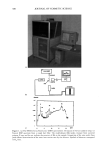
326 JOURNAL OF COSMETIC SCIENCE The Relationship between Sebum Composition, Facial Skin Condition and Seasonal Changes Masaru Kenjo, Sayuri Okura, Miho Toda, Chikako Kaneko, Naoko Ota Safety Analytical Research Center, POLA Chemical Industries, Inc. Sebum secretion onto skin surfaces is a normal process, and plays an important role in the protection of skin. However, it is known that either excessive or poor secretion of sebum often causes skin troubles. There are many studies about the relationship between the sebum components and facial skin conditions, but little research exists considering seasonal changes. We investigated the relationships between sebum composition and lhcial skin conditions with seasonal changes. Our findings are as follows: 1) The quantity and ratio of sebum components varied during seasonal changes, and the range of variation depended on each subject. 2) The evaluated skin conditions varied with each subject. 3) Based on the comparison between sebum compositions and skin conditions in each subject, it was determined that dry skin improved along with the decrease of free fatty acid ratio in sebum, and that the corneocyte surface area increased along with the decrease of unsaturated saturated ratio in free fatty acid. Therefore, it was concluded that the amount of sebum and the compositional variation of free thtty acids had a relationship to skin conditions. 4) There were some subjects who specifically showed a high unsaturated saturated ratio in free fatty acids with low amounts of secreted sebum, and almost all of their skin conditions were classified as "sensitive skin." Based on the results, it is suggested that sebum composition may influence the skin sensitivity. Evaluation of Skin Surface Relief Using 3 D Analysis of Stereomicroscopic Images Naruhito Toyoda, Masakazu Fukuoka Institute of Beauty Sciences, Shisedo Co., Ltd. The stereoscopic recording/analyzing system for the skin surface image has been developed. Two sets of video camera with a magnifying lens are installed in the probe for recording the right and left images (area of 2.9x2.2mm) synchronously. The stereoscopic images can be recorded by a2 channel video cassette recorder. These images are synthesized on the screen and they are visible using a binocular stereo vision method. The system can replay the image of the skin surlhce with high fidelity, which is useful in cosmetic product tests for assisting researchers to evaluate the skin condition visually. The system can also measure topographic dimensions by an image processing method. The approximate diameters and depths of hair pores were obtained, in which the depth was calculated from the disparity between the right and left images with the use of trigonometry. The 3 D data were analyzed to grade the pore size and to categorize the skin for cosmetic counseling. Development of Care Products to Prevent Aged Body Odor 1 Yoko Gozu 2, Shinichiro Haze 2, Shoji Nakamura 2, Yoshiyuki Kohno 3, Hiroshi Fukui 2 Yoshimaru Kumano 2, Kiyohito Sawano 4, Hideaki Ohta 4, Kazuo Yamazaki 4 Shiseido Product Development Center 2, Shiseido Basic Research Center 3, Fragrance Division, Takasago International Co.4 We investigated the development of technique to cope with middle age body odor (ABO) by two suggested ways, 1) intercept the key component of ABO that is nonenal on the way of generation 2) using ABO masking able or variation able fragrance, match to the character of ABO. In the first way, we developed in vitro ABO generation system by coexistence of palmitoleic acid and squalenemonohydroperoxide. Thiotaurine, a prominent biomedical antioxidant, was sel•ected by this in vitro system for the ingredient to cut off the generation of nonenal. The using test of protocol product including thiotaurine was down the skin nonenal level and had an effect on suppression of ABO generation. Next, we developed the model ABO that general people considered the middle age body odor. We use the model ABO to test the fragrance efficacy of masking or variation. Based on this screening test, some effective fragrance was developed, and protocol product fragrant with that effective fragrance had the ability to prevent the odor of ABO in the using test. The application of technique we investigated shown the way for the product of cope with ABO. Development of a New Color Rendering Powder and Its Application to Base Make up Katsuki Ogawa, Osamu Sakurai, Setsuko Fuse, Kazuhisa Ohno, Sigenori Kumagai Shiseido Research Center I It is well known that a sintered pigment made from a mixture of titanium oxide and iron oxide by calcining at 700 or more shows photochromic characteristics. To develop a photochromic powder having new optical characteristics, we synthesized a composite powder made from the mixture of interference type pearly pigment and iron oxide (0.2 to 0.3wt) through sintering process at 900. The photochromic powder (hereinafter

ABSTRACTS 327 relErred to as "color rendering powder") having new optical characteristics of which brightness and hue can change simultaneously before and after UV irradiation. This color rendering powder uses the interference light of pearl pigment (specially blue based color), while the substrate color tone is adjusted to be a yellowish orange color. This can show a tone change (a color difference of at least 15) that has never been available before. These optical characteristics were applied to correct unnatural appearance of skin under various optical environments. A foundation containing this color rendering powder can correct unnatural cosmetics appearance of heavy covered skin. For example, the foundation can provide a bright and translucent appearance under fluorescent light and a natural and beautithl appearance under bright sunlight. This new color rendering powder can show superior optical characteristics under various light environments. Therefore, this powder is useful as a powder for base make up application. The EffEct of Plant Extracts on Production of Adult T Cell Leukemia Derived FactorUTioredoxin (ADF«TRX) Hiroshi Tanaka, Yoko Funasaka, Masamitsu Ichihashi Research Development Department, Naris Cosmetics Co., Ltd. Department of Dermatology, Kobe University School of Medicine Study of Blooming on the Eyebrow Pencil Containing Cetyl Alcohol Hiroyo Kameymna, Mika Kurashige, Kunio Sugimoto, Kiyokazu Tamura Product Development Department, Tokiwa Corporation In eyebrow pencils containingcetyl alcohol, white fine powders have appeared on the surface. This is called as blooming. Analytical data continned that the white powder was cetyl alcohol itself. Particularly, at the temperature of 372, cetyl alcohol crystallized quickly and appeared on the surface of eyebrow pencils in the form of needle crystals. On the other hand, when cetostearyl alcohol (a 1:1 mixture ofstearyl alcohol and cetyl alcohol) was used instead ofcetyl alcohol, no such blooming problem occurred. This is probably because that the crystallization ofcetyl alcohol is hindered due to mixing withstearyl alcohol so that no crystals grow even at 377•. Also, it has been found that less blooming substance appeared when the ratio of oil was increased. This is because that more oil can dissolve more solid substance and therefore prevent cetyl alcohol from crystallization This study indicates that the differences in solubility of solid substances in different oils and the micronizing of cetyl alcohol crystals by mixing with higher alcohol are key factors for the occurrence and control of the blooming in eyebrow pencils. With the aim to recognize the materials which increase the tyrosinase activity of melanocytes in the conditioned medium ofkeratinocytes after UV B irradiation, we studied the stimulatory effects of conditioned media using ADF TRX and ct MSH (melanocyte stimulating hormone) antibodies. As a result of the studies, all tyrosinase activities of melanocyte in the conditioned media with ADFUTRX andor a MSH antibodies were suppressed efficiently as compared to the medium without the antibodies. As melanin amount is up regulated by UV B irradiation that causes skin pigmentation, we searched for a way to suppress the amount of ADFI•TRX produced during UV B irradiation. We found the ingredients that effectively suppress the amount of ADF [] TRX [] as follows:dl a tocopherol, Psidium guajava leaf extract, Thea sinensis L. extract and Helianthus annuus L. seed extract.
Purchased for the exclusive use of nofirst nolast (unknown)
From: SCC Media Library & Resource Center (library.scconline.org)