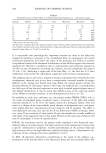
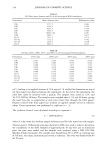
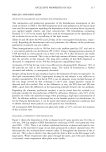
OCCLUSIVE PROPERTIES OF SLN 315 in prior publications (1,4,17). For the formulation produced by ultrasonication, the pre-emulsion was ultrasonified using a Labsonic 2000 (B. Braun, Germany) with a standard ultrasonic detector (B. Braun, Germany). Table I shows the formulations, production parameters, and storage conditions used for the investigations presented. Particle size examination. Particle size was analyzed by photon correlation spectroscopy (PCS) using a Zetasizer 4 (Malvern Instruments, UK). PCS gives information about the mean diameter of the bulk population and about the width of the distribution via the polydispersity index (PI). The measuring range is 3 nm to approximately 3 pm. Table II shows the PCS data of the investigated formulations. Particle size was also analyzed by laser diffraction (LD) using a LS230 (Coulter Elec- tronics, Germany) with a measuring range from 40 nm to 2000 pm. This method results in a volume distribution. Characteristic parameters are the diameters d50%, d90%, d95%, and d99%, where, e.g., d99% means that 99% of the particles are smaller than the given size. The value of the mean diameter d50% is usually greater than the value obtained by PCS because of the measurable size range (LD includes the micrometer range). The formation of aggregates is characterized by d95% and d99%. Table III shows the LD data of the investigated formulations. In vitro occlusion test. An in vitro occlusion test adapted by de Vringer (18) was used. Beakers (100 ml) were filled with 50 ml of water, covered with filter paper (cellulose acetate filter, 90 mm, Schleicher, Germany cutoff size: 4-7 pm), and sealed. If not stated otherwise, a 200-mg sample were spread evenly with a spatula on the filter surface (18.8 Table I Composition of SLN Formulations and their Production Method Production Formulation Lipid Surfactant parameters ZPa 500 bar, 3 cycles ZPb 1500 bar, 3 cycles ZPc Cetyl palmirate TegoCare 450 (5%) Ultrasonic (40%) 1 min, 150W ZPd 150 bar, 1 cycle CPe High-speed stirrer CPZ Cetyl palmirate Sucrose stearic acid (30%) ester (5%) D112 Dynasan 112 (20%) 500 bar, 3 cycles Dl14a Dynasan 114 (20%) Tyloxapol (5%) Dl14b D116 Dynasan 116 (20%) All samples were stored at room temperature, except D114b (stored at 4ø-8øC).

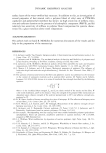
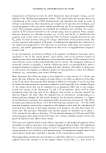
316 JOURNAL OF COSMETIC SCIENCE Table II PCS Data (mean diameter and PI) of the Investigated SLN Formulations Formulation Mean diameter (nm) Polydispersity index CPa 227 + 2 0.093 CPb 316 --- 4 0.182 CPc 405 ___ 3 0.236 CPd 518 q- 4 0.296 CPe 3000 q- 100 0.597 CPZ 208 q- 1 0.072 Dl12 167 q- 2 0.174 D114a 172 q- 2 0.192 D114b 193 q- 2 0.238 D116 206 q- 2 0.232 Table III LD Data (d50%, d90%, d95%, and d99%) of the Investigated SLN Formulations Formulation d50% (pm) d90% (pm) d95% (}•m) d99% (pm) CPa 0.187 0.364 0.405 0.478 CPb 0.306 0.486 0.539 0.642 CPc 0.388 0.742 1.675 2.252 CPd 0.620 4.210 5.669 8.024 CPe 4.248 7.238 8.120 9.848 CPZ 0.300 0.550 0.660 5.110 D112 0.135 0.310 0.393 0.547 D114a 0.117 0.299 0.365 0.480 D114b 0.134 0.343 0.433 0.581 D116 0.109 0.228 0.296 0.464 cm2), leading to an applied amount of 10.6 mg/cm 2. A visible film formation on top of the filter paper was observed during the experiment. At the end of the experiment, the solid film could be removed with a spatula. The samples were stored at 32øC and 50-55 % RH for 48 hours. The samples were weighed after 6, 24, and 48 hours, giving the water loss due to evaporation at each time (water flux through the filter paper). Beakers covered with filter paper but without on applied sample served as reference values. Every experiment was performed in triplicate (n -- 3). The occlusion factor F was calculated according to equation 1' F-- lO0*((A-B)/A) (1) where A is the water loss without sample (reference) and B is the water loss with sample. Therma/a,a/ysis. Differential scanning calorimetry (DSC) was used in order to determine the crystallinity of the SLN. Samples of approximately 10 mg were put in aluminum pans, the pans were sealed, and the samples were analyzed using a DSC 821/700e (Mettier-Toledo, Germany). The samples were heated from 20 ø to 90øC at a heating rate of 5 K/min. An empty aluminum pan served as reference. The oven was flushed with 80 ml N2/min.
Purchased for the exclusive use of nofirst nolast (unknown)
From: SCC Media Library & Resource Center (library.scconline.org)